FabulousFusionFood's South Asian Recipes Home Page
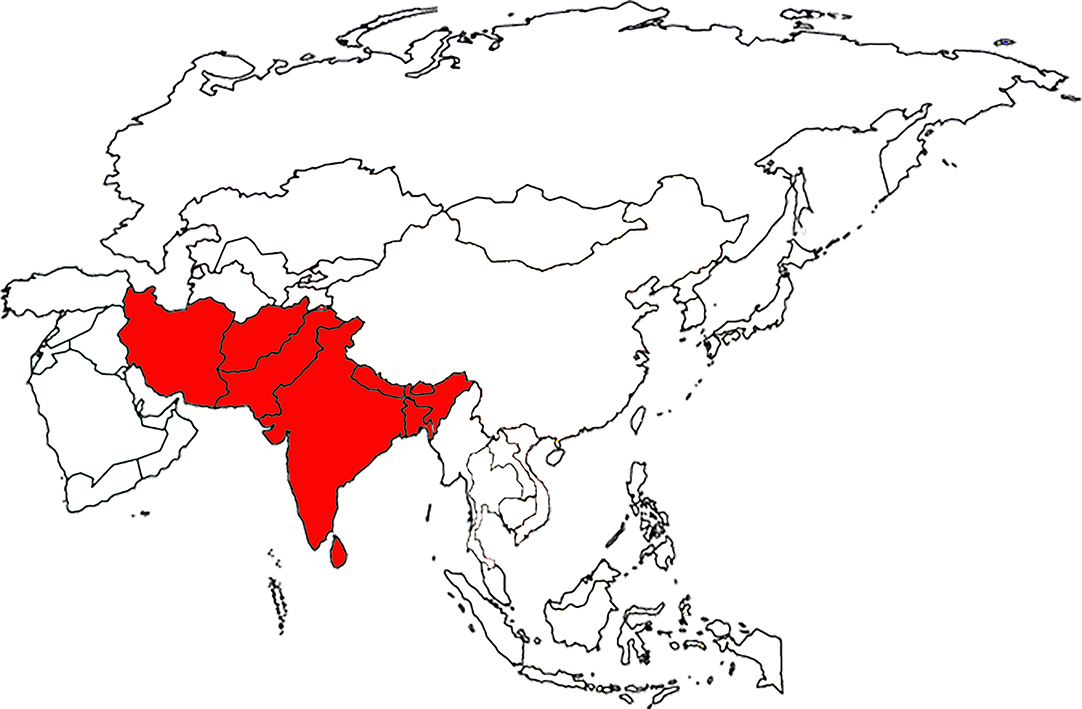 The map of Asia, with South Asia picked out in red.
Welcome to the summary page for FabulousFusionFood's South Asian recipes. This page provides links to all the South Asian recipes presented on this site, with 871 recipes in total.
These recipes, for the major part, originate in South Asia. Otherwise they are fusion recipes with major South Asian influences.
South Asia is the southern subregion of Asia, which is defined in both geographical and ethnic-cultural terms. With a population of 2.04 billion living in South Asia, it contains a quarter (25%) of the world's population. As commonly conceptualized, the modern states of South Asia include Bangladesh, Bhutan, India, the Maldives, Nepal, Pakistan, and Sri Lanka, with Afghanistan also often included, which may otherwise be classified as part of Central Asia. South Asia borders East Asia to the northeast, Central Asia to the northwest, West Asia to the west and Southeast Asia to the east. Apart from Southeast Asia, Maritime South Asia is the only subregion of Asia that lies partly within the Southern Hemisphere. The British Indian Ocean Territory and two out of 26 atolls of the Maldives in South Asia lie entirely within the Southern Hemisphere. Topographically, it is dominated by the Indian subcontinent and is bounded by the Indian Ocean in the south, and the Himalayas, Karakoram, and Pamir Mountains in the north.
Settled life emerged on the Indian subcontinent in the western margins of the Indus river basin 9,000 years ago, evolving gradually into the Indus Valley Civilisation of the third millennium BCE. By 1200 BCE, an archaic form of Sanskrit, an Indo-European language, had diffused into India from the northwest, with the Dravidian languages being supplanted in the northern and western regions. By 400 BCE, stratification and exclusion by caste had emerged within Hinduism, and Buddhism and Jainism had arisen, proclaiming social orders unlinked to heredity
In the early medieval era, Christianity, Islam, Judaism, and Zoroastrianism became established on South Asia's southern and western coasts. Muslim armies from Central Asia intermittently overran the plains of northern India, eventually founding the Delhi Sultanate in the 13th century, and drawing the region into the cosmopolitan networks of medieval Islam. The Islamic Mughal Empire, in 1526, ushered in two centuries of relative peace, leaving a legacy of luminous architecture. Gradually expanding rule of the British East India Company followed, turning most of South Asia into a colonial economy, but also consolidating its sovereignty. British Crown rule began in 1858. The rights promised to Indians were granted slowly, but technological changes were introduced, and modern ideas of education and the public life took root. In 1947 the British Indian Empire was partitioned into two independent dominions, a Hindu-majority Dominion of India and a Muslim-majority Dominion of Pakistan, amid large-scale loss of life and an unprecedented migration. The 1971 Bangladesh Liberation War, a Cold War episode resulting in East Pakistan's secession, was the most recent instance of a new nation being formed in the region.
South Asia has a total area of 5.2 million sq.km (2 million sq.mi), which is 10% of the Asian continent. The population of South Asia is estimated to be 1.94 billion or about one-fourth of the world's population, making it both the most populous and the most densely populated geographical region in the world.
The geographical extent is not clear cut as systemic and foreign policy orientations of its constituents are quite asymmetrical. Beyond the core territories of the Indian Empire (territories of the British Empire which were under the system of British Raj), there is a high degree of variation as to which other countries are included in South Asia. There is no clear boundary – geographical, geopolitical, socio-cultural, economical, or historical – between South Asia and other parts of Asia, especially Southeast Asia and West Asia.
The common definition of South Asia is largely inherited from the administrative boundaries of the Indian Empire, with several exceptions. The current territories of Bangladesh, India, and Pakistan which were the core territories of the British Empire from 1857 to 1947 also form the core territories of South Asia. The mountain countries of Nepal and Bhutan, two independent countries that were not under the British Raj but were protectorates of the Empire, and the island countries of Sri Lanka and the Maldives are generally included. By various definitions based on substantially different reasons, the British Indian Ocean Territory and the Tibet Autonomous Region may be included as well. Myanmar (Burma), a former British colony and now largely considered a part of Southeast Asia, is also sometimes included. Afghanistan is also included by some sources (as here).
The terms Indian subcontinent and 'South Asia' are sometimes used interchangeably. The Indian subcontinent is largely a geological term referring to the land mass that drifted northeastwards from ancient Gondwana, colliding with the Eurasian plate nearly 55 million years ago, towards the end of Palaeocene. This geological region largely includes Bangladesh, Bhutan, India, Maldives, Nepal, Pakistan, and Sri Lanka. Historians Catherine Asher and Cynthia Talbot state that the term 'Indian subcontinent' describes a natural physical landmass in South Asia that has been relatively isolated from the rest of Eurasia
The use of the term Indian subcontinent began in the British Empire, and has been a term particularly common in its successors. South Asia as the preferred term is particularly common when scholars or officials seek to differentiate this region from East Asia. According to historians Sugata Bose and Ayesha Jalal, the Indian subcontinent has come to be known as South Asia 'in more recent and neutral parlance'. This 'neutral' notion refers to the concerns of Pakistan and Bangladesh, particularly given the recurring conflicts between India and Pakistan, wherein the dominant placement of 'India' as a prefix before the subcontinent might offend some political sentiments. However, in Pakistan, the term 'South Asia' is considered too India-centric and was banned until 1989 after the death of Zia ul Haq. This region has also been labelled as 'India' (in its classical and pre-modern sense) and 'Greater India'.
The countries of South Asia are defined in the table below:
These recipes, for the major part, originate in South Asia. Otherwise they are fusion recipes with major South Asian influences.
South Asia is the southern subregion of Asia, which is defined in both geographical and ethnic-cultural terms. With a population of 2.04 billion living in South Asia, it contains a quarter (25%) of the world's population. As commonly conceptualized, the modern states of South Asia include Bangladesh, Bhutan, India, the Maldives, Nepal, Pakistan, and Sri Lanka, with Afghanistan also often included, which may otherwise be classified as part of Central Asia. South Asia borders East Asia to the northeast, Central Asia to the northwest, West Asia to the west and Southeast Asia to the east. Apart from Southeast Asia, Maritime South Asia is the only subregion of Asia that lies partly within the Southern Hemisphere. The British Indian Ocean Territory and two out of 26 atolls of the Maldives in South Asia lie entirely within the Southern Hemisphere. Topographically, it is dominated by the Indian subcontinent and is bounded by the Indian Ocean in the south, and the Himalayas, Karakoram, and Pamir Mountains in the north.
Settled life emerged on the Indian subcontinent in the western margins of the Indus river basin 9,000 years ago, evolving gradually into the Indus Valley Civilisation of the third millennium BCE. By 1200 BCE, an archaic form of Sanskrit, an Indo-European language, had diffused into India from the northwest, with the Dravidian languages being supplanted in the northern and western regions. By 400 BCE, stratification and exclusion by caste had emerged within Hinduism, and Buddhism and Jainism had arisen, proclaiming social orders unlinked to heredity
In the early medieval era, Christianity, Islam, Judaism, and Zoroastrianism became established on South Asia's southern and western coasts. Muslim armies from Central Asia intermittently overran the plains of northern India, eventually founding the Delhi Sultanate in the 13th century, and drawing the region into the cosmopolitan networks of medieval Islam. The Islamic Mughal Empire, in 1526, ushered in two centuries of relative peace, leaving a legacy of luminous architecture. Gradually expanding rule of the British East India Company followed, turning most of South Asia into a colonial economy, but also consolidating its sovereignty. British Crown rule began in 1858. The rights promised to Indians were granted slowly, but technological changes were introduced, and modern ideas of education and the public life took root. In 1947 the British Indian Empire was partitioned into two independent dominions, a Hindu-majority Dominion of India and a Muslim-majority Dominion of Pakistan, amid large-scale loss of life and an unprecedented migration. The 1971 Bangladesh Liberation War, a Cold War episode resulting in East Pakistan's secession, was the most recent instance of a new nation being formed in the region.
South Asia has a total area of 5.2 million sq.km (2 million sq.mi), which is 10% of the Asian continent. The population of South Asia is estimated to be 1.94 billion or about one-fourth of the world's population, making it both the most populous and the most densely populated geographical region in the world.
The geographical extent is not clear cut as systemic and foreign policy orientations of its constituents are quite asymmetrical. Beyond the core territories of the Indian Empire (territories of the British Empire which were under the system of British Raj), there is a high degree of variation as to which other countries are included in South Asia. There is no clear boundary – geographical, geopolitical, socio-cultural, economical, or historical – between South Asia and other parts of Asia, especially Southeast Asia and West Asia.
The common definition of South Asia is largely inherited from the administrative boundaries of the Indian Empire, with several exceptions. The current territories of Bangladesh, India, and Pakistan which were the core territories of the British Empire from 1857 to 1947 also form the core territories of South Asia. The mountain countries of Nepal and Bhutan, two independent countries that were not under the British Raj but were protectorates of the Empire, and the island countries of Sri Lanka and the Maldives are generally included. By various definitions based on substantially different reasons, the British Indian Ocean Territory and the Tibet Autonomous Region may be included as well. Myanmar (Burma), a former British colony and now largely considered a part of Southeast Asia, is also sometimes included. Afghanistan is also included by some sources (as here).
The terms Indian subcontinent and 'South Asia' are sometimes used interchangeably. The Indian subcontinent is largely a geological term referring to the land mass that drifted northeastwards from ancient Gondwana, colliding with the Eurasian plate nearly 55 million years ago, towards the end of Palaeocene. This geological region largely includes Bangladesh, Bhutan, India, Maldives, Nepal, Pakistan, and Sri Lanka. Historians Catherine Asher and Cynthia Talbot state that the term 'Indian subcontinent' describes a natural physical landmass in South Asia that has been relatively isolated from the rest of Eurasia
The use of the term Indian subcontinent began in the British Empire, and has been a term particularly common in its successors. South Asia as the preferred term is particularly common when scholars or officials seek to differentiate this region from East Asia. According to historians Sugata Bose and Ayesha Jalal, the Indian subcontinent has come to be known as South Asia 'in more recent and neutral parlance'. This 'neutral' notion refers to the concerns of Pakistan and Bangladesh, particularly given the recurring conflicts between India and Pakistan, wherein the dominant placement of 'India' as a prefix before the subcontinent might offend some political sentiments. However, in Pakistan, the term 'South Asia' is considered too India-centric and was banned until 1989 after the death of Zia ul Haq. This region has also been labelled as 'India' (in its classical and pre-modern sense) and 'Greater India'.
The countries of South Asia are defined in the table below:
South Asia
| Arms | Flag | Name of Territory | Capital | Name in Official Language(s) |
|---|---|---|---|---|
 |
 |
Afghanistan | Dhaka | د افغانستان اسلامي امارت (Pashto: Də Afġānistān Islāmī Imārat امارت اسلامی افغانستان (Dari: Imārat-i Islāmī-yi Afğānistān) |
 |
 |
Bangladesh | Dhaka | গণপ্রজাতন্ত্রী বাংলাদেশ (Gôṇoprojātôntrī Bāṅglādesh) |
 |
 |
Bhutan | Thimphu | འབྲུག་རྒྱལ་ཁབ (Druk Gyal Khap) |
 |
 |
India | New Delhi | Bhārat Gaṇarājya |
 |
 |
Maldives | Malé | ދިވެހިރާއްޖޭގެ ޖުމްހޫރިއްޔާ (Dhivehi Raajjeyge Jumhooriyyaa) |
 |
 |
Nepal | Kathmandu | सङ्घीय लोकतान्त्रिक गणतन्त्र नेपाल (Saṅghīya Lokatāntrika Gaṇatantra Nepāla) |
 |
 |
Pakistan | Islamabad | اسلامی جمہوریہ پاكستان (Islāmī Jumhūriyah Pākistān) |
 |
 |
Sri Lanka | Sri Jayawardenepura Kotte (legislative) Colombo (executive and judicial) |
ශ්රී ලංකා ප්රජාතාන්ත්රික සමාජවාදී ජනරජය (Srī Laṅkā Prajātāntrika Samājavādī Janarajaya) இலங்கை சனநாயக சோசலிசக் குடியரசு (Ilaṅkai Jaṉanāyaka Cōcalicak Kuṭiyaracu) |
The alphabetical list of all the South Asian recipes on this site follows, (limited to 100 recipes per page). There are 871 recipes in total:
Page 1 of 9
| Aad Maas (Goan Pork Rib Curry) Origin: India | Ambot Tik (Goan Shark Curry) Origin: India | Baked Tandoori Whole Fish Origin: India |
| Aaloo Gosht (Mutton Curry with Potatoes) Origin: Pakistan | Ambul Thial (Pickled Fish Curry) Origin: Sri Lanka | Balchão de Camarão (Goan Prawn Pickle) Origin: India |
| Aam Aur Podina ki Chatni (Mango and Mint Chutney) Origin: India | Ambul Thial (Pickled Fish) Origin: Sri Lanka | Balti Garam Masala Origin: India |
| Aam Ka Meetha Achaar (Sweet Mango Chutney) Origin: India | Amritsar Fish and Chips Origin: India | Balushahi Origin: India |
| Aam Kulfi (Mango Ice Cream) Origin: India | Anardana goli II Origin: India | Bambukeyo Bongara (Maldives Breadfruit Curry) Origin: Maldives |
| Achaari Jhinga (Indian Pickled Prawns) Origin: India | Anardana Gosht (Lamb Curry with Pomegranate) Origin: India | Banana Lassi Origin: India |
| Achari Masala Origin: India | Anardana Jheenga (Pomegranate-flavoured Prawns) Origin: India | Banana leaf mackerel Origin: Sri Lanka |
| Achari Roast Chicken Origin: Pakistan | Anardana Pakora in Mustard Oil Origin: India | Bangladeshi Beef Shatkora Origin: Bangladesh |
| Adaka Roti Origin: Sri Lanka | Andhra Kodi Kura (Andhra Chicken Curry) Origin: India | Bangladeshi Fish Korma Origin: Bangladesh |
| Afghan Kofta Curry Origin: Afghanistan | Andhra Pappu Charu (Andhra-style Lentil Puree Curry) Origin: India | Bangladeshi Garlic Daal Origin: Bangladesh |
| Afghan Roast Chicken Spice Blend Origin: Afghanistan | Andhra Pepper Chicken (Dry Restaurant-style Pepper Chicken) Origin: India | Bangladeshi Goat Curry Origin: Bangladesh |
| Afghan-spiced Roast Chicken Origin: Afghanistan | Angel Burfi Origin: India | Bangude Ghassi (Bunt-style Spicy Mangalorean Curry) Origin: India |
| Afghani Chicken Curry Origin: Pakistan | Apas (Rice Flour Rotis) Origin: India | Barfi badam (Almond Cream Sweetmeats) Origin: India |
| Ak-Ni Korma Origin: India | Apfel-, Knollensellerie- und Beifußsoße (Apple, Celeriac and Mugwort Gravy for Goose) Origin: India | Basanti Pulao (Bengali Pilau Rice) Origin: India |
| Alleppey Fish Curry Origin: India | Appa (Hoppers) Origin: Sri Lanka | Basbousa Origin: India |
| Almond Katli with Pistachios Origin: India | Apple Kesari with Nutmeg Origin: India | Bashi Hiki Riha (Maldives Aubergine Curry) Origin: Maldives |
| Aloo Anardana Origin: India | Apple Peda Origin: India | Basic Dhokla (Basic Steamed Rice and Dhal Cake) Origin: India |
| Aloo Badun (Potato Badun) Origin: Sri Lanka | Arbi ki Bhaji (Taro Curry) Origin: India | Basic Onion Paste Origin: India |
| Aloo Bhaji Origin: India | Arrowroot Halwa Origin: India | Basundi (Thickened Milk Dessert) Origin: India |
| Aloo Chaat (Savoury Potato Snack) Origin: India | Arvi aur Gosht ka Khatta Salan (Taro and Lamb in a Tangy Sauce) Origin: India | Batak Raichat (Duck Raichat) Origin: India |
| Aloo Dhaniya (Balti Potatoes and Coriander) Origin: India | Asabia el Aroos (Brides' Fingers) Origin: Afghanistan | Bean Foogath Origin: India |
| Aloo Kari (Curried Potatoes) Origin: India | Ash Gourd Coconut Curry Origin: India | Bedam ki Burfi (Almond Toffee) Origin: India |
| Aloo ki Bhujia (Pakistani Potato Curry) Origin: Pakistan | Aurangabadi Naan Qaliya Origin: India | Bedmi Aloo Origin: India |
| Aloo Masala (Potato Masala) Origin: India | Aurangabadi Special Naan Bread Origin: India | Bedmi Puri Origin: India |
| Aloo Palya (Potato Curry) Origin: India | Baabath (Tripe Curry) Origin: Sri Lanka | Beef and Dhal Curry Origin: India |
| Aloo Paratha (Flatbread with a Spicy Potato Stuffing) Origin: India | Baadusha Origin: India | Beef and Mushroom Tshoem Origin: Bhutan |
| Aloo Paratha (Potato-stuffed Paratha) Origin: India | Badam Puri Origin: India | Beef Madras Origin: India |
| Aloo Sabzi Kari (Potato Curry) Origin: India | Badanekaayi Gojju (Brinjal Curry) Origin: India | Beef Pasanda Origin: India |
| Aloobukhara Chutney (Prune Chutney) Origin: Pakistan | Bafado Origin: India | Beetroot Halwa Origin: India |
| Alu Achari Origin: India | Baingan au Tamatar ki Sabzi (Aubergine and Tomato Sabzi) Origin: India | Beetroot Sabzi (Beetroot Curry) Origin: India |
| Alu Kesel (Sri Lankan Ash Plantain Curry) Origin: Sri Lanka | Baingan Musallam (Mughlai Style Aubergine in Rich Tomato Gravy) Origin: India | Beetroot-stuffed Parathas Origin: India |
| Alu ko Achhar (Potatoes with Split Peas) Origin: Nepal | Bajra Roti (Pearl Millet Flatbread) Origin: India | Bengali Chicken Curry Origin: India |
| Alu Tarkari (Potato Curry) Origin: Nepal | Bajra Roti (Pearl Millet Roti) Origin: India | |
| Amb Halad Ka Achar (Zedoary Pickle) Origin: India | Bakari Riha (Mutton Curry) Origin: Maldives |
Page 1 of 9