FabulousFusionFood's Afghan recipes Home Page
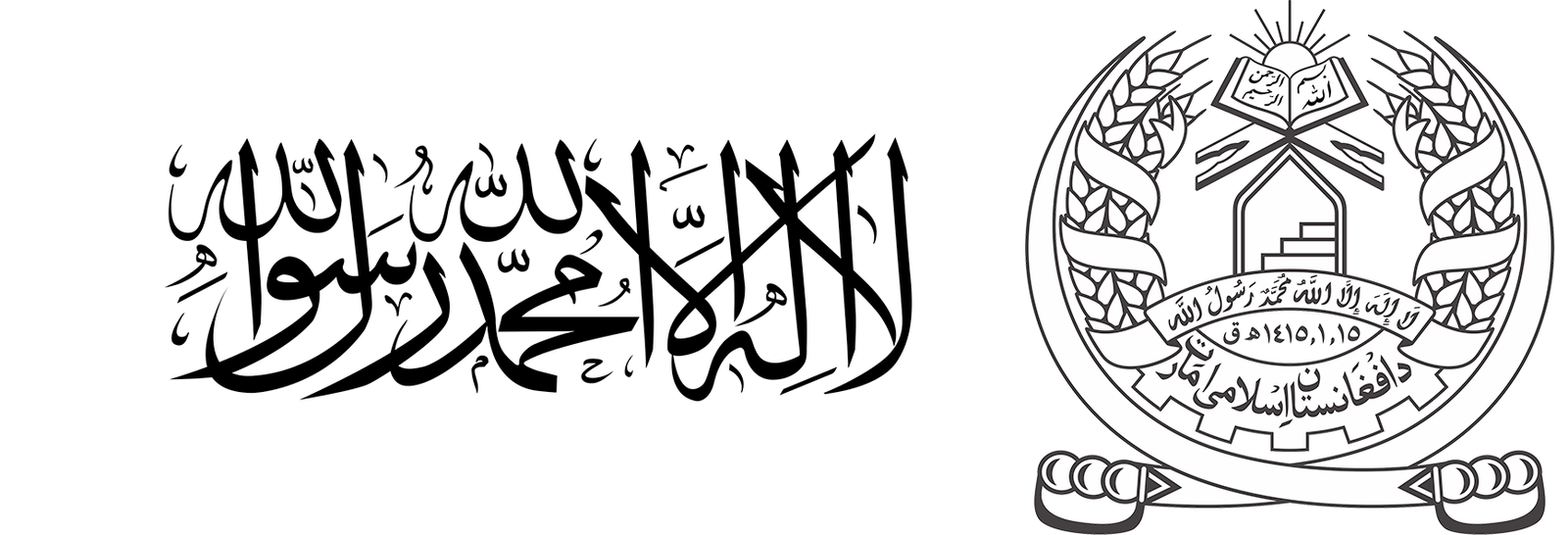 The flag of Afghanistan (left) and the Emblem of Afghanistan (right).
Welcome to the summary page for FabulousFusionFood's Afghan recipes, part of the Asian Continent. This page provides links to all the Afghan recipes presented on this site, with 18 recipes in total.
Afghanistan, (د افغانستان اسلامي امارتد افغانستان اسلامي امارت (Də Afġānistān Islāmī Imārat in Pashto) and امارت اسلامی افغانستان (Imārat-i Islāmī-yi Afğānistān in Dari)) s a landlocked country located at the crossroads of Central and South Asia. It is bordered by Pakistan to the east and south, Iran to the west, Turkmenistan to the northwest, Uzbekistan to the north, Tajikistan to the northeast, and China to the northeast and east. Kabul is the country's capital and largest city; Pashto and Dari are the official languages.
Afghan cuisine is largely based upon the nation's chief crops, such as wheat, maize, barley and rice. Accompanying these staples are native fruits and vegetables as well as dairy products such as milk, yogurt, and whey. Kabuli palaw is the national dish of Afghanistan. The nation's culinary specialties reflect its ethnic and geographic diversity. Afghanistan is known for its high-quality pomegranates, grapes, and sweet melons. Tea is a favorite drink among Afghans. A typical Afghan diet consists of naan, yoghurt, rice, and meat.
Afghanistan, officially the Islamic Emirate of Afghanistan, is a landlocked country located at the crossroads of Central and South Asia. It is bordered by Pakistan to the east and south, Iran to the west, Turkmenistan to the northwest, Uzbekistan to the north, Tajikistan to the northeast, and China to the northeast and east. Occupying 652,864 square kilometers of land, the country is predominantly mountainous with plains in the north and the southwest, which are separated by the Hindu Kush mountain range. Kabul is the country's capital and largest city. Afghanistan's population is estimated to be between 36 and 50 million.
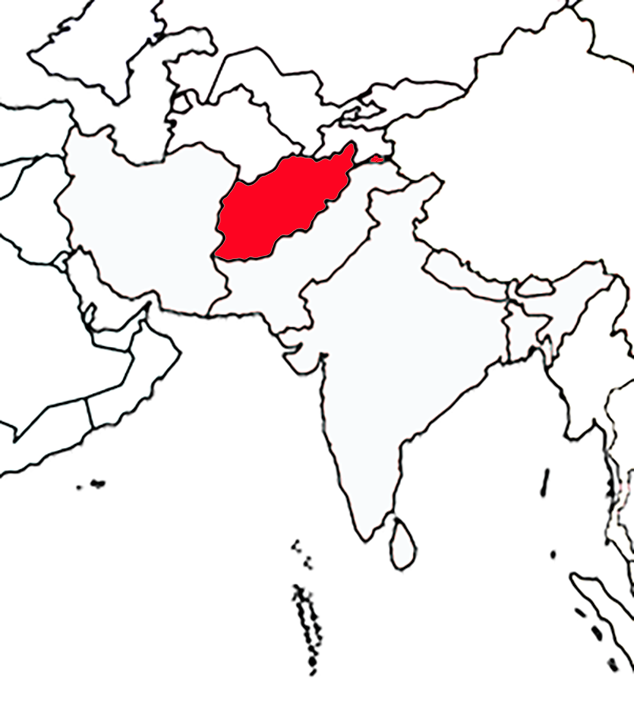 The image above shows Afghanistan (red) in relation to South Asia.Human habitation in Afghanistan dates to the Middle Paleolithic era. Popularly referred to as the graveyard of empires, the land has witnessed numerous military campaigns, including those by the Persians, Alexander the Great, the Maurya Empire, Arab Muslims, the Mongols, the British, the Soviet Union, and a US-led coalition. Afghanistan also served as the source from which the Greco-Bactrians and the Mughals, among others, rose to form major empires. Because of the various conquests and periods in both the Iranian and Indian cultural spheres, the area was a center for Zoroastrianism, Buddhism, Hinduism, and later Islam. The modern state of Afghanistan began with the Durrani Afghan Empire in the 18th century, although Dost Mohammad Khan is sometimes considered to be the founder of the first modern Afghan state. Afghanistan became a buffer state in the Great Game between the British Empire and the Russian Empire. From India, the British attempted to subjugate Afghanistan but were repelled in the First Anglo-Afghan War; the Second Anglo-Afghan War saw a British victory. Following the Third Anglo-Afghan War in 1919, Afghanistan became free of foreign political hegemony, and emerged as the independent Kingdom of Afghanistan in 1926. This monarchy lasted almost half a century, until Zahir Shah was overthrown in 1973, following which the Republic of Afghanistan was established
In the 16th century, the native Safavid dynasty re-established a unified Iranian state with Twelver Shi'ism as the official religion. During the Afsharid Empire in the 18th century, Iran was a leading world power, but this was no longer the case after the Qajars took power in the 1790s. The early 20th century saw the Persian Constitutional Revolution and the establishment of the Pahlavi dynasty by Reza Shah the Great, who ousted the last Qajar shah in 1925. Attempts by Mohammad Mosaddegh to nationalise the oil industry led to an Anglo-American coup in 1953. After the Iranian Revolution, the monarchy was overthrown in 1979 and the Islamic Republic of Iran was established by Ruhollah Khomeini, who became the country's first Supreme Leader. In 1980, Iraq invaded Iran, sparking the eight-year-long Iran–Iraq War, which ended in stalemate.
Since the late 1970s, Afghanistan's history has been dominated by extensive warfare, including coups, invasions, insurgencies, and civil wars. The conflict began in 1978 when a communist revolution established a socialist state (itself a response to the dictatorship established following a coup d'état in 1973), and subsequent infighting prompted the Soviet Union to invade Afghanistan in 1979. Mujahideen fought against the Soviets in the Soviet–Afghan War and continued fighting among themselves following the Soviets' withdrawal in 1989. The Taliban controlled most of the country by 1996, but their Islamic Emirate of Afghanistan received little international recognition before its overthrow in the 2001 US invasion of Afghanistan. The Taliban returned to power in 2021 after capturing Kabul, ending the 2001–2021 war. As of July 2025, the Taliban government is widely unrecognized by the international community due to reported violations of human rights in Afghanistan, particularly regarding the rights of women in Afghanistan and the treatment of women by the Taliban.
Afghanistan is rich in natural resources, including lithium, iron, zinc, and copper. It is the second-largest producer of cannabis resin, and third largest of both saffron and cashmere. The country is a member of the South Asian Association for Regional Cooperation and a founding member of the Organization of Islamic Cooperation. Due to the effects of war in recent decades, the country has dealt with high levels of terrorism, poverty, and child malnutrition. Afghanistan remains among the world's least developed countries, ranking 182nd on the Human Development Index. Afghanistan's gross domestic product (GDP) is $81 billion by purchasing power parity and $20.1 billion by nominal values. Per capita, its GDP is among the lowest of any country as of 2020.
Etymology: Some scholars suggest that the root name Afghān is derived from the Sanskrit word Aśvakan, which was the name used for ancient inhabitants of the Hindu Kush. Aśvakan literally means 'horsemen', 'horse breeders', or 'cavalrymen' (from aśva, the Sanskrit and Avestan words for 'horse').
Historically, the ethnonym Afghān was used to refer to ethnic Pashtuns. The Arabic and Persian form of the name, Afġān, was first attested in the 10th-century geography book Hudud al-'Alam. The last part of the name, '-stan', is a Persian suffix meaning 'place of'. Therefore, 'Afghanistan' translates to 'land of the Afghans', or 'land of the Pashtuns' in a historical sense. The term 'Afghanistan' was officially used in 1855, when the British recognized Dost Mohammad Khan as king of Afghanistan.
The cuisine of Afghanistan is halal and uses various herbs and spices including coriander, mint, dill, cumin, cardamom and turmeric as well locally-grown saffron. Afghan dishes are typically mild in flavour. A variety of rice dishes known locally as 'Palao' are prepared with various fruits, nuts and legumes and combine sweet and sour flavors central to Afghan cuisine. Afghan dishes including dumpling and noodles dishes, meat and vegetable stews, legumes and kebab dishes making up the bulk of Afghan cuisine.
Afghanistan, (د افغانستان اسلامي امارتد افغانستان اسلامي امارت (Də Afġānistān Islāmī Imārat in Pashto) and امارت اسلامی افغانستان (Imārat-i Islāmī-yi Afğānistān in Dari)) s a landlocked country located at the crossroads of Central and South Asia. It is bordered by Pakistan to the east and south, Iran to the west, Turkmenistan to the northwest, Uzbekistan to the north, Tajikistan to the northeast, and China to the northeast and east. Kabul is the country's capital and largest city; Pashto and Dari are the official languages.
Afghan cuisine is largely based upon the nation's chief crops, such as wheat, maize, barley and rice. Accompanying these staples are native fruits and vegetables as well as dairy products such as milk, yogurt, and whey. Kabuli palaw is the national dish of Afghanistan. The nation's culinary specialties reflect its ethnic and geographic diversity. Afghanistan is known for its high-quality pomegranates, grapes, and sweet melons. Tea is a favorite drink among Afghans. A typical Afghan diet consists of naan, yoghurt, rice, and meat.
Afghanistan, officially the Islamic Emirate of Afghanistan, is a landlocked country located at the crossroads of Central and South Asia. It is bordered by Pakistan to the east and south, Iran to the west, Turkmenistan to the northwest, Uzbekistan to the north, Tajikistan to the northeast, and China to the northeast and east. Occupying 652,864 square kilometers of land, the country is predominantly mountainous with plains in the north and the southwest, which are separated by the Hindu Kush mountain range. Kabul is the country's capital and largest city. Afghanistan's population is estimated to be between 36 and 50 million.
The image above shows Afghanistan (red) in relation to South Asia.In the 16th century, the native Safavid dynasty re-established a unified Iranian state with Twelver Shi'ism as the official religion. During the Afsharid Empire in the 18th century, Iran was a leading world power, but this was no longer the case after the Qajars took power in the 1790s. The early 20th century saw the Persian Constitutional Revolution and the establishment of the Pahlavi dynasty by Reza Shah the Great, who ousted the last Qajar shah in 1925. Attempts by Mohammad Mosaddegh to nationalise the oil industry led to an Anglo-American coup in 1953. After the Iranian Revolution, the monarchy was overthrown in 1979 and the Islamic Republic of Iran was established by Ruhollah Khomeini, who became the country's first Supreme Leader. In 1980, Iraq invaded Iran, sparking the eight-year-long Iran–Iraq War, which ended in stalemate.
Since the late 1970s, Afghanistan's history has been dominated by extensive warfare, including coups, invasions, insurgencies, and civil wars. The conflict began in 1978 when a communist revolution established a socialist state (itself a response to the dictatorship established following a coup d'état in 1973), and subsequent infighting prompted the Soviet Union to invade Afghanistan in 1979. Mujahideen fought against the Soviets in the Soviet–Afghan War and continued fighting among themselves following the Soviets' withdrawal in 1989. The Taliban controlled most of the country by 1996, but their Islamic Emirate of Afghanistan received little international recognition before its overthrow in the 2001 US invasion of Afghanistan. The Taliban returned to power in 2021 after capturing Kabul, ending the 2001–2021 war. As of July 2025, the Taliban government is widely unrecognized by the international community due to reported violations of human rights in Afghanistan, particularly regarding the rights of women in Afghanistan and the treatment of women by the Taliban.
Afghanistan is rich in natural resources, including lithium, iron, zinc, and copper. It is the second-largest producer of cannabis resin, and third largest of both saffron and cashmere. The country is a member of the South Asian Association for Regional Cooperation and a founding member of the Organization of Islamic Cooperation. Due to the effects of war in recent decades, the country has dealt with high levels of terrorism, poverty, and child malnutrition. Afghanistan remains among the world's least developed countries, ranking 182nd on the Human Development Index. Afghanistan's gross domestic product (GDP) is $81 billion by purchasing power parity and $20.1 billion by nominal values. Per capita, its GDP is among the lowest of any country as of 2020.
Etymology: Some scholars suggest that the root name Afghān is derived from the Sanskrit word Aśvakan, which was the name used for ancient inhabitants of the Hindu Kush. Aśvakan literally means 'horsemen', 'horse breeders', or 'cavalrymen' (from aśva, the Sanskrit and Avestan words for 'horse').
Historically, the ethnonym Afghān was used to refer to ethnic Pashtuns. The Arabic and Persian form of the name, Afġān, was first attested in the 10th-century geography book Hudud al-'Alam. The last part of the name, '-stan', is a Persian suffix meaning 'place of'. Therefore, 'Afghanistan' translates to 'land of the Afghans', or 'land of the Pashtuns' in a historical sense. The term 'Afghanistan' was officially used in 1855, when the British recognized Dost Mohammad Khan as king of Afghanistan.
Afghan Cuisine
Afghan cuisine is influenced by Persian, Central Asian and South Asian cuisines due to Afghanistan's close proximity and cultural ties. The cuisine is halal and mainly based on mutton, beef, poultry and fish with rice and Afghan bread. Accompanying these are common vegetables and dairy products, such as milk, yogurt, whey, and fresh and dried fruits such as apples, apricots, grapes, bananas, oranges, plums, pomegranates, sweet melons, and raisins. The diet of most Afghans revolves around rice-based dishes, while various forms of naan are consumed with most meals. Tea is generally consumed daily in large quantities, and is a major part of hospitality. The culinary specialties reflect the nation's ethnic and geographic diversity. The national dish of Afghanistan is Kabuli palaw, a rice dish cooked with raisins, carrots, nuts, and lamb or beef.The cuisine of Afghanistan is halal and uses various herbs and spices including coriander, mint, dill, cumin, cardamom and turmeric as well locally-grown saffron. Afghan dishes are typically mild in flavour. A variety of rice dishes known locally as 'Palao' are prepared with various fruits, nuts and legumes and combine sweet and sour flavors central to Afghan cuisine. Afghan dishes including dumpling and noodles dishes, meat and vegetable stews, legumes and kebab dishes making up the bulk of Afghan cuisine.
Afghanistan's National Dishes:
Below are listed the dishes considered to be Afghanistan's national foods along with links to the recipes for those dishes:| Quabili Pilau (Lamb and Yellow Rice with Carrots and Raisins) Origin: Afghanistan |
The alphabetical list of all the Afghan recipes on this site follows, (limited to 100 recipes per page). There are 18 recipes in total:
Page 1 of 1
| Quabili Pilau (Lamb and Yellow Rice with Carrots and Raisins) Origin: Afghanistan | Char Masala Origin: Afghanistan | Lagman Spice Blend Origin: Afghanistan |
| Afghan Kofta Curry Origin: Afghanistan | Chelo Nachodo (Chicken and Chickpea Stew with Rice) Origin: Afghanistan | Mourgh (Afghan Chicken) Origin: Afghanistan |
| Afghan Roast Chicken Spice Blend Origin: Afghanistan | Firnee Origin: Afghanistan | Qaraqurut Origin: Afghanistan |
| Afghan-spiced Roast Chicken Origin: Afghanistan | Khatai Biscuits Origin: Afghanistan | Qatiq (Fermented Milk Drink) Origin: Afghanistan |
| Asabia el Aroos (Brides' Fingers) Origin: Afghanistan | Khubz (Pita Bread) Origin: Afghanistan | Quabili Pilau (Lamb and Yellow Rice with Carrots and Raisins) Origin: Afghanistan |
| Bonjan Salat (Spicy Aubergine Salad) Origin: Afghanistan | Kofta Nakhod (Meatballs with Chickpeas) Origin: Afghanistan | Sabse Borani (Fried Spinach with Yoghurt) Origin: Afghanistan |
Page 1 of 1