FabulousFusionFood's Southeast Asian Recipes Home Page
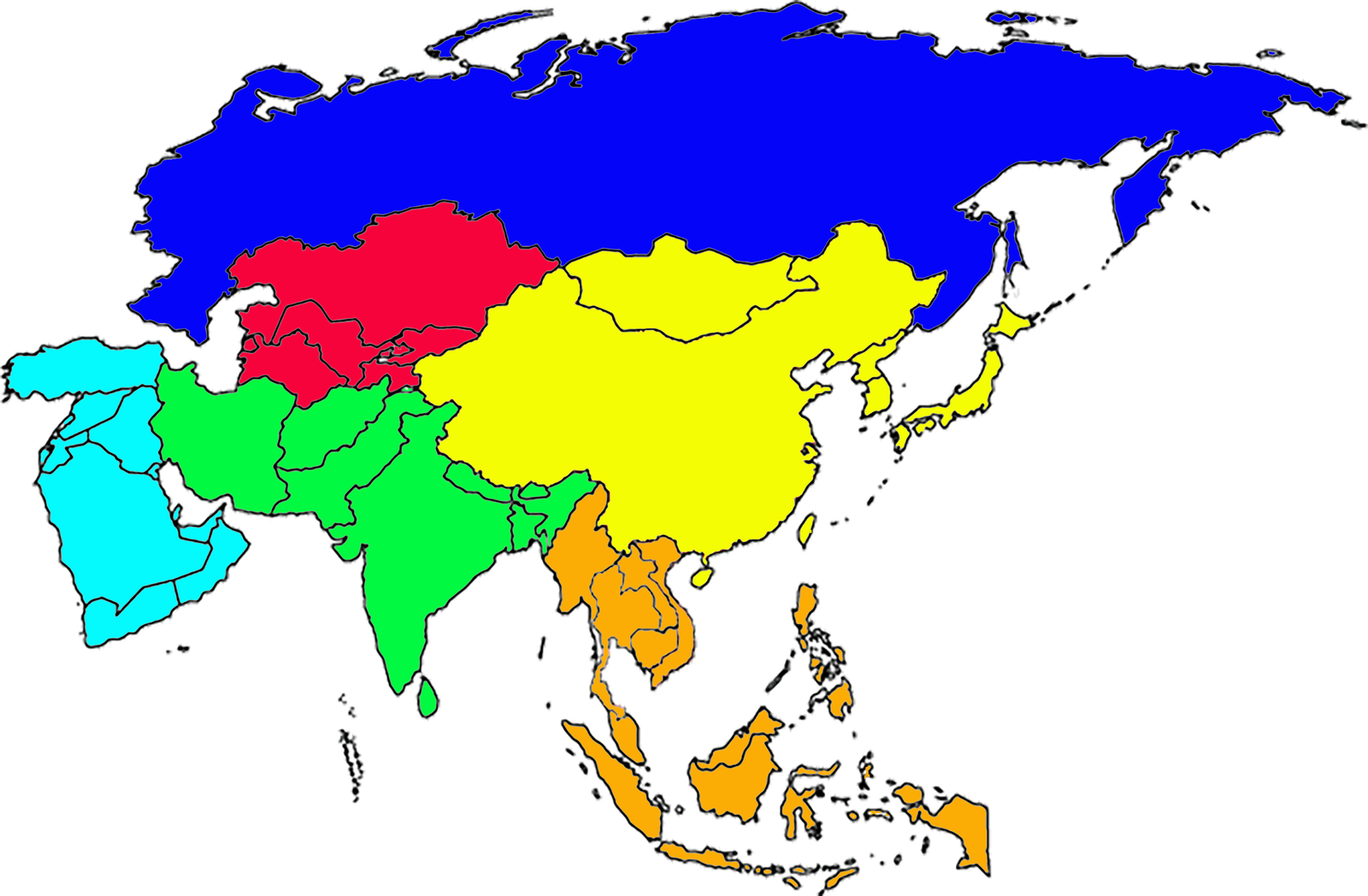 The map of Asia, with sub-divisions into North Asia (dark blue), Central Asia(red),
West Asia (Middle East and Caucasus) [light blue], South Asia (green),
East Asia (yellow) and Southeast Asia (brown).
Welcome to the summary page for FabulousFusionFood's Southeast Asian recipes. This page provides links to all the Southeast Asian recipes presented on this site, with 369 recipes in total.
These recipes, for the major part, originate in Southeast Asia. Otherwise they are fusion recipes with major Southeast Asian influences.
Southeast Asia is the geographical southeastern region of Asia, consisting of the regions that are situated south of China, east of the Indian subcontinent, and northwest of the Australian mainland, which is part of Oceania.[5] Southeast Asia is bordered to the north by East Asia, to the west by South Asia and the Bay of Bengal, to the east by Oceania and the Pacific Ocean, and to the south by Australia and the Indian Ocean. Apart from the British Indian Ocean Territory and two out of 26 atolls of the Maldives in South Asia, Maritime Southeast Asia is the only other subregion of Asia that lies partly within the Southern Hemisphere. Mainland Southeast Asia is entirely in the Northern Hemisphere. East Timor and the southern portion of Indonesia are the parts of Southeast Asia that lie south of the equator.
The region lies near the intersection of geological plates, with both heavy seismic and volcanic activities. The Sunda Plate is the main plate of the region, featuring almost all Southeast Asian countries except Myanmar, northern Thailand, northern Laos, northern Vietnam, and northern Luzon of the Philippines, while the Sunda Plate only includes western Indonesia to as far east as the Indonesian province of Bali. The mountain ranges in Myanmar, Thailand, Peninsular Malaysia, and the Indonesian islands of Sumatra, Java, Bali, Lesser Sunda Islands, and Timor are part of the Alpide belt, while the islands of the Philippines and Indonesia as well as East Timor are part of the Pacific Ring of Fire. Both seismic belts meet in Indonesia, causing the region to have relatively high occurrences of earthquakes and volcanic eruptions, particularly in the Philippines and Indonesia.
It covers about 4,500,000 km2 (1,700,000 sq mi), which is 8% of Eurasia and 3% of Earth's total land area. Its total population is more than 675 million, about 8.5% of the world's population. It is the third most populous geographical region in Asia after South Asia and East Asia.[8] The region is culturally and ethnically diverse, with hundreds of languages spoken by different ethnic groups.[9] Ten countries in the region are members of the Association of Southeast Asian Nations (ASEAN), a regional organisation established for economic, political, military, educational, and cultural integration among its members.
Southeast Asia is one of the most culturally diverse regions of the world. There are many different languages and ethnicities in the region. Historically, Southeast Asia was significantly influenced by Indian, Chinese, Muslim, and colonial cultures, which became core components of the region's cultural and political institutions. Most modern Southeast Asian countries were colonised by European powers. European colonisation exploited natural resources and labour from the lands they conquered, and attempted to spread European institutions to the region. Several Southeast Asian countries were also briefly occupied by the Japanese Empire during World War II. The aftermath of World War II saw most of the region decolonised. Today, Southeast Asia is predominantly governed by independent states.
 Map of South Asia with the 11 nations numbered. The
corresponding countries are : 1: Myanmar; 2: Thailand; 3: Laos; 4: Vietnam;
5: Cambodia; 6: Malaysia; 7: Singapore; 8: Philippines; 9: Indonesia; 10: East Timor; 11: BruneiThe region, together with part of South Asia, was well known by Europeans as the East Indies or simply the Indies until the 20th century. Chinese sources referred to the region as Nanyang ('南洋'), which literally means the 'Southern Ocean'. The mainland section of Southeast Asia was referred to as Indochina by European geographers due to its location between China and the Indian subcontinent and its having cultural influences from both neighbouring regions. In the 20th century, however, the term became more restricted to territories of the former French Indochina (Cambodia, Laos, and Vietnam). The maritime section of Southeast Asia is also known as the Malay Archipelago, a term derived from the European concept of a Malay race. Another term for Maritime Southeast Asia is Insulindia (Indian Islands), used to describe the region between Indochina and Australasia.
The term 'Southeast Asia' was first used in 1839 by American pastor Howard Malcolm in his book Travels in South-Eastern Asia. Malcolm only included the Mainland section and excluded the Maritime section in his definition of Southeast Asia. The term was officially used in the midst of World War II by the Allies, through the formation of South East Asia Command (SEAC) in 1943. SEAC popularised the use of the term 'Southeast Asia', although what constituted Southeast Asia was not fixed; for example, SEAC excluded the Philippines and a large part of Indonesia while including Ceylon. However, by the late 1970s, a roughly standard usage of the term 'Southeast Asia' and the territories it encompasses had emerged. Although from a cultural or linguistic perspective the definitions of 'Southeast Asia' may vary, the most common definitions nowadays include the area represented by the countries (sovereign states and dependent territories) listed below.
The countries of Southeast Asia are defined in the table below:
These recipes, for the major part, originate in Southeast Asia. Otherwise they are fusion recipes with major Southeast Asian influences.
Southeast Asia is the geographical southeastern region of Asia, consisting of the regions that are situated south of China, east of the Indian subcontinent, and northwest of the Australian mainland, which is part of Oceania.[5] Southeast Asia is bordered to the north by East Asia, to the west by South Asia and the Bay of Bengal, to the east by Oceania and the Pacific Ocean, and to the south by Australia and the Indian Ocean. Apart from the British Indian Ocean Territory and two out of 26 atolls of the Maldives in South Asia, Maritime Southeast Asia is the only other subregion of Asia that lies partly within the Southern Hemisphere. Mainland Southeast Asia is entirely in the Northern Hemisphere. East Timor and the southern portion of Indonesia are the parts of Southeast Asia that lie south of the equator.
The region lies near the intersection of geological plates, with both heavy seismic and volcanic activities. The Sunda Plate is the main plate of the region, featuring almost all Southeast Asian countries except Myanmar, northern Thailand, northern Laos, northern Vietnam, and northern Luzon of the Philippines, while the Sunda Plate only includes western Indonesia to as far east as the Indonesian province of Bali. The mountain ranges in Myanmar, Thailand, Peninsular Malaysia, and the Indonesian islands of Sumatra, Java, Bali, Lesser Sunda Islands, and Timor are part of the Alpide belt, while the islands of the Philippines and Indonesia as well as East Timor are part of the Pacific Ring of Fire. Both seismic belts meet in Indonesia, causing the region to have relatively high occurrences of earthquakes and volcanic eruptions, particularly in the Philippines and Indonesia.
It covers about 4,500,000 km2 (1,700,000 sq mi), which is 8% of Eurasia and 3% of Earth's total land area. Its total population is more than 675 million, about 8.5% of the world's population. It is the third most populous geographical region in Asia after South Asia and East Asia.[8] The region is culturally and ethnically diverse, with hundreds of languages spoken by different ethnic groups.[9] Ten countries in the region are members of the Association of Southeast Asian Nations (ASEAN), a regional organisation established for economic, political, military, educational, and cultural integration among its members.
Southeast Asia is one of the most culturally diverse regions of the world. There are many different languages and ethnicities in the region. Historically, Southeast Asia was significantly influenced by Indian, Chinese, Muslim, and colonial cultures, which became core components of the region's cultural and political institutions. Most modern Southeast Asian countries were colonised by European powers. European colonisation exploited natural resources and labour from the lands they conquered, and attempted to spread European institutions to the region. Several Southeast Asian countries were also briefly occupied by the Japanese Empire during World War II. The aftermath of World War II saw most of the region decolonised. Today, Southeast Asia is predominantly governed by independent states.
Map of South Asia with the 11 nations numbered. Thecorresponding countries are : 1: Myanmar; 2: Thailand; 3: Laos; 4: Vietnam;
5: Cambodia; 6: Malaysia; 7: Singapore; 8: Philippines; 9: Indonesia; 10: East Timor; 11: Brunei
The term 'Southeast Asia' was first used in 1839 by American pastor Howard Malcolm in his book Travels in South-Eastern Asia. Malcolm only included the Mainland section and excluded the Maritime section in his definition of Southeast Asia. The term was officially used in the midst of World War II by the Allies, through the formation of South East Asia Command (SEAC) in 1943. SEAC popularised the use of the term 'Southeast Asia', although what constituted Southeast Asia was not fixed; for example, SEAC excluded the Philippines and a large part of Indonesia while including Ceylon. However, by the late 1970s, a roughly standard usage of the term 'Southeast Asia' and the territories it encompasses had emerged. Although from a cultural or linguistic perspective the definitions of 'Southeast Asia' may vary, the most common definitions nowadays include the area represented by the countries (sovereign states and dependent territories) listed below.
The countries of Southeast Asia are defined in the table below:
Southeast Asia
| Arms | Flag | Name of Territory | Capital | Name in Official Language(s) |
|---|---|---|---|---|
 |
 |
Brunei | Bandar Seri Begawan | Negara Brunei Darussalam |
 |
 |
Cambodia | Phnom Penh | ព្រះរាជាណាចក្រកម្ពុជា (Khmer) Preăh Réachéanachâkr Kâmpŭchéa (UNGEGN) |
 |
 |
East Timor | Dili | República Democrática de Timor-Leste (Portuguese) Repúblika Demokrátika de Timór-Leste (Tetum) |
 |
 |
Indonesia | Jakarta | Republik Indonesia |
 |
 |
Laos | Vientiane | ສາທາລະນະລັດ ປະຊາທິປະໄຕ ປະຊາຊົນລາວ (Lao: Sathalanalat Paxathipatai Paxaxon Lao) |
 |
 |
Malaysia | Kuala Lumpur | مليسيا |
 |
 |
Myanmar | Nay Pi Taw | ပြည်ထောင်စု သမ္မတ မြန်မာနိုင်ငံတော် (Burmese: Pyidăuzu Thammăda Myăma Năingandaw) |
 |
 |
Philippines | Manila | Republika ng Pilipinas |
 |
 |
Singapore | Singapore | Malay: Republik Singapura/Mandarin: 新加坡共和国/Tamil: சிங்கப்பூர் குடியரசு |
 |
 |
Thailand | Bangkok | ราชอาณาจักรไทย (Thai: Ratcha-anachak Thai) |
 |
 |
Vietnam |
Hanoi | Cộng hòa Xã hội chủ nghĩa Việt Nam |
The alphabetical list of all the Southeast Asian recipes on this site follows, (limited to 100 recipes per page). There are 369 recipes in total:
Page 1 of 4
| Acar (Indonesian cucumber pickles) Origin: Indonesia | Boogong Alamang (Fermented Krill) Origin: Philippines | Crocodile Sandakkan Origin: Malaysia |
| Adobong Pato a la Moja (Duck Adobo with Pineapple and Dates) Origin: Philippines | Brunei Cutlets Origin: Brunei | Curry Mouan (Chicken Curry) Origin: Cambodia |
| Ah Mè Thar Hin (Myanmar Beef Curry) Origin: Myanmar | Brunei Murtabak (Meat Rotis) Origin: Brunei | Curry Tomato Sofrito Origin: Philippines |
| Ah Mè Thar Hin (Beef Curry) Origin: Myanmar | Brunei Murtabak (Meat Rotis) Origin: Singapore | Curry Trey Ruah (Curried Snapper) Origin: Cambodia |
| Ahlu Hin (Potato Curry) Origin: Myanmar | Brunei Satay Origin: Brunei | Dadar Jagung (Prawn and Corn Fritters) Origin: Indonesia |
| Aioan Chua Noeung Phset Kretni (Stir-fried Chicken with Mushrooms) Origin: Cambodia | Bua Loy (Pumpkin Sticky Rice Balls in Coconut Milk) Origin: Thailand | Daging Bumbu Bali Origin: Indonesia |
| Almondigas (Filipino Meatball Soup with Sotanghon Noodles) Origin: Philippines | Bubur Ketan Hitam (Black Rice Pudding) Origin: Brunei | Dau Khuon Xao Lan (Curried Tofu Stir-fry) Origin: Vietnam |
| Ambuyat Tempoyak Origin: Brunei | Budu Sauce (Grilled Tamarind Fish) Origin: Malaysia | Debal Curry Origin: Malaysia |
| Amok Trey Khmer (Cambodian Fish Amok) Origin: Cambodia | Bumbu Kuning (Base Indonesian Yellow Spice Paste) Origin: Indonesia | Duck Curry with Aubergine and Bamboo Origin: Vietnam |
| Arroz a la Cubana (Cuban-style Rice) Origin: Philippines | Bumbu Merah (Base Indonesian Red Spice Paste) Origin: Indonesia | Es Cendol (Cold Dessert) Origin: Brunei |
| Assam Fish Curry Origin: Malaysia | Burmese Curry Paste Origin: Myanmar | Escabeche Nga Isdab (Sweet and Sour Skate Escabeche) Origin: Philippines |
| Aw Lahm (Lao Stew) Origin: Laos | Burmese grilled chicken with sticky and crispy rice Origin: Myanmar | Fermented Sriracha Sauce Origin: Thailand |
| Ayam Begana (Malaysian Chilli Paste) Origin: Malaysia | Cà Ri Gá (Chicken Curry) Origin: Vietnam | Filipino Beef Rendang Origin: Philippines |
| Ayam Bumbu Rujak (Chicken with Rujak Gravy) Origin: Indonesia | Cà Ri Gà (Vietnamese Chicken Curry) Origin: Vietnam | Filipino Cassava Cake Origin: Philippines |
| Ayam Goreng (Malaysian Fried Chicken) Origin: Malaysia | Cabbage Kootu (Cabbage in Coconut Milk Gravy) Origin: Malaysia | Filipino Chicken Curry Origin: Philippines |
| Ayam Masak Lemak (Spicy Fenugreek Meat) Origin: Malaysia | Canh Chua Gà (Chicken Sour Soup) Origin: Vietnam | Filipino Chicken Curry 2 Origin: Philippines |
| Ayam Masak Lemak (Chicken in Creamy Coconut) Origin: Malaysia | Cari (Vietnamese Curry Powder) Origin: Vietnam | Filipino Fish Curry Origin: Philippines |
| Ayam Panggang (Grilled Whole Chicken) Origin: Indonesia | Cascaron (Deep Fried Rice and Coconut Balls) Origin: Philippines | Filipino Sweet and Sour Pork Origin: Philippines |
| Bánh lọt (Sweet Rice Pasta) Origin: Vietnam | Chicken Adobo Origin: Philippines | Filipino Yellow Curry Powder Origin: Philippines |
| Bò Tái Chanh (Lemon-cured Beef with Rice Paddy Herb) Origin: Vietnam | Chicken Afritada Origin: Philippines | Five-spice Pickled Vegetable Achara Origin: Philippines |
| Bột Cary (Vietnamese Curry Powder) Origin: Vietnam | Chicken and Peanut Thai Curry Origin: Thailand | Flaming Eggs Origin: Thailand |
| Bak Kut Teh (Spicy Sparerib Soup) Origin: Malaysia | Chicken Curry with Potatoes Origin: Malaysia | Fragrant Coconut Rice Origin: Thailand |
| Bakwan Jagung (Indonesian Corn Fritters) Origin: Indonesia | Chicken Liver Mousse Origin: Philippines | French Bean and Duck Green Thai Curry Origin: Thailand |
| Balachaung Gyaw (Fried Dried Shrimp with Chillies) Origin: Myanmar | Chicken Rice Origin: Malaysia | Fresh Sriracha Chilli Sauce Origin: Thailand |
| Bánh đa kê (Sweet Stuffed Rice Crackers) Origin: Vietnam | Chicken Rice Origin: Singapore | Fried Brinjal Sambal Origin: Myanmar |
| Basic Ginseng Tea Origin: Singapore | Chicken with Spices and Soy Sauce Origin: Malaysia | Fried Brnijal Sambal Origin: Myanmar |
| Bebotok Sapi (Indonesian Meatloaf) Origin: Indonesia | Chilli Crab Origin: Singapore | Fried Kway Teow Origin: Malaysia |
| Beef Mechado Origin: Philippines | Chilli Sambal Origin: Singapore | Gadang Pit (Red Curry Chicken) Origin: Laos |
| Beef Rendang Origin: Indonesia | Chin Baung Kaw (Fried Roselle Leaves) Origin: Myanmar | Gado Gado with Sambal Kacang Origin: Indonesia |
| Beriani Origin: Brunei | Chin Baung Kyaw (Fried Roselle Leaves) Origin: Myanmar | Gaeng Karee Gai (Yellow Curry With Chicken) Origin: Thailand |
| Bihun Goreng (Fried Glass Noodles) Origin: Indonesia | Chin Hin (Sour Soup) Origin: Myanmar | Gaeng Khiaw Waen (Green Curry with Pork) Origin: Thailand |
| Blanched Sea Blite with Thai Chilli Paste Origin: Thailand | Chu Chee Curry Paste Origin: Thailand | Gaeng Ki Lek (Northern Thai Pork and Ki Lek Curry with Fingerroot) Origin: Thailand |
| Bo Kho (Spicy Beef Stew) Origin: Vietnam | Coconut Biscuits Origin: Philippines | |
| Bobor Taro (Taro Root Pudding) Origin: Cambodia | Coconut Ice Cream Origin: Philippines |
Page 1 of 4