FabulousFusionFood's Chilli-based Recipes Home Page
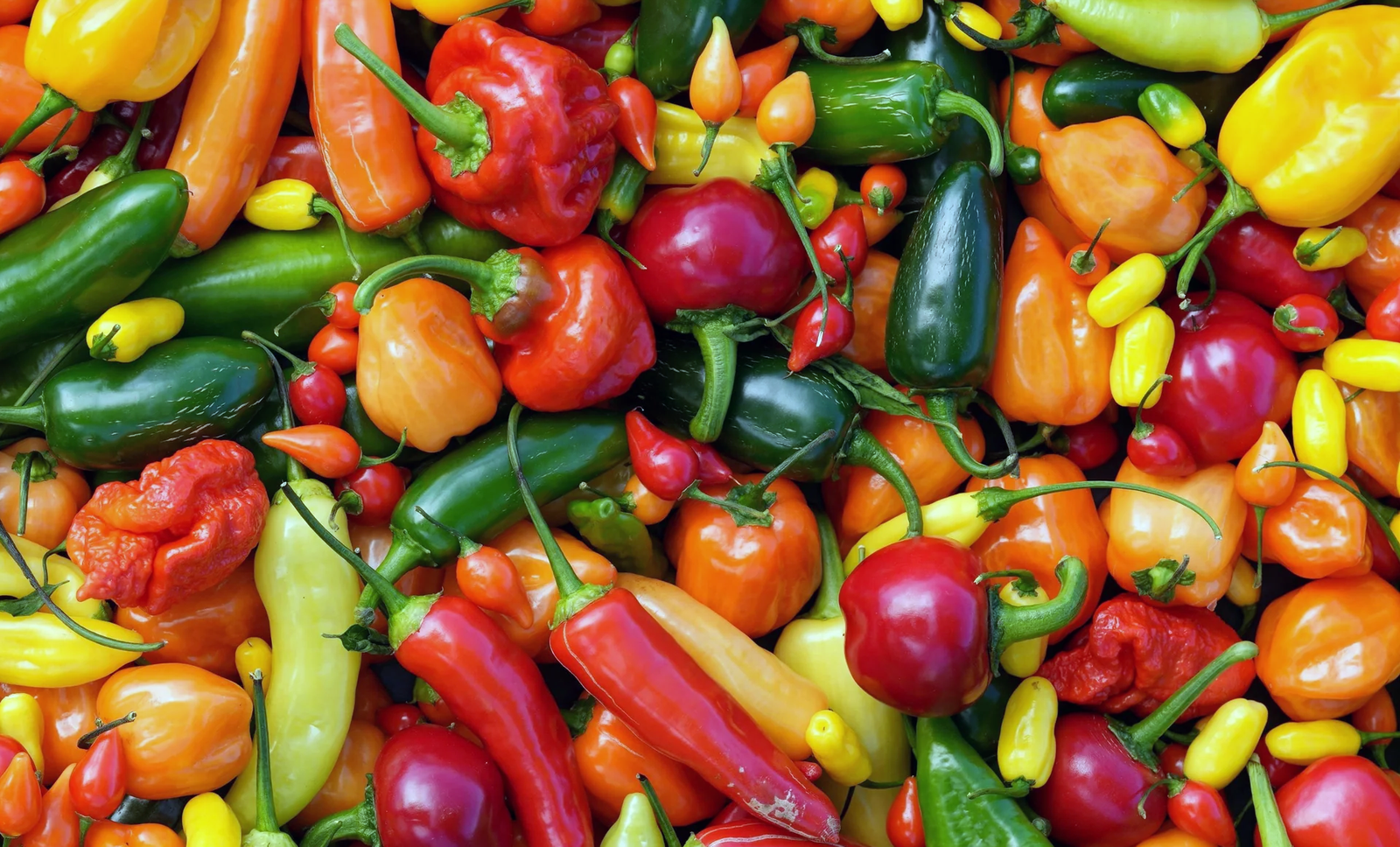 A mixture of different chilli peppers.
Welcome to FabulousFusionFood's Chilli-based Recipes Page — The recipes presented here all contain chilli peppers as a main ingredient. Chillies are the fruit of the chilli plant. Along with black pepper, they are unique spices in that they impart 'heat' to a dish without any associated bitterness. The dried and powdered fruit along with the fresh fruit and the dried fruit are all used as spices. As well as their capsaicin induced heat, chillies (depending on the variety or cultivar) can also imbue a dish with a fruity flavour. Smoked chillies are also used to impart a smokiness as well as heat to a dish.
Chilli peppers, also spelled chile or chili (from Classical Nahuatl chīlli [ˈt͡ʃiːlːi]) and known as hot peppers, are varieties of berry-fruit plants from the genus Capsicum, which are members of the nightshade family Solanaceae, cultivated for their pungency. Chilli peppers are widely used in many cuisines as a spice to add "heat" to dishes. Capsaicin and the related capsaicinoids give chillies their intensity when ingested or applied topically. Chilli peppers exhibit a range of heat and flavours. This diversity is the reason behind the availability of different types of chilli powder, each offering its own taste and heat level.
Chilli peppers originated in Central or South America and were first cultivated in Mexico. European explorers brought chillies back to the Old World in the late 16th century as part of the Columbian Exchange, which led to the cultivation of multiple varieties across the world for food and traditional medicine. Five Capsicum species have been widely cultivated: annuum, baccatum, chinense, frutescens, and pubescens.
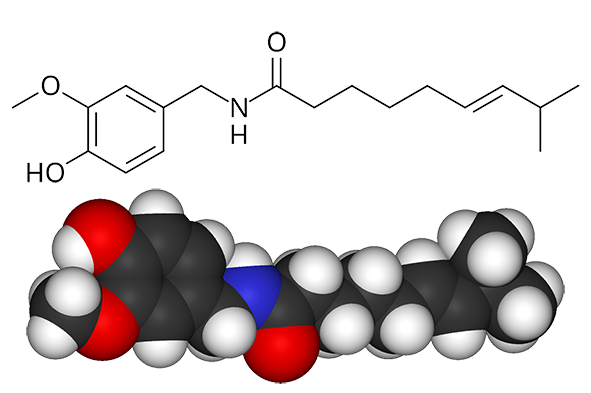 The capsaicin molecule, chemical structure (top) and space-filling model (bottom).
When peppers are consumed by mammals such as humans, capsaicin binds with pain receptors in the mouth and throat, potentially evoking pain via spinal relays to the brainstem and thalamus where heat and discomfort are perceived. However, birds are unable to perceive the hotness and so they can eat some of the hottest peppers. The intensity of the "heat" of chillies is commonly reported in Scoville heat units (SHU), invented by American pharmacist Wilbur Scoville in 1912. Historically, it was a measure of the dilution of an amount of chilli extract added to sugar syrup before its heat becomes undetectable to a panel of tasters; the more it has to be diluted to be undetectable, the more powerful the variety, and therefore the higher the rating. Since the 1980s, spice heat has been assessed quantitatively by high-performance liquid chromatography (HPLC), which measures the concentration of heat-producing capsaicinoids, typically with capsaicin content as the main measure
The alphabetical list of all the chilli-based on this site follows, (limited to 100 recipes per page). There are 2079 recipes in total:
Page 1 of 21
| Ćevapi Origin: Bosnia | Ai Manas (Chilli Sauce with Eggs) Origin: East Timor | Anardana Jheenga (Pomegranate-flavoured Prawns) Origin: India |
| Aad Maas (Goan Pork Rib Curry) Origin: India | Ailes de Poulet au Riz et Poivron (Chicken Wings with Rice and Chillies) Origin: Senegal | Andhra Kodi Kura (Andhra Chicken Curry) Origin: India |
| Aadun Origin: Nigeria | Air-dried Chillies Origin: Mexico | Andouille Sausage Origin: Cajun |
| Aaloo Gosht (Mutton Curry with Potatoes) Origin: Pakistan | Air-dried Green Chillies Origin: Mexico | Anguilla Green Seasoning Origin: Anguilla |
| Aam Aur Podina ki Chatni (Mango and Mint Chutney) Origin: India | Aji Chombo (Panamanian Hot Sauce) Origin: Panama | Anguilla Habanero Hot Sauce Origin: Anguilla |
| Aam Ka Meetha Achaar (Sweet Mango Chutney) Origin: India | Ají Criollo (Ecuadorian Hot Sauce) Origin: Ecuador | Anguilla Wet Rub Origin: Anguilla |
| Abacha Ncha (Dried Cassava with Garden Eggs) Origin: Nigeria | Ají de Tamarillo (Ecuadorian Tree Tomato Hot Sauce) Origin: Ecuador | Anguillan Barbecue Sauce Origin: Anguilla |
| Abak (Palm Nut Soup) Origin: Nigeria | Ají Panca Paste Origin: Peru | Anticuchos (Grilled Beef Heart Skewers) Origin: Bolivia |
| Acar (Indonesian cucumber pickles) Origin: Indonesia | Aji Verde (Spicy Peruvian Green Sauce) Origin: Peru | Anticuchos Picantes (Spicy Kebabs) Origin: Mexico |
| Accras de Morue Origin: French Guiana | Ajiaco Colombiano (Colombian Ajiaco) Origin: Colombia | Antiguan Green Seasoning Origin: Antigua |
| Accras de Morue (Salt Cod Fritters) Origin: Saint Barthelemy | Ajvar (Aubergine and Pepper Dip) Origin: Serbia | Antiguan Hot Sauce Origin: Antigua |
| Accras de Morue (Salt Cod Fritters) Origin: Sint Maarten | Akara (Black-eyed Pea Fritters) Origin: Nigeria | Antiguan Pepper Shrimp Origin: Antigua |
| Accras de Morue (Salt Cod Fritters) Origin: Saint-Martin | Akara Seke-pu (Bean and Melon Seed Fritters) Origin: Nigeria | Antillean Barbecue Sauce Origin: Sint Maarten |
| Achaari Jhinga (Indian Pickled Prawns) Origin: India | Alapa (Palm-oil Stew) Origin: Nigeria | Antillean Barbecue Sauce Origin: Guadeloupe |
| Achard de pahua confit (Achard of Confit of Pahua) Origin: Tahiti | Albóndigas de Sardinas (Sardine Meatballs) Origin: Equatorial Guinea | Antillean Barbecue Sauce Origin: Martinique |
| Achari Masala Origin: India | Alitas de pollo picante (Spicy Chicken Wings) Origin: Ecuador | Antillean Barbecue Sauce Origin: Saint-Martin |
| Achari Roast Chicken Origin: Pakistan | Almogrote Gomero (Cheese and Tomato Paste) Origin: Spain | Antillean Barbecue Sauce Origin: Saint Barthelemy |
| Achu Spice Blend Origin: Cameroon | Aloo Bhaji Origin: India | Apricot Blatjang Origin: South Africa |
| Adalu (Bean and Sweetcorn Pottage) Origin: Nigeria | Aloo Bharta (Indian Mashed Potatoes) Origin: Anglo-Indian | Arjoli Dip Origin: Malta |
| Adjika (Abkhazian Paprika Sauce) Origin: Abkhazia | Aloo Dhaniya (Balti Potatoes and Coriander) Origin: India | Aromatic Lamb with Ginger and Potatoes Origin: Ireland |
| Adobo à la Norteña (Northern-style Adobo Stew) Origin: Peru | Aloo Kari (Curried Potatoes) Origin: India | Arrabiata Pasta Sauce Origin: Italy |
| Adobo de Pollo Origin: Peru | Aloo Paratha (Flatbread with a Spicy Potato Stuffing) Origin: India | Arroz Rojo (Mexican Red Rice) Origin: Mexico |
| Adobo Sauce Origin: Mexico | Aloo Pie Origin: Trinidad | Aruba Sambal Tomat (Tomato Sambal) Origin: Aruba |
| Adobo Valentine Lamb Origin: American | Alu Achari Origin: India | Aruban Curried Chicken Origin: Aruba |
| Adun Origin: Nigeria | Alubias Blancas Con Almejas (White Beans with Clams) Origin: Spain | Aruban Curried Goat Origin: Aruba |
| Afang Soup Origin: Nigeria | Am Ke Achar (Fijian Mango Pickle) Origin: Fiji | Aruban Curried Mutton Origin: Aruba |
| Afghan Kofta Curry Origin: Afghanistan | Amb Halad Ka Achar (Zedoary Pickle) Origin: India | Aruban Curry Goat Origin: Aruba |
| African Chicken Wings Origin: African Fusion | Ambot Tik (Goan Shark Curry) Origin: India | Asaro (Yam Pottage) Origin: Nigeria |
| African Fish Curry Powder Origin: West Africa | Ambotic Origin: Mozambique | Asaro (Special Yam Pottage) Origin: Nigeria |
| African Hot Sauce Origin: sub-Saharan Africa | Ambrocal Origin: Seychelles | Asaro II (Yam Porridge) Origin: Nigeria |
| African Stew Curry Powder Origin: West Africa | Ambuyat Tempoyak Origin: Brunei | Asian Duck Curry Origin: Fusion |
| Afrikaanse Yakhni Origin: South Africa | Amiwo (Beninese Maize Porridge) Origin: Benin | Assaisonnement Vert (Guianan Green Seasoning) Origin: French Guiana |
| Agidi Jollof Origin: Nigeria | Amiwo au Poulet (Chicken Amiwo) Origin: Benin | |
| Agushi Soup (Ghanaian Egusi Soup) Origin: Ghana | Amiwo au Poulet 2 (Amiwo with Chicken) Origin: Benin |
Page 1 of 21