FabulousFusionFood's Chilli-based Recipes 8th Page
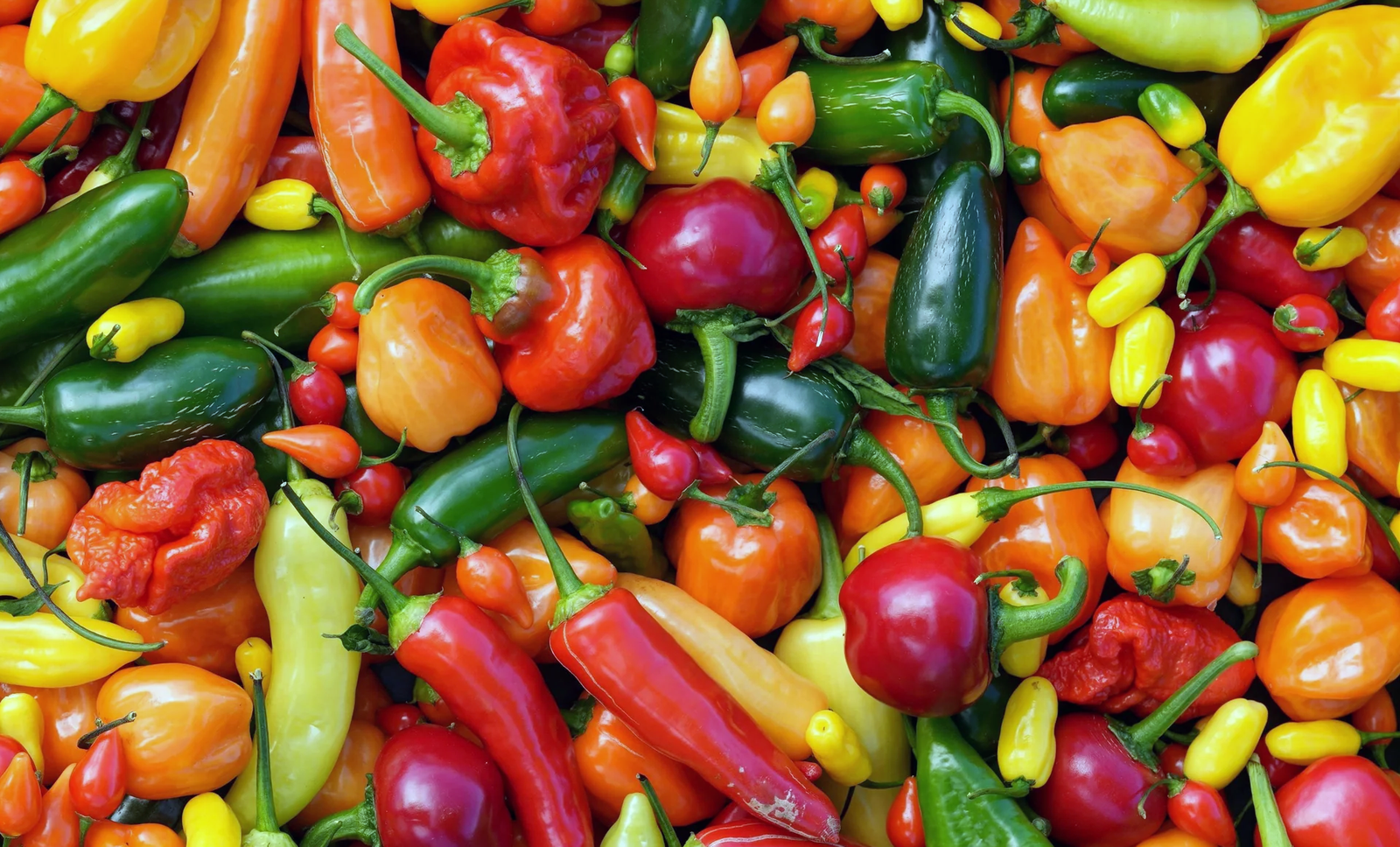 A mixture of different chilli peppers.
Welcome to FabulousFusionFood's Chilli-based Recipes Page — The recipes presented here all contain chilli peppers as a main ingredient. Chillies are the fruit of the chilli plant. Along with black pepper, they are unique spices in that they impart 'heat' to a dish without any associated bitterness. The dried and powdered fruit along with the fresh fruit and the dried fruit are all used as spices. As well as their capsaicin induced heat, chillies (depending on the variety or cultivar) can also imbue a dish with a fruity flavour. Smoked chillies are also used to impart a smokiness as well as heat to a dish.
Chilli peppers, also spelled chile or chili (from Classical Nahuatl chīlli [ˈt͡ʃiːlːi]) and known as hot peppers, are varieties of berry-fruit plants from the genus Capsicum, which are members of the nightshade family Solanaceae, cultivated for their pungency. Chilli peppers are widely used in many cuisines as a spice to add "heat" to dishes. Capsaicin and the related capsaicinoids give chillies their intensity when ingested or applied topically. Chilli peppers exhibit a range of heat and flavours. This diversity is the reason behind the availability of different types of chilli powder, each offering its own taste and heat level.
Chilli peppers originated in Central or South America and were first cultivated in Mexico. European explorers brought chillies back to the Old World in the late 16th century as part of the Columbian Exchange, which led to the cultivation of multiple varieties across the world for food and traditional medicine. Five Capsicum species have been widely cultivated: annuum, baccatum, chinense, frutescens, and pubescens.
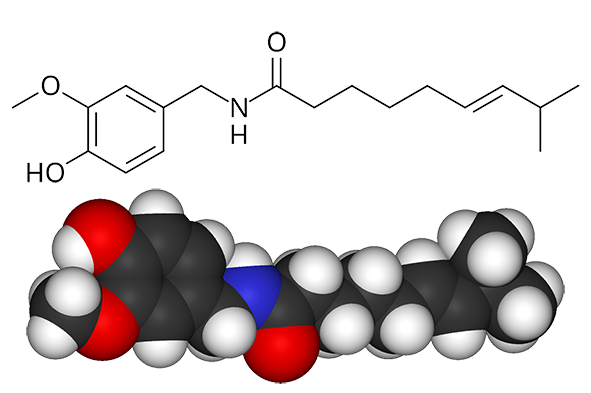 The capsaicin molecule, chemical structure (top) and space-filling model (bottom).
When peppers are consumed by mammals such as humans, capsaicin binds with pain receptors in the mouth and throat, potentially evoking pain via spinal relays to the brainstem and thalamus where heat and discomfort are perceived. However, birds are unable to perceive the hotness and so they can eat some of the hottest peppers. The intensity of the "heat" of chillies is commonly reported in Scoville heat units (SHU), invented by American pharmacist Wilbur Scoville in 1912. Historically, it was a measure of the dilution of an amount of chilli extract added to sugar syrup before its heat becomes undetectable to a panel of tasters; the more it has to be diluted to be undetectable, the more powerful the variety, and therefore the higher the rating. Since the 1980s, spice heat has been assessed quantitatively by high-performance liquid chromatography (HPLC), which measures the concentration of heat-producing capsaicinoids, typically with capsaicin content as the main measure
The alphabetical list of all the chilli-based on this site follows, (limited to 100 recipes per page). There are 2079 recipes in total:
Page 8 of 21
| Gaeng Khiaw Waen (Green Curry with Pork) Origin: Thailand | Ghanaian Tomato Gravy Origin: Ghana | Green Bean Bredie Origin: South Africa |
| Gaeng Ki Lek (Northern Thai Pork and Ki Lek Curry with Fingerroot) Origin: Thailand | Ginger Prawns with Oyster Mushrooms Origin: China | Green Chilli Paste Origin: Britain |
| Gaeng Ki Lek (Northern Thai Pork and Ki Lek Curry with Fingerroot) Origin: Thailand | Ginger, Chicken and Coconut Soup Origin: Fusion | Green Fig and Saltfish Origin: Saint Lucia |
| Gaeng Pa (Jungle Curry Paste) Origin: Thailand | Glazed Duckling with Pineapple Salsa Origin: Fusion | Green Mango Chutney with Cuban Oregano Origin: Trinidad |
| Gaeng Phet Gai (Red Chicken Curry) Origin: Laos | Goan Crab Claw Curry Origin: India | Green Masala Origin: India |
| Gaeng Som (Thai Sour Curry) Origin: Thailand | Goan Fish Curry Origin: India | Green Pea and Liver Curry Origin: Sri Lanka |
| Gaeng Som (Thai Sour Curry) Origin: Thailand | Goan Lamb Xacutti Origin: India | Green Stew Origin: Nigeria |
| Gaeng Som (Thai Sour Orange Curry) Origin: Thailand | Goan Mackerel Masala Origin: India | Green Yoghurt Chutney Origin: Pakistan |
| Galettes de couac à la sauce tomate (Couac pancakes with tomato sauce) Origin: French Guiana | Goat and Aubergine Kebabs Origin: Haiti | Grenada Callaloo Soup Origin: Grenada |
| Galo Soup Origin: Liberia | Goat Brochettes Origin: Rwanda | Grenadian Hot Pepper Sauce Origin: Grenada |
| Gambian Benachin Origin: Gambia | Goat Curry II Origin: Fusion | Grenadian Nutmeg Chicken Curry Origin: Grenada |
| Gambian Fish Pepper Soup Origin: Gambia | Goat Curry with Potatoes Origin: Pakistan | Grilled Orange Roughy Origin: New Zealand |
| Gambian Fish Yassa Origin: Gambia | Goat in the Burmese Style Origin: Fusion | Griots Origin: Haiti |
| Gambian Oxtail Pepper Soup Origin: Gambia | Goat Meat Groundnut Soup Origin: Ghana | Guacamole Origin: Mexico |
| Gambian Pepper Soup II Origin: Gambia | Goat Meat Pepper Soup with Calabash Nutmeg Origin: Nigeria | Guai Daun Singlong Tumbuk (Grilled Fish with Greens) Origin: Sumatra |
| Garden Eggs Stew Origin: Ghana | Goat Meat Soup Origin: Liberia | Guai wei ji si (Bang-bang Chicken) Origin: China |
| Gari Gnignan Origin: Benin | Gochugaru Seasoning Blend Origin: Korea | Guava Peppersauce Origin: Turks Caicos |
| Gari Piñon Origin: Togo | Gochujang (Korean Fermented Chilli Paste) Origin: Korea | Guiana Green Seasoning Origin: French Guiana |
| Garlic Chilli Chicken Origin: Britain | Goen Hogay (Cucumbers with Onion and Cheese) Origin: Bhutan | Guiana Rice and Peas Origin: French Guiana |
| Garlic Mustard Greens Bhutuwa Origin: Fusion | Golbeda Achar (Nepali Tomato Achar) Origin: Nepal | Guinean Avocado Sauce Origin: Equatorial Guinea |
| Gateaux Piments (Chilli Cakes) Origin: Mauritius | Gombapaprikás (Mushroom Paprikash) Origin: Hungary | Guinean Fish Grill with Three Sauces Origin: Equatorial Guinea |
| Gato Piman (Spicy Cakes) Origin: Seychelles | Gombo et Kissar (Okra Stew with Kissar) Origin: Chad | Guinness Bottle Chicken Stew Origin: Saint Vincent |
| Gbékui (Spinach Sauce) Origin: Togo | Gombos au Boeuf (Beef and Okra) Origin: Central African Republic | Guisado Perviuano de la Calabaza (Peruvian Pumpkin Stew) Origin: Peru |
| Gbegiri (Bean Stew) Origin: Nigeria | Gomen Kitfo (Spiced Curd Cheese with Greens) Origin: Ethiopia | Gulai Lemak (Beef Spicy Stew) Origin: Indonesia |
| Gboma Dessi (Spinach Sauce with Beef) Origin: Togo | Gong Bao Chicken Origin: China | Gungo Rice and Peas Origin: Jamaica |
| Gem Squash Stuffed with Braised Mince Origin: South Africa | Gorkhali Lamb Curry (Nepalese Lamb Curry) Origin: Nepal | Gutti Vankaya (Stuffed Brinjal Curry) Origin: India |
| Gesmoorde Eier Origin: South Africa | Goulash Origin: Hungary | Guyana Black Pudding Origin: Guyana |
| Gesmoorde Vis (Salt Cod and Potatoes in Tomato Sauce) Origin: South Africa | Grain Mustard Based Fish Curry Origin: India | Guyana Pressure-cooker Mango Sour Origin: Guyana |
| Ghanaian Cabbage Stew Origin: Ghana | Grannat Chop Origin: Sierra Leone | Guyana White Pudding Origin: Guyana |
| Ghanaian Groundnut Soup Origin: Ghana | Grape Jelly Meatballs Origin: American | Guyanese Crab Callaloo Origin: Guyana |
| Ghanaian Jollof Rice Origin: Ghana | Grasscutter Soup with Okra Origin: Ghana | Guyanese Green Seasoning (Guianan Green Seasoning) Origin: Guyana |
| Ghanaian Pepper Soup Origin: Ghana | Grasscutter Stew Origin: Ghana | Guyanese Hot Pepper Sauce Origin: Guyana |
| Ghanaian Spaghetti Jollof Origin: Ghana | Great Balls of Fire Dip Origin: American | |
| Ghanaian Street Indomie Origin: Ghana | Green Apple Curry Origin: Sri Lanka |
Page 8 of 21