FabulousFusionFood's Chilli-based Recipes 3rd Page
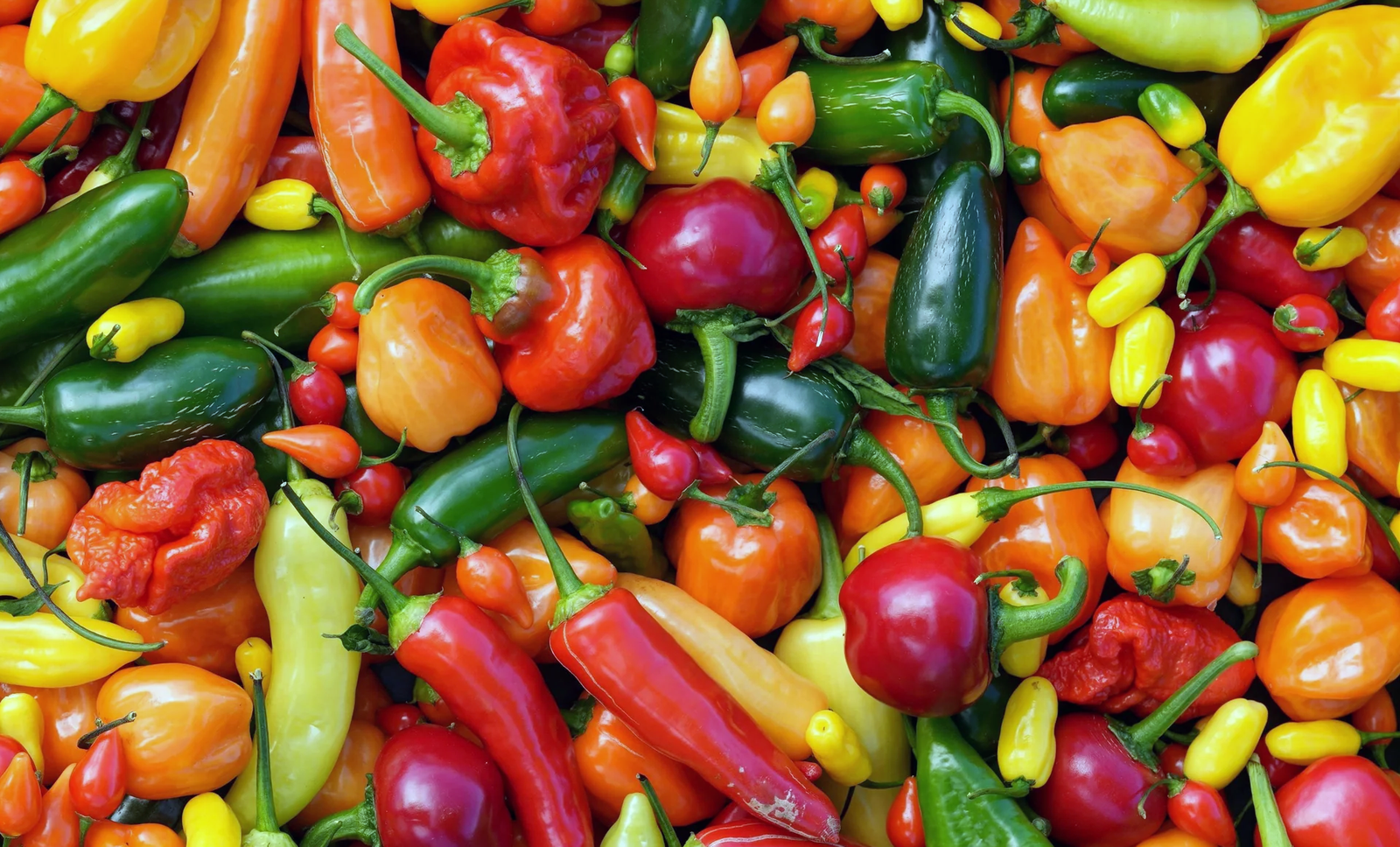 A mixture of different chilli peppers.
Welcome to FabulousFusionFood's Chilli-based Recipes Page — The recipes presented here all contain chilli peppers as a main ingredient. Chillies are the fruit of the chilli plant. Along with black pepper, they are unique spices in that they impart 'heat' to a dish without any associated bitterness. The dried and powdered fruit along with the fresh fruit and the dried fruit are all used as spices. As well as their capsaicin induced heat, chillies (depending on the variety or cultivar) can also imbue a dish with a fruity flavour. Smoked chillies are also used to impart a smokiness as well as heat to a dish.
Chilli peppers, also spelled chile or chili (from Classical Nahuatl chīlli [ˈt͡ʃiːlːi]) and known as hot peppers, are varieties of berry-fruit plants from the genus Capsicum, which are members of the nightshade family Solanaceae, cultivated for their pungency. Chilli peppers are widely used in many cuisines as a spice to add "heat" to dishes. Capsaicin and the related capsaicinoids give chillies their intensity when ingested or applied topically. Chilli peppers exhibit a range of heat and flavours. This diversity is the reason behind the availability of different types of chilli powder, each offering its own taste and heat level.
Chilli peppers originated in Central or South America and were first cultivated in Mexico. European explorers brought chillies back to the Old World in the late 16th century as part of the Columbian Exchange, which led to the cultivation of multiple varieties across the world for food and traditional medicine. Five Capsicum species have been widely cultivated: annuum, baccatum, chinense, frutescens, and pubescens.
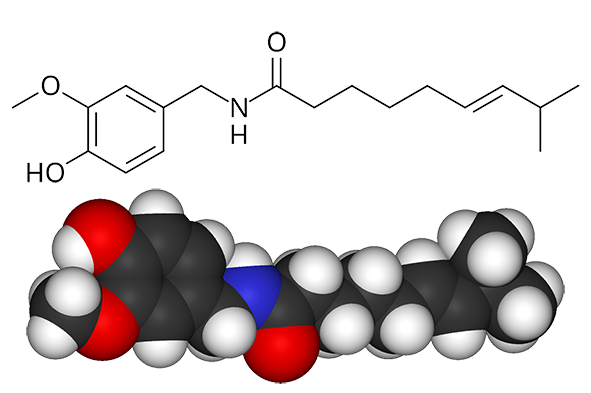 The capsaicin molecule, chemical structure (top) and space-filling model (bottom).
When peppers are consumed by mammals such as humans, capsaicin binds with pain receptors in the mouth and throat, potentially evoking pain via spinal relays to the brainstem and thalamus where heat and discomfort are perceived. However, birds are unable to perceive the hotness and so they can eat some of the hottest peppers. The intensity of the "heat" of chillies is commonly reported in Scoville heat units (SHU), invented by American pharmacist Wilbur Scoville in 1912. Historically, it was a measure of the dilution of an amount of chilli extract added to sugar syrup before its heat becomes undetectable to a panel of tasters; the more it has to be diluted to be undetectable, the more powerful the variety, and therefore the higher the rating. Since the 1980s, spice heat has been assessed quantitatively by high-performance liquid chromatography (HPLC), which measures the concentration of heat-producing capsaicinoids, typically with capsaicin content as the main measure
The alphabetical list of all the chilli-based on this site follows, (limited to 100 recipes per page). There are 2079 recipes in total:
Page 3 of 21
| BIR Mushroom Vindaloo Origin: Britain | Breadfruit Puffs Origin: Guadeloupe | Cachupa Rica Origin: Cape Verde |
| BIR-style Hot-hot Catfish Curry Origin: Fusion | Breadfruit Puffs Origin: Martinique | Cafréal de Cordeiro (Lamb Cafréal) Origin: Angola |
| Bissap Beuguedj (Hibiscus Leaf Paste) Origin: Ghana | Brinjal and Dryfish Pahi Origin: Sri Lanka | Cafréal de Poulet (Chicken Cafréal) Origin: Angola |
| Bissara Origin: Morocco | Brinjal Bharta Origin: Anglo-Indian | Cafriela de Frango Origin: Guinea-Bissau |
| Bissara Chorba (Moroccan Broad Bean Soup) Origin: Morocco | Brochettes Burkinabé (Spiced Lamb Kebabs) Origin: Burkina Faso | Cailles au Paprika (Quails in Paprika Sauce) Origin: Chad |
| Bizar Spice Blend Origin: Qatar | Brochettes de Boeuf (Beef Kebabs) Origin: Rwanda | Cailles Grillées au Piment et Gingembre (Grilled Quail with Chilli and Ginger) Origin: Congo |
| Black Beans Origin: Mexico | Brochettes de Poulet Mariné aux Arachides (Marinated Chicken Skewers with Peanuts) Origin: Mali | Cajun Blackening Spices Origin: Cajun |
| Black Curry Powder Origin: Sri Lanka | Brodet na Dalmatinski Nacin (Fish, Dalmatian Style) Origin: Serbia | Cajun Chili Pork Origin: Cajun |
| Black Fungus Okra Soup Origin: Nigeria | Brôn (Brawn) Origin: Welsh | Cajun Crayfish Bread Origin: Cajun |
| Blanched Sea Blite with Thai Chilli Paste Origin: Thailand | Brown Sugar Brine for Turkey Origin: Britain | Cajun Crayfish Cornbread Origin: Cajun |
| Boatman's Curry Origin: India | Brunei Cutlets Origin: Brunei | Cajun Gravy Origin: Cajun |
| Bobófrito (Sao Tomean Fried Fish) Origin: Sao Tome | Brunswick Stew Origin: American | Cajun Hot Sauce Origin: Cajun |
| Boeuf et Feuilles de Manioc (Beef and Cassava Greens in Peanut Sauce) Origin: Gabon | Bucatini all'Amatriciana Origin: Italy | Cajun Tofu Gumbo Origin: Cajun |
| Boletes with Balsamic Vinegar Origin: Britain | Buffalo Chicken Pizza Origin: American | Calabrese Mushroom Chili Origin: American |
| Bolinhos de Bacalhau (Brazilian Salt Cod Balls) Origin: Brazil | Buffalo Chicken Wing Sauce Origin: America | Calalou (Beninese Callaloo) Origin: Benin |
| Bombay toast Origin: India | Buffalo Wings Origin: America | Calalou aux crabes (Crab Callaloo) Origin: Guadeloupe |
| Booshala Origin: Assyria | Bufuke with Onion Sauce Origin: Uganda | Calalu Origin: Benin |
| Borokhé Origin: Mali | Bukharan Pilaf Origin: Uzbekistan | Calco Stoba (Conch Stew) Origin: Aruba |
| Bosanski Lonac (Bosnian Pot Stew) Origin: Bosnia | Bulgur Wan Pot Origin: Sierra Leone | Caldeirada de Lulas a Madeirense (Madeira Squid Stew) Origin: Portugal |
| Bosanski Sarma (Stuffed Cabbage Leaves) Origin: Bosnia | Buljawou Origin: Sint Maarten | Caldo Branco (White Stew) Origin: Guinea-Bissau |
| Bosnian Goulash Origin: Bosnia | Bumbu Merah (Base Indonesian Red Spice Paste) Origin: Indonesia | Caldo de Arroz de Cebada (Beef and Pearl Barley Soup) Origin: Ecuador |
| Botswana Sosaties (Botswana Kebab) Origin: Botswana | Bund Gobi aur Narial (Coconut Cabbage) Origin: India | Caldo de Bagre (Catfish Soup) Origin: Ecuador |
| Botswana-style Beef Origin: Botswana | Burmese Curry Paste Origin: Myanmar | Caldo de Bicuda (Barracuda Stew) Origin: Guinea-Bissau |
| Bottom Belleh (Sierra Leonean Deep Fried Fish Pasties) Origin: Sierra Leone | Burundi Beans and Plantains Origin: Burundi | Caldo de Camaron (Prawn Soup) Origin: Mexico |
| Bouillie de Mil (Millet Porridge) Origin: Togo | Bushmeat Skewers with Cashew Nut Satay Origin: Namibia | Caldo de Chabéu (Palm Nut Stew) Origin: Guinea-Bissau |
| Bouillon d'awara (Awara Broth) Origin: French Guiana | Butternut Squash and Smoked Bacon Soup Origin: British | Caldo de Citi (Red Palm oil Stew) Origin: Guinea-Bissau |
| Bouillon de Crabes (Swimmer Crab Bouillon) Origin: Mauritius | Bygan Dhal Origin: India | Caldo de Hongos (Mexican Clear Mushroom Soup) Origin: Mexico |
| Bouillon de Petits Crabes (Stew of Small Crabs) Origin: Mauritius | Cëebu Jen II Origin: Senegal | Caldo de Mancarra (Chicken in Peanut Sauce) Origin: Guinea-Bissau |
| Boulettes à l'Igname (Fried Yam Balls) Origin: Togo | Caçarola de Frango com Cominho (Chicken Casserole with Cumin) Origin: Angola | Caldo de Peixe de Guiné-Bissau (Guinea-Bissau Style Fish Stew) Origin: Guinea-Bissau |
| Braaied Giant Wild Prawns with Peanuts and Coconut Origin: South Africa | Cabbage Egusi Soup Origin: Ghana | Caldou au Bissap (Flatfish with Hibiscus Flowers) Origin: Senegal |
| Braised Egg Dumplings in Chilli Broth Origin: China | Cabbage Kootu (Cabbage in Coconut Milk Gravy) Origin: Malaysia | Callaloo Origin: Trinidad |
| Braised Tuna Origin: Seychelles | Cabbage Soup with Spicy Meatballs Origin: Liberia | Callaloo Soup Origin: Saint Lucia |
| Breadfruit Puffs Origin: Saba | Cabbage with Chicken Origin: Guyana | |
| Breadfruit Puffs Origin: Dominica | Cabri aux Gombos et Patates Douces (Goat with Okra and Sweet Potatoes) Origin: Senegal |
Page 3 of 21