FabulousFusionFood's Stew Recipes 21st Page
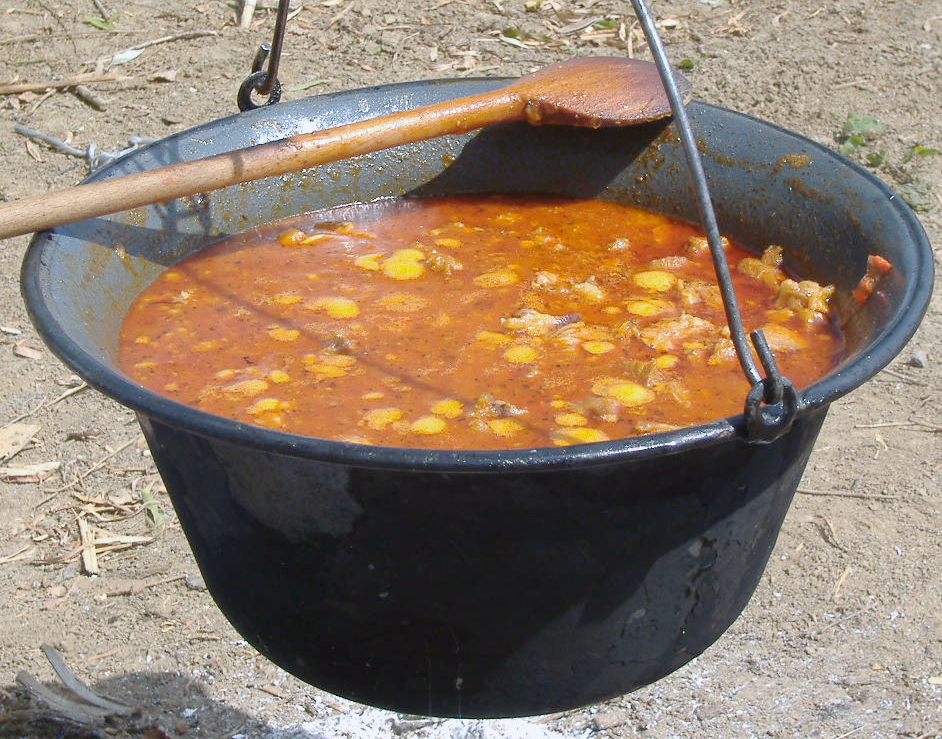 Classic goulash cooking outdoors in a traditional bogrács.
Welcome to FabulousFusionFood's Stew Recipes Page — Stews represent a combination of solid food ingredients that have been cooked in liquid and served in the resultant gravy. Ingredients can include any combination of vegetables and may include meat, especially tougher meats suitable for slow-cooking, such as beef, pork, venison, rabbit, lamb, poultry, sausages, and seafood. While water can be used as the stew-cooking liquid, stock is also common. A small amount of red wine or other alcohol is sometimes added for flavour. Seasonings and flavourings may also be added. Stews are typically cooked at a relatively low temperature (simmered, not boiled), allowing flavours to mingle.
Stews have been around almost nearly as long as humans have been cooking. All you need is a vessel to hold your ingredients and water and a means of heating that vessel. It can be as simple as a leather bag with stones heated in a fire dropped into it. So stews were almost certainly prepared during the Paleolithic and Neolithic periods, if not earlier. Once you have clay or metal pots you can prepare stews next to or set directly over a fire. Stews are low-maintenance cookery, generally not requiring that the cooking pot be observed continuously. The slow cooking is also ideal for tenderizing tougher cuts of meat (neck, shin, tail etc). As these also tend to be the most flavoursome parts of animals, this also means that stews can be extremely flavourful. Stews also pair well with the local staple: potatoes, rice, bread, yams, cassava etc.
Even in hunter-gatherer societies stews are useful in that the slow cooking can make the most of tough meat and it can be combined with foraged grains, leafy greens, nuts and starchy tubers to yield a flavourful, low maintenance and nutritious meal. With the advent of agriculture almost all grains are amenable to stewing and combining grains and legumes in a stew provides a ready way to gain all the essential amino acids that humans (particularly children) require.
The boiling process of making stews also helps sterilize the ingredients, killing harmful bacteria and viruses. It can also help neutralize harmful chemicals, such as the cyanogenic compounds in bitter cassava and helps reduce bitterness in leafy greens, making the food both safer to eat and more palatable. The addition of flavouring ingredients (fruit, spices, herbs) during the cooking process can also alter the flavours of stews, making them more palatable and more appealing. This is particularly the case when adding components with high umami content (certain fish, seaweed, cruciferous vegetables, beans, soy sauce, mushrooms etc).
It is little wonder that, taken globally, the list of stews presented on this site is a long one.
Some stews border on soups and the definition of whether a dish is a soup or a stew. A good example of this is Welsh cawl which can be served with more liquid as a soup or can be thickened as a stew and served with bread and/or potatoes. Most curries, due to their long, slow cooking and blend of ingredients can also be considered a subtype of stew.
Pretty much every culture on earth has a classic stew that's a major part of its cultural culinary repertoire. I have viewed and collected recipes for many of these on my travels. These and other classic stews from around the world are collected and presented here.
The alphabetical list of all the stew recipes on this site follows, (limited to 100 recipes per page). There are 2702 recipes in total:
Page 21 of 28
| Poulet à la N'Gatietro (Chicken in the Manner of N'Gatietro) Origin: Cote dIvoire | Powsowdie Origin: Scotland | Quabili Pilau (Lamb and Yellow Rice with Carrots and Raisins) Origin: Afghanistan |
| Poulet à la Noix de Coco et aux Arachides (Chicken with Coconut and Peanuts) Origin: Gabon | Prassa (Leek and Rice Stew) Origin: Armenia | Queue de Boeuf Braisée (Braised Oxtail) Origin: Equatorial Guinea |
| Poulet à la Provençale (Provence-style Chicken) Origin: France | Prawn Kofta Curry Origin: Anglo-Indian | Queue de Boeuf Pinon (Oxtail Pinon) Origin: Togo |
| Poulet à la Sauce Blanche (Chicken with White Sauce) Origin: Benin | Prawn Patia Origin: India | Quiabos com Camarão (Okra with Prawns) Origin: Mozambique |
| Poulet à la Sauce Tomate (Chicken with Tomato Sauce) Origin: Gabon | Prebranac (Serbian-style Baked Beans) Origin: Serbia | Quizaca (Cassava Leaf Stew) Origin: Angola |
| Poulet à la mangue et fonio (Mango Chicken with Fonio) Origin: Mali | Pressure Cooker Baked Beans Origin: American | Qurutob Origin: Tajikistan |
| Poulet à la Moambe (Chicken Moambe) Origin: DR-Congo | Pressure Cooker Beef and Stout Stew Origin: Ireland | Quzi (Iraqi Lamb over Rice) Origin: Iraq |
| Poulet à la Moutarde (Gabon Mustard Chicken) Origin: Gabon | Pressure Cooker Beef in Pepper Sauce Origin: American | Râgout de Boeuf aux Bananes (Beef Stew with Plantains) Origin: Central African Republic |
| Poulet au Beurre de Cacahuète (Chicken with Peanut Butter) Origin: Senegal | Pressure Cooker Cajun Meatball Stew Origin: American | Rabbit in Tomato and Emperor's Mint Sauce Origin: Britain |
| Poulet au Citron Vert (Chicken with Limes) Origin: DR-Congo | Pressure Cooker Curried Beef Stew Origin: South Africa | Rabbit in Tomato and Mint Sauce Origin: Andorra |
| Poulet au Gingembre (Ginger Chicken) Origin: Cote dIvoire | Pressure Cooker Curried Squash Origin: Fusion | Rabbit Pilaf Origin: Uzbekistan |
| Poulet aux Arachides à la Togolaise (Chicken with Peanuts, Togo Fashion) Origin: Togo | Pressure Cooker Dhal Origin: Fusion | Rabbit Pilaf Origin: Uzbekistan |
| Poulet aux Arachides de Niger (Chicken with Peanuts, Niger Style) Origin: Niger | Pressure Cooker Jambalaya Origin: American | Rabbit Stew with Mallow Cheeses Origin: British |
| Poulet aux Bananes Plantains (Chicken with Plantains) Origin: Cameroon | Pressure Cooker Ratatouille Origin: Britain | Rabo Encendido (Spicy Dominican Oxtail Stew) Origin: Dominican Republic |
| Poulet aux Bananes Plantains (Chicken with Plantains) Origin: Madagascar | Pressure Cooker Vegetable and Coconut Curry Origin: Fusion | Rad Na Moo (Pork with Noodles in Gravy) Origin: Thailand |
| Poulet Bicyclette Origin: Burkina Faso | Psarósoupa Kakavia (Cretan Seafood Stew) Origin: Greece | Ragoût aux épinards (Spinach Stew) Origin: Central African Republic |
| Poulet Créole (Creole Chicken) Origin: Mauritius | Psarossoupa Avgolemno (Fish Soup with Egg and Lemon) Origin: Greece | Ragoût Béninoise (Beninese Ragout) Origin: Benin |
| Poulet de Comores (Comorian Chicken) Origin: Comoros | Psoai (Pork in Piquant Sauce) Origin: Roman | Ragoût d'Ignames et Boeuf (Beef Stew with Yams) Origin: Britain |
| Poulet de Guinée (Guinean Chicken) Origin: Guinea | Pua’atoro aux Pommes de Terre Rissolées (Corned Beef with Fried Potatoes) Origin: Tahiti | Ragoût de Chévre au Riz (Goat Stew with Rice) Origin: DR-Congo |
| Poulet Directeur Général Origin: Cameroon | Puerto Rican Picadillo (Puerto Rican Stewed Minced Beef) Origin: Puerto Rico | Ragoût de Porc au Citron Vert (Ragoût of Pork with Lime) Origin: Senegal |
| Poulet en Cocotte (French Chicken Casserole) Origin: France | Puhādi (Mesopotamian Lamb Stew) Origin: Mesopotamia | Ragoût de Porc aux Potates Douces (Pork Stew with Sweet Potatoes) Origin: Cote dIvoire |
| Poulet Fafa (Chicken with Taro Leaves) Origin: Tahiti | Pulled BBQ Pork Tacos with Wilted Cabbage Salad (Pulled BBQ Pork Tacos with Wilted Cabbage Salads) Origin: Britain | Ragoût Njansang (Njansang Stew) Origin: Central African Republic |
| Poulet Fafa (Chicken with Taro Leaves) Origin: Wallis Futuna | Pultes (Meat Pottage) Origin: Roman | Ragoût of Turkey Origin: Britain |
| Poulet Kédjénou (Kédjénou Chicken) Origin: Cote dIvoire | Pultes Cum Iure Oenococti (Pottage with Wine Sauce) Origin: Roman | Ragout Breton à la saucisse (Breton Stew with sausage) Origin: France |
| Poulet Massalé (Chicken Massala) Origin: Reunion | Pumpkin Chili Origin: American | Ragout d'Igname (Yam Porridge) Origin: Burkina Faso |
| Poulet Moambe (Chicken Moambe) Origin: Congo | Pumpkin Curry Origin: Britain | Ragoût de cabri créole (Creole Goat Stew) Origin: Guadeloupe |
| Poulet Véronique (Chicken Véronique) Origin: France | Pumpkin Goulash Origin: American | Ragoût de chatrou créole (Creole Chatrou Stew) Origin: Guadeloupe |
| Poulet Yassa (Chicken yassa) Origin: Senegal | Pumpkin Sambar Origin: India | Ragoût de lambi (Conch stew) Origin: Saint-Martin |
| Poulet Yassa (Chicken Yassa) Origin: Gambia | Pumpkin Vine Tips Tarkari Origin: Nepal | Ragoût de poisson (Creole-style fish Stew) Origin: Saint-Martin |
| Poulet Yassa (Chicken Yassa) Origin: Guinea-Bissau | Punjene Paprika (Stuffed Peppers) Origin: Serbia | Ragout de Poisson au Njansang (Stewed Fish with Njansang) Origin: Cameroon |
| Poulet Yassa Burkinabé (Burkinabe Chicken Yassa) Origin: Burkina Faso | Purée d'Aubergines (Aubergine Purée) Origin: Rwanda | Ragù d'anatra (Venetian Duck Ragu) Origin: Italy |
| Poulet Yassa de Guinée (Guinean Poulet Yassa) Origin: Guinea | Purée d'Azinkokoui au Boudin (Azinkokoui Purée with Boudin Sausage) Origin: Togo | Ragu di Carne Origin: San Marino |
| Poulet Yassa Malienne (Malian Chicken Yassa) Origin: Mali | Qatari Jareesh Origin: Qatar | |
| Poulet Yassa Mauritanienne (Mauritanian Chicken Yassa) Origin: Mauritania | Qatari Machboos Origin: Qatar |
Page 21 of 28