FabulousFusionFood's Chilli-based Recipes 9th Page
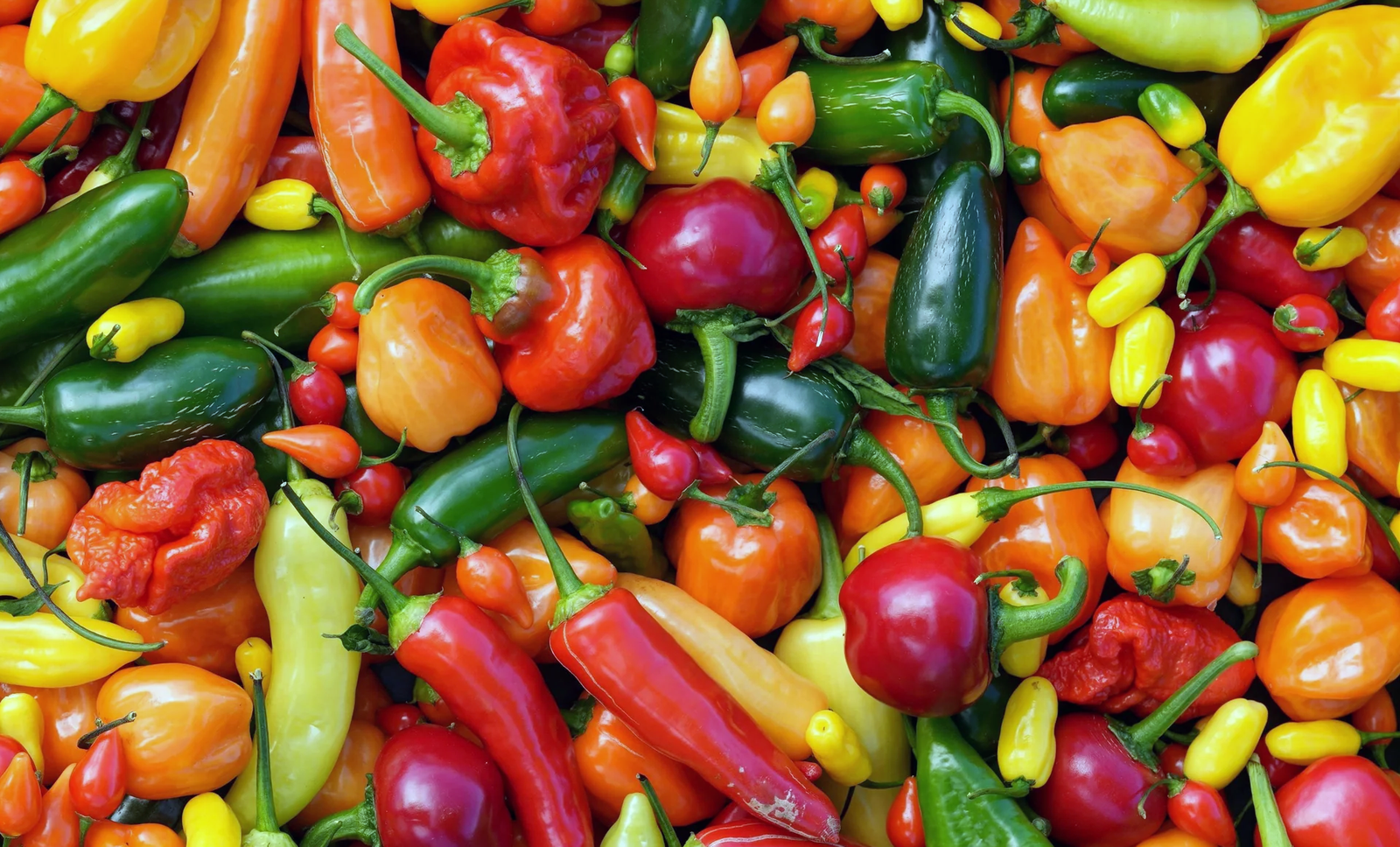 A mixture of different chilli peppers.
Welcome to FabulousFusionFood's Chilli-based Recipes Page — The recipes presented here all contain chilli peppers as a main ingredient. Chillies are the fruit of the chilli plant. Along with black pepper, they are unique spices in that they impart 'heat' to a dish without any associated bitterness. The dried and powdered fruit along with the fresh fruit and the dried fruit are all used as spices. As well as their capsaicin induced heat, chillies (depending on the variety or cultivar) can also imbue a dish with a fruity flavour. Smoked chillies are also used to impart a smokiness as well as heat to a dish.
Chilli peppers, also spelled chile or chili (from Classical Nahuatl chīlli [ˈt͡ʃiːlːi]) and known as hot peppers, are varieties of berry-fruit plants from the genus Capsicum, which are members of the nightshade family Solanaceae, cultivated for their pungency. Chilli peppers are widely used in many cuisines as a spice to add "heat" to dishes. Capsaicin and the related capsaicinoids give chillies their intensity when ingested or applied topically. Chilli peppers exhibit a range of heat and flavours. This diversity is the reason behind the availability of different types of chilli powder, each offering its own taste and heat level.
Chilli peppers originated in Central or South America and were first cultivated in Mexico. European explorers brought chillies back to the Old World in the late 16th century as part of the Columbian Exchange, which led to the cultivation of multiple varieties across the world for food and traditional medicine. Five Capsicum species have been widely cultivated: annuum, baccatum, chinense, frutescens, and pubescens.
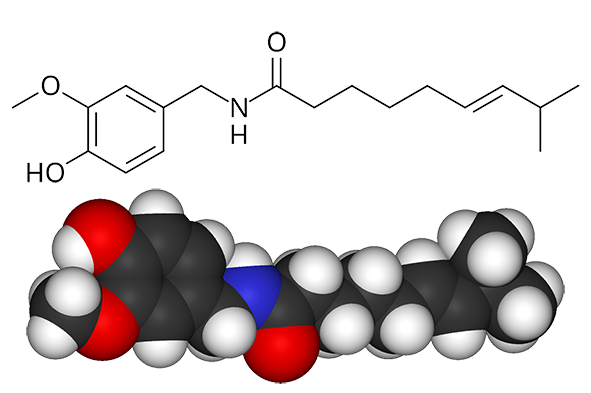 The capsaicin molecule, chemical structure (top) and space-filling model (bottom).
When peppers are consumed by mammals such as humans, capsaicin binds with pain receptors in the mouth and throat, potentially evoking pain via spinal relays to the brainstem and thalamus where heat and discomfort are perceived. However, birds are unable to perceive the hotness and so they can eat some of the hottest peppers. The intensity of the "heat" of chillies is commonly reported in Scoville heat units (SHU), invented by American pharmacist Wilbur Scoville in 1912. Historically, it was a measure of the dilution of an amount of chilli extract added to sugar syrup before its heat becomes undetectable to a panel of tasters; the more it has to be diluted to be undetectable, the more powerful the variety, and therefore the higher the rating. Since the 1980s, spice heat has been assessed quantitatively by high-performance liquid chromatography (HPLC), which measures the concentration of heat-producing capsaicinoids, typically with capsaicin content as the main measure
The alphabetical list of all the chilli-based on this site follows, (limited to 100 recipes per page). There are 2079 recipes in total:
Page 9 of 21
| Guyanese Metemgee Origin: Guyana | Hot Enchilada Sauce Origin: America | Isi Ewu (Spiced Goat Head) Origin: Nigeria |
| Guyanese Pepper Pot Origin: Guyana | Hot Green Tamarind Chicken Origin: Indonesia | Island Fish Tea Origin: Bahamas |
| Habanero Hot Sauce Origin: America | Hot Jalfrezi Spices Origin: African Fusion | Iwuk Efere Origin: Nigeria |
| Halászlé (Fisherman's Soup) Origin: Hungary | Hot Pepper Rowan and Apple Jelly Origin: British | Jackfruit Kofta Curry Origin: India |
| Halloween Pumpkin and Smoked Bacon Soup Origin: British | Hot Pepper Sauce Origin: West Africa | Jalapeño Buffalo Burgers Origin: American |
| Hambúrger (Brazilian-style Burgers) Origin: Brazil | Hot Pinto Bean Chili Origin: American | Jalapeño Wonton Puffs Origin: American |
| Hamutzim (Israeli Pickled Vegetables) Origin: Israel | Hot Sesame Beef Origin: China | Jalapeno Cornbread Origin: American |
| Hapai Hantue (Filled Buckwheat Dumplings) Origin: Bhutan | Hot Sweet Mango Chutney Origin: Anglo-Indian | Jalfrezi Curry Powder Origin: India |
| Hara Mircha (Bell Pepper Curry) Origin: India | Hot Turkey and Black Bean Chili Origin: American | Jalfrezi Masala Origin: India |
| Hararat (Libyan Five-spice) Origin: Libya | Hot Wings in Haw Sauce Origin: Britain | Jamaican Beef Patties Origin: Jamaica |
| Hari Mirch ka Achar (Indian Pickled Green Chillies) Origin: India | How to Roast Chillies Origin: America | Jamaican Brown Fish Stew Origin: Jamaica |
| Harissa Origin: North Africa | Huevos Rancheros Origin: Costa Rica | Jamaican Curried Goat Origin: Jamaica |
| Hassa (Libyan Gravy) Origin: Libya | Hungarian Goulash Soup Origin: Britain | Jamaican Curry Chicken with Coconut Rice Origin: Jamaica |
| Heat Wave Chili Origin: American | Hyderabad Mutton Dopyaza Origin: India | Jamaican Fiery Spiced Pork Marinade Origin: Jamaica |
| Hedgehog Fungus and Filo Parcels Origin: Britain | Ibiharage (Burundian Fried Beans) Origin: Burundi | Jamaican Goat Patties Origin: Jamaica |
| Heinz 57 Sauce Copycat Origin: American | Ibiharage II (Fried Beans II) Origin: Burundi | Jamaican Jerk Chicken Origin: Jamaica |
| Himalayan Balsam Seed Curry Origin: Fusion | Igbo MoinMoin Origin: Nigeria | Jamaican Jerk Marinade Origin: Jamaica |
| Hinga Mirsang (Green Chillies in Asafoetida) Origin: India | Ignames à la sauce tomate (Yams with Tomato Sauce) Origin: Burkina Faso | Jamaican Jerk Seasoning Origin: Jamaica |
| Hlalem (Pasta with Beans) Origin: Tunisia | Ikan Sabuko (Grilled Tamarind Fish) Origin: East Timor | Jamaican Mutton and Lime Leaf Origin: Jamaica |
| Home-made Chilli Oil Origin: China | Ikokore Origin: Nigeria | Jamaican Pepper Sauce Origin: Jamaica |
| Home-made Deggi Mirch Origin: India | Imli Chutney (Tamarind Chutney) Origin: Pakistan | Jamaican Pickapeppa Sauce Origin: Jamaica |
| Home-made Diced Tomatoes with Green Chillies Origin: America | Indian Chilli Dipping Sauce Origin: Britain | Jamaican Pumpkin Rice Origin: Jamaica |
| Home-made Quick Gochujang (Quick Korean Chilli Paste) Origin: Korea | Indian Chilli Pickle Origin: India | Jamaican Salt Fish Origin: Jamaica |
| Home-made Salsa Lizano Origin: Costa Rica | Indian Mustard Curry Paste Origin: India | Jamaican Seafood Soup Origin: Jamaica |
| Home-made Sichuan Garlic Chilli Oil Origin: China | Indian Takeaway Style Seekh Kebabs Origin: Britain | Jamaican Spicy Okra Origin: Jamaica |
| Home-made Tomato Puree Origin: India | Indo-Chinese Szechwan Sauce Origin: India | Jasha Maroo (Minced Chicken Tshoem) Origin: Bhutan |
| Hoontoo (Sierra Leonean Steamed Beef and Polenta Dumplings) Origin: Sierra Leone | Indonesian Island-style Curry Powder Origin: Indonesia | Javanese Sambal Bajak (Javanese Hot Sauce) Origin: Indonesia |
| Hor Mok Pla Chawnn Bai-Yaw (Steamed Serpent Head Fish Curry with Indian Mulberry Leaf) Origin: Thailand | Indonesian Peanut Sauce Origin: Indonesia | Jerk Bar-B-Q Sauce Origin: Jamaica |
| Hor Mok Pla Chawnn Bai-Yaw (Steamed Serpent Head Fish Curry with Indian Mulberry Leaf) Origin: Thailand | Indonesian Soufflé Omelette Origin: Indonesia | Jerk BBQ Sauce Origin: Jamaica |
| Hor'i (Stewed Beef Shank) Origin: Yemen | Indonesian-style Spicy Cod Origin: Fusion | Jerked Leg of Goat Origin: Jamaica |
| Hot and Sticky Chicken Origin: Fusion | Insane Trini Hot Sauce Origin: Trinidad | Jollof Rice with Chicken Beef and Ham Origin: Ghana |
| Hot Chilli Paste Origin: Liberia | Insanity Chilli Paste Origin: Fusion | Jollof Rice with Lamb Origin: Mali |
| Hot Chilli Sauce Origin: Jamaica | Inswa (Boiled Termite Snack) Origin: Zambia | |
| Hot Curry Powder Origin: Anglo-Indian | Iraqi Adana Kebab Origin: Iraq |
Page 9 of 21