FabulousFusionFood's Western Saharan recipes Home Page
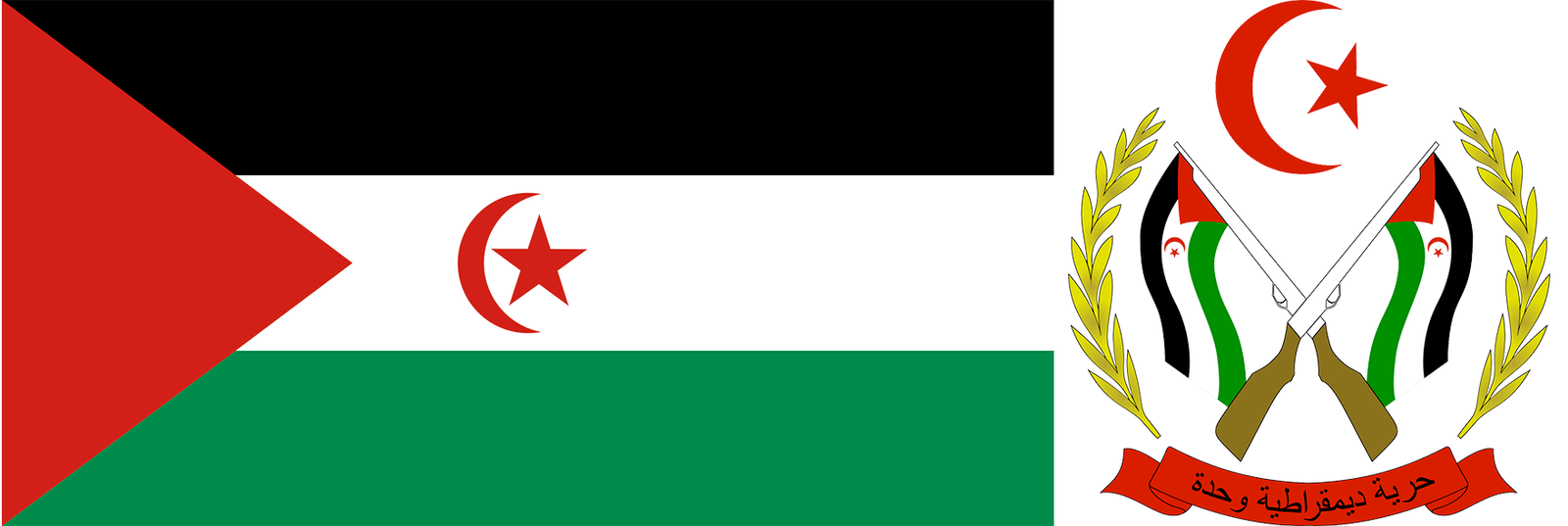 The flag of the Sahrawi Republic (left) and the Coat of Arms (right).
Welcome to the summary page for FabulousFusionFood's Somalia recipes, part of the African Continent. This page provides links to all the Western Saharan recipes presented on this site, with 8 recipes in total.
Western Sahara, (Somali: Soomaaliya; Arabic: الصحراء الغربية Spanish: Sáhara Occidental) is a non-self-governing territory in North-western Africa undergoing decolonization. It has a surface area of 272,000 square kilometres. Western Sahara is the last African colonial state yet to achieve independence and has been dubbed "Africa's last colony". Its capital and largest city is Laayoune.
Western Saharan cuisine has several influences, as the population of that area (Sahrawi), in their most part are of Arabic and Berber origin. The Saharawi cuisine is also influenced by Spanish cuisine owing to Spanish colonization.
Western Sahara, is a non-self-governing territory in North-western Africa undergoing decolonization. It has a surface area of 272,000 square kilometres (105,000 sq mi). Western Sahara is the last African colonial state yet to achieve independence and has been dubbed 'Africa's last colony'. With an estimated population of around 600,000 inhabitants, it is the most sparsely populated territory in Africa and the second most sparsely populated territory in the world, consisting mainly of desert flatlands.
 The image above shows Western Sahara (red) in relation to Africa, left and West Africa, right.Spain previously colonized the territory as the Spanish Sahara until 1976, when it attempted to transfer its administration to Morocco and Mauritania while ignoring a International Court of Justice's verdict that those countries had no sovereignty over Western Sahara. A war erupted and the Polisario Front—a national liberation movement recognized by the United Nations as the legitimate representative of the people of Western Sahara—proclaimed the Sahrawi Arab Democratic Republic (SADR) with a government-in-exile in Tindouf, Algeria. Mauritania withdrew its claims in 1979, and Morocco secured de facto control of most of the territory, including all major cities and most natural resources. A UN-sponsored ceasefire agreement was reached in 1991, though a planned referendum monitored by the UN's MINURSO mission has since stalled.
Approximately 30% of the Western Sahara is controlled by the Polisario Front; the remaining 70% is occupied by Morocco. Morocco maintains the Berm, a 2,700 km-long (1,700 mi) wall lined with land mines that splits the territory. The Polisario Front is primarily supported by Algeria and has won formal recognition for the SADR from 84 UN member states and membership in the African Union. Morocco is supported by France and the United States, and several states began expressing support for its autonomy proposal in the 2020s.
In February 2021, Morocco proposed to Spain the creation of an autonomy for Western Sahara under the sovereignty of the King of Morocco. In March 2022, the Spanish government abandoned its traditional position of neutrality in the conflict, siding with the Moroccan government and recognising the autonomy proposal 'as the most serious, realistic and credible basis for the resolution of the dispute'. This sudden turnaround was generally rejected by both the Opposition, the parties that make up the government coalition, the Polisario Front, as well as members of the governing party, who support a solution 'that respects the democratic will of the Saharawi people'.
In October 2024, in a speech to the Parliament of Morocco, French President Emmanuel Macron backed Morocco's autonomy proposal. Macron also unveiled a €25 million ($27 million) investment in Guelmim-Oued Noun, which includes part of the Western Sahara. In June 2025, UK Foreign Secretary David Lammy stated that Morocco's plan for autonomy in Western Sahara represented 'the most credible, viable and pragmatic' solution to the conflict. In July 2025, the Copernicus Programme corrected its cartography, separating Morocco from Western Sahara.
The name Simalia is derived from 'Samaale', the oldest common ancestor of several Somali clans, is generally regarded as the source of the ethnonym Somali. One other theory is that the name is held to be derived from the words soo and maal, which together mean 'go and milk'. Another plausible etymology proposes that the term Somali is derived from the Arabic word for 'wealthy' (zāwamāl), again referring to Somali riches in livestock.
A major staple food is the couscous that often accompanies one way or another all the food dishes. The influence of southern cuisine makes peanuts an accompaniment of some dishes. For meat, the Sahrawis favour camel and goat; lamb is also prominent. Some tribes are famous for growing wheat, barley and cereals in general.
Western Sahara, (Somali: Soomaaliya; Arabic: الصحراء الغربية Spanish: Sáhara Occidental) is a non-self-governing territory in North-western Africa undergoing decolonization. It has a surface area of 272,000 square kilometres. Western Sahara is the last African colonial state yet to achieve independence and has been dubbed "Africa's last colony". Its capital and largest city is Laayoune.
Western Saharan cuisine has several influences, as the population of that area (Sahrawi), in their most part are of Arabic and Berber origin. The Saharawi cuisine is also influenced by Spanish cuisine owing to Spanish colonization.
Western Sahara, is a non-self-governing territory in North-western Africa undergoing decolonization. It has a surface area of 272,000 square kilometres (105,000 sq mi). Western Sahara is the last African colonial state yet to achieve independence and has been dubbed 'Africa's last colony'. With an estimated population of around 600,000 inhabitants, it is the most sparsely populated territory in Africa and the second most sparsely populated territory in the world, consisting mainly of desert flatlands.
The image above shows Western Sahara (red) in relation to Africa, left and West Africa, right.Approximately 30% of the Western Sahara is controlled by the Polisario Front; the remaining 70% is occupied by Morocco. Morocco maintains the Berm, a 2,700 km-long (1,700 mi) wall lined with land mines that splits the territory. The Polisario Front is primarily supported by Algeria and has won formal recognition for the SADR from 84 UN member states and membership in the African Union. Morocco is supported by France and the United States, and several states began expressing support for its autonomy proposal in the 2020s.
In February 2021, Morocco proposed to Spain the creation of an autonomy for Western Sahara under the sovereignty of the King of Morocco. In March 2022, the Spanish government abandoned its traditional position of neutrality in the conflict, siding with the Moroccan government and recognising the autonomy proposal 'as the most serious, realistic and credible basis for the resolution of the dispute'. This sudden turnaround was generally rejected by both the Opposition, the parties that make up the government coalition, the Polisario Front, as well as members of the governing party, who support a solution 'that respects the democratic will of the Saharawi people'.
In October 2024, in a speech to the Parliament of Morocco, French President Emmanuel Macron backed Morocco's autonomy proposal. Macron also unveiled a €25 million ($27 million) investment in Guelmim-Oued Noun, which includes part of the Western Sahara. In June 2025, UK Foreign Secretary David Lammy stated that Morocco's plan for autonomy in Western Sahara represented 'the most credible, viable and pragmatic' solution to the conflict. In July 2025, the Copernicus Programme corrected its cartography, separating Morocco from Western Sahara.
The name Simalia is derived from 'Samaale', the oldest common ancestor of several Somali clans, is generally regarded as the source of the ethnonym Somali. One other theory is that the name is held to be derived from the words soo and maal, which together mean 'go and milk'. Another plausible etymology proposes that the term Somali is derived from the Arabic word for 'wealthy' (zāwamāl), again referring to Somali riches in livestock.
Western Saharan Cuisine
Western Saharan cuisine has several influences, as the population of that area (Sahrawi), in their most part are of Arabic and Berber origin. The Saharawi cuisine is also influenced by Spanish cuisine owing to Spanish colonization. Food is primarily imported into Western Sahara, as minimal rainfall in the territory inhibits agricultural production. Indigenous sources of food include those derived from fishing and nomadic pastoralism. The labor and business in these indigenous provisions of foods are also a primary contributor of income for the territory's population, and are among the primary contributors to the economy of Western Sahara.A major staple food is the couscous that often accompanies one way or another all the food dishes. The influence of southern cuisine makes peanuts an accompaniment of some dishes. For meat, the Sahrawis favour camel and goat; lamb is also prominent. Some tribes are famous for growing wheat, barley and cereals in general.
Western Sahara's National Dishes:
Below are listed the dishes considered to be Western Sahara's national foods along with links to the recipes for those dishes:| Khobz Sahrawi Origin: Western Sahara | Mrefisa Origin: Western Sahara |
The alphabetical list of all the Western Saharan recipes on this site follows, (limited to 100 recipes per page). There are 8 recipes in total:
Page 1 of 1
| Khobz Sahrawi Origin: Western Sahara | Assegas n Tajin s Ifrawen (Camel tagine with dried apricots) Origin: Western Sahara | Kebab with Garlic Origin: Western Sahara |
| Mrefisa Origin: Western Sahara | Atay (Mint Tea) Origin: Western Sahara | Khobz Sahrawi Origin: Western Sahara |
| Al Mechoui (Spit-roasted Baby Lamb) Origin: Western Sahara | Camel Kebabs with Harissa Sauce Origin: Western Sahara |
Page 1 of 1