FabulousFusionFood's Ghana Recipes Home Page
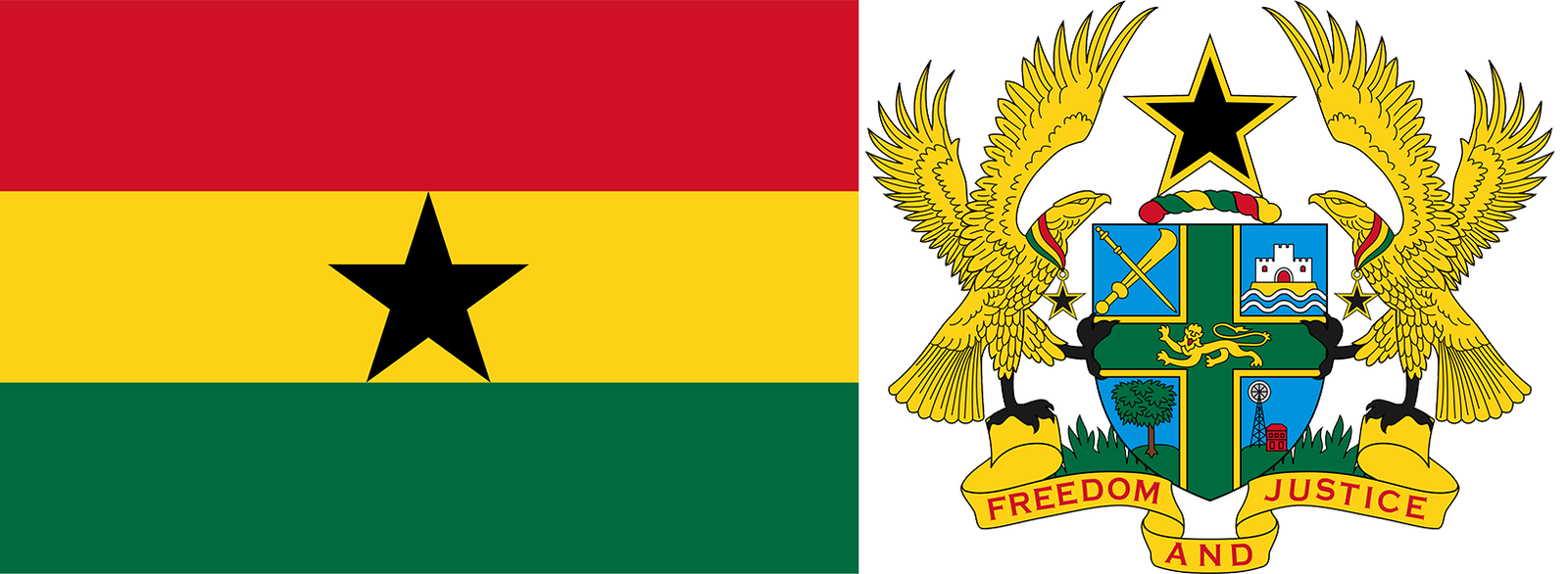 The flag of Ghana (left) and the coat of arms of Ghana (right).
Welcome to the summary page for FabulousFusionFood's Ghana recipes, part of West Africa. This page provides links to all the Ghanaian recipes presented on this site, with 96 recipes in total.
These recipes, for the major part, originate in Ghana. Otherwise they are fusion recipes with major Ghaiaian influences.
Ghana officially the Republic of Ghana, is a country in West Africa. It abuts the Gulf of Guinea and the Atlantic Ocean to the south, sharing a border with Ivory Coast in the west, Burkina Faso in the north, and Togo in the east. Ghana covers an area of 239,567 km2 (92,497 sq mi), spanning diverse biomes that range from coastal savannas to tropical rainforests. With over 32 million inhabitants, Ghana is the second-most populous country in West Africa. The capital and largest city is Accra; other significant cities include Kumasi, Tamale, and Sekondi-Takoradi.
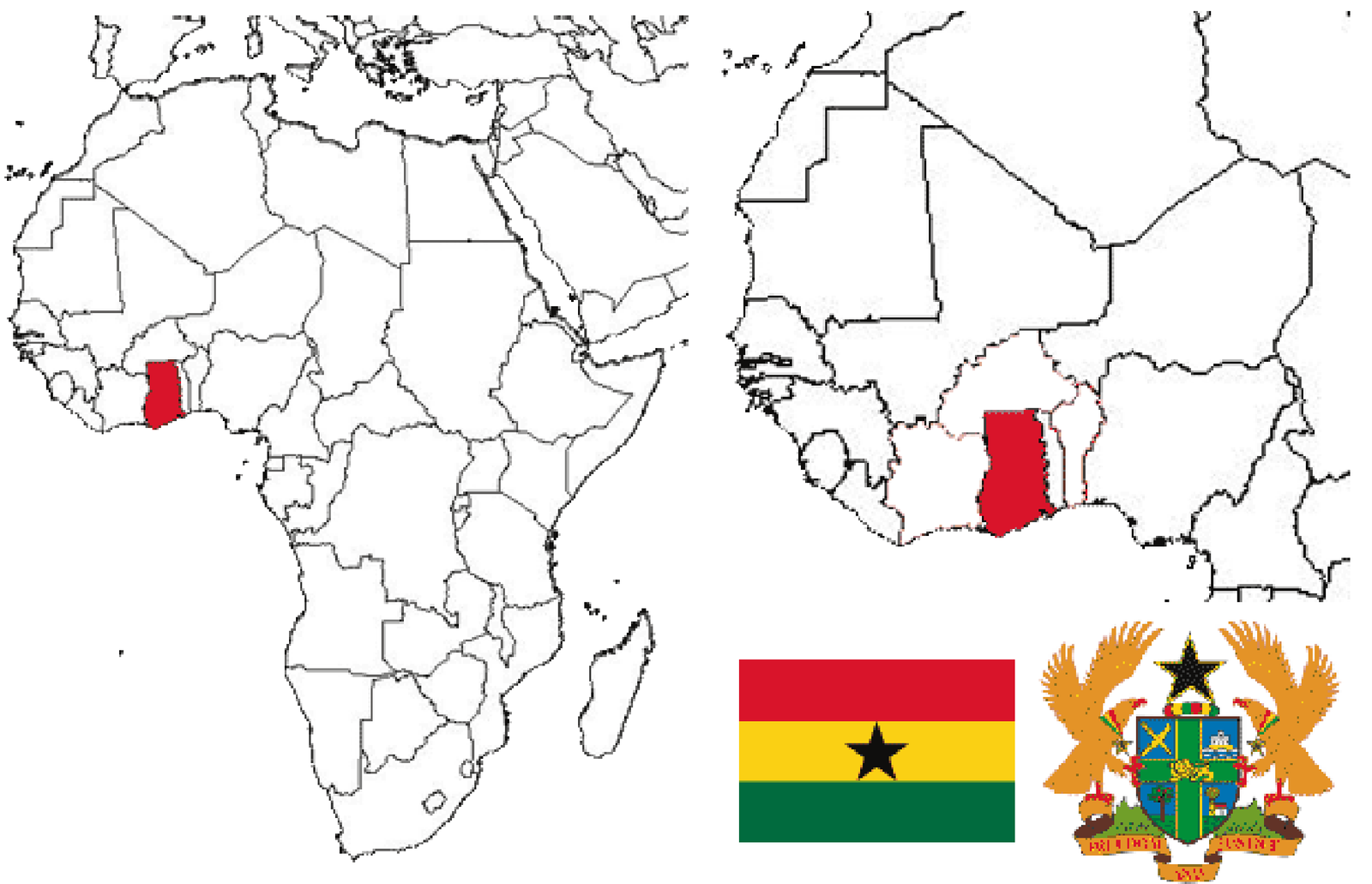 The image above shows a view of Ghana (in red) in relation to Africa (left) and West
Africa (right) with the flag and coat of arms inset.The earliest kingdoms to emerge in Ghana were the Kingdom of Dagbon in the north and the Bono state in the south, with the Bono state existing in the area during the 11th century. The Ashanti Empire and other Akan kingdoms in the south emerged over the centuries. Beginning in the 15th century, the Portuguese Empire, followed by other European powers, contested the area for trading rights, until the British ultimately established control of the coast by the 19th century. Following over a century of colonial resistance, the current borders of the country took shape, encompassing four separate British colonial territories: Gold Coast, Ashanti, the Northern Territories, and British Togoland. These were unified as an independent dominion within the Commonwealth of Nations. On 6 March 1957, Ghana became the first country in Sub-Saharan Africa to achieve sovereignty. Ghana subsequently became influential in decolonisation efforts and the Pan-African movement.
Ghana is a multi-ethnic country with linguistic and religious groups; while the Akan are the largest ethnic group, they constitute a plurality. Most Ghanaians are Christians (71.3%); almost a fifth are Muslims; a tenth practise traditional faiths or report no religion. Ghana is a unitary constitutional democracy led by a president who is head of state and head of government. For political stability in Africa, Ghana ranked seventh in the 2012 Ibrahim Index of African Governance and fifth in the 2012 Fragile States Index. It has maintained since 1993 one of the freest and most stable governments on the continent, and it performs relatively well in healthcare, economic growth, and human development, so that it has a significant influence in West Africa and Africa as a whole. Ghana is highly integrated in international affairs, being a founding member of the Non-Aligned Movement, African Union and a member of the Economic Community of West African States, Group of 24 and Commonwealth of Nations.
Etymology: Since Ghana 1957 the name of the former Gold Coast; from the name of a former tribal chieftain (Ga-na) of the Ga peoples, whose name itself is a form of a royal title, hence, na 'king'.
These recipes, for the major part, originate in Ghana. Otherwise they are fusion recipes with major Ghaiaian influences.
Ghana officially the Republic of Ghana, is a country in West Africa. It abuts the Gulf of Guinea and the Atlantic Ocean to the south, sharing a border with Ivory Coast in the west, Burkina Faso in the north, and Togo in the east. Ghana covers an area of 239,567 km2 (92,497 sq mi), spanning diverse biomes that range from coastal savannas to tropical rainforests. With over 32 million inhabitants, Ghana is the second-most populous country in West Africa. The capital and largest city is Accra; other significant cities include Kumasi, Tamale, and Sekondi-Takoradi.
The image above shows a view of Ghana (in red) in relation to Africa (left) and WestAfrica (right) with the flag and coat of arms inset.
Ghana is a multi-ethnic country with linguistic and religious groups; while the Akan are the largest ethnic group, they constitute a plurality. Most Ghanaians are Christians (71.3%); almost a fifth are Muslims; a tenth practise traditional faiths or report no religion. Ghana is a unitary constitutional democracy led by a president who is head of state and head of government. For political stability in Africa, Ghana ranked seventh in the 2012 Ibrahim Index of African Governance and fifth in the 2012 Fragile States Index. It has maintained since 1993 one of the freest and most stable governments on the continent, and it performs relatively well in healthcare, economic growth, and human development, so that it has a significant influence in West Africa and Africa as a whole. Ghana is highly integrated in international affairs, being a founding member of the Non-Aligned Movement, African Union and a member of the Economic Community of West African States, Group of 24 and Commonwealth of Nations.
Etymology: Since Ghana 1957 the name of the former Gold Coast; from the name of a former tribal chieftain (Ga-na) of the Ga peoples, whose name itself is a form of a royal title, hence, na 'king'.
Food and Cuisine:
Ghanaian cuisine includes an assortment of soups and stews with varied seafoods; most Ghanaian soups are prepared with vegetables, meat, poultry or fish. Fish is important in the diet with tilapia, roasted and fried whitebait, smoked fish and crayfish, all being common components of Ghanaian dishes. Banku (akple) is a common starchy food made from ground corn (maize), and cornmeal based staples kɔmi (kenkey) and banku (akple) are usually accompanied by some form of fried fish (chinam) or grilled tilapia and a very spicy condiment made from raw red and green chillies, onions and tomatoes (pepper sauce). Banku and tilapia is a combo served in most restaurants. Fufu is the most common exported Ghanaian dish and is a delicacy across the African diaspora. Rice is an established staple meal across the country, with various rice based dishes serving as breakfast, lunch and dinner, the main variants are waakye, plain rice and stew (eight kontomire or tomato gravy), fried rice and jollof riceGhana's National Dishes:
Below are listed the dishes considered to be Ghana's national foods along with links to the recipes for those dishes:| Cocoyam Fufu Origin: Ghana | Ghanaian Chicken Jollof Rice Origin: Ghana | Shito (Ghanaian Black Chilli Sauce) Origin: Ghana |
| Dawadawa Jollof Rice with Guinea Fowl Origin: Ghana | Ghanaian Jollof Rice Origin: Ghana | Yam FuFu Origin: Ghana |
| FuFu Origin: Ghana | Jollof Rice with Chicken Beef and Ham Origin: Ghana |
The alphabetical list of all the Ghana recipes on this site follows, (limited to 100 recipes per page). There are 96 recipes in total:
Page 1 of 1
| Cocoyam Fufu Origin: Ghana | FuFu Origin: Ghana | Kokoro (Sweet Cornmeal Sticks) Origin: Ghana |
| Dawadawa Jollof Rice with Guinea Fowl Origin: Ghana | Garden Eggs Stew Origin: Ghana | Kontomire Stew (Cocoyam Leaf Stew) Origin: Ghana |
| FuFu Origin: Ghana | Gari Biscuits Origin: Ghana | Kpakpo Shito (Fresh Shitor) Origin: Ghana |
| Ghanaian Chicken Jollof Rice Origin: Ghana | Gari Foto Origin: Ghana | Kpalugu Beef Origin: Ghana |
| Ghanaian Jollof Rice Origin: Ghana | Ghana Curry Rice Origin: Ghana | Kubecake Origin: Ghana |
| Jollof Rice with Chicken Beef and Ham Origin: Ghana | Ghana Green Marinade Origin: Ghana | Kwahu Nsusua Abomu (Turkey Berry and Fish Stew) Origin: Ghana |
| Shito (Ghanaian Black Chilli Sauce) Origin: Ghana | Ghanaian Cabbage Stew Origin: Ghana | Kyinkaafa (Rice with Tomato and Dried Fish) Origin: Ghana |
| Yam FuFu Origin: Ghana | Ghanaian Chichinga (Ghanaian Skewered Beef) Origin: Ghana | Kyinkyinga (Beef and Liver Kebabs) Origin: Ghana |
| Accra Banana Peanut Cake Origin: Ghana | Ghanaian Chicken Jollof Rice Origin: Ghana | Miyan Kuuka Soup (Fish and Baobab Leaf Powder Soup) Origin: Ghana |
| Agbeli Kaaklo (Sweet Cassava Fritters) Origin: Ghana | Ghanaian Curry Powder Origin: Ghana | Mpotompoto (Ghanaian Yam Porridge) Origin: Ghana |
| Agushi Soup (Ghanaian Egusi Soup) Origin: Ghana | Ghanaian Etor Origin: Ghana | Nane Flor (Pig's Feet Stew) Origin: Ghana |
| Ampesi with Kontomire Stew Origin: Ghana | Ghanaian Groundnut Soup Origin: Ghana | Nkatenkwan (Ghanaian Peanut Soup) Origin: Ghana |
| Angwa Mo (Ghanaian Rice Pilaf) Origin: Ghana | Ghanaian Jollof Rice Origin: Ghana | Nkrakra II (Ghanaian Light Soup) Origin: Ghana |
| Ashanti Chicken Origin: Ghana | Ghanaian Jollof Rice II (Ghanaian Jollof Rice) Origin: Ghana | Nkrakrakwam (Ghanaian Light Soup) Origin: Ghana |
| Ataanme Nmliche (Tiger Nut Pudding) Origin: Ghana | Ghanaian Kulikuli (Deep Fried Peanut Balls) Origin: Ghana | Nyambeh Nyebbeh (Black-eyed Bean stew with Cassava) Origin: Ghana |
| Atadwe Milkye (Silky Tigernut Pudding) Origin: Ghana | Ghanaian Papaya Bread Origin: Ghana | Ofam (Ripe Plantain Loaf) Origin: Ghana |
| Atwemo (Twisted Cakes) Origin: Ghana | Ghanaian Pepper Soup Origin: Ghana | Omo Tuo (Hausa Rice Balls) Origin: Ghana |
| Banku Origin: Ghana | Ghanaian Ripe Plantain Ice Cream Origin: Ghana | Oto (Mashed Yams with Eggs) Origin: Ghana |
| Bean and Gari Loaf Origin: Ghana | Ghanaian Spaghetti Jollof Origin: Ghana | Palaver Chicken Origin: Ghana |
| Bissap Beuguedj (Hibiscus Leaf Paste) Origin: Ghana | Ghanaian Street Indomie Origin: Ghana | Pawpaw Stew Origin: Ghana |
| Cabbage Egusi Soup Origin: Ghana | Ghanaian Tomato Gravy Origin: Ghana | Pizza Rustica (Italian Easter Ham Pie) Origin: Ghana |
| Cane Rat Pepper Soup Origin: Ghana | Ghanaian Tooloo Beefy (Ghanaian Cured Beef) Origin: Ghana | Prekese Drink (Soup Perfume Bean Drink) Origin: Ghana |
| Cocoyam Chips Origin: Ghana | Gizdodo (Chicken Gizzards with Plantain) Origin: Ghana | Pretzel-crusted Catfish Origin: Ghana |
| Cocoyam Eto Origin: Ghana | Goat Meat Groundnut Soup Origin: Ghana | Red-red Origin: Ghana |
| Cocoyam Fufu Origin: Ghana | Grasscutter Soup with Okra Origin: Ghana | Red-red with Spiced Plantains Origin: Ghana |
| Curried Rice with Beef Origin: Ghana | Grasscutter Stew Origin: Ghana | Shito (Dark Chilli Sambal) Origin: Ghana |
| Dawadawa Jollof Rice with Guinea Fowl Origin: Ghana | Green Banana Fufu Origin: Ghana | Shito (Ghanaian Black Chilli Sauce) Origin: Ghana |
| Dzowowe (Spiced Peanut Paste Balls) Origin: Ghana | Jollof Rice with Chicken Beef and Ham Origin: Ghana | Shitor Din Origin: Ghana |
| EbunuEbunu Soup Origin: Ghana | Kelewele (Hot Plantain Chips) Origin: Ghana | Smoked Fish Light Soup Origin: Ghana |
| Fante Kenkey Origin: Ghana | Kelewele III Origin: Ghana | Spicy Papaya Origin: Ghana |
| Fante-Fante (Ghanaian Fisherman's Stew) Origin: Ghana | Kenkey Origin: Ghana | Steamed Black-eyed Bean Dumplings Origin: Ghana |
| Fryplantain and Beans Origin: Ghana | Kokonte Origin: Ghana | Tankora Powder Origin: Ghana |
Page 1 of 1