FabulousFusionFood's Chilli-based Recipes 12th Page
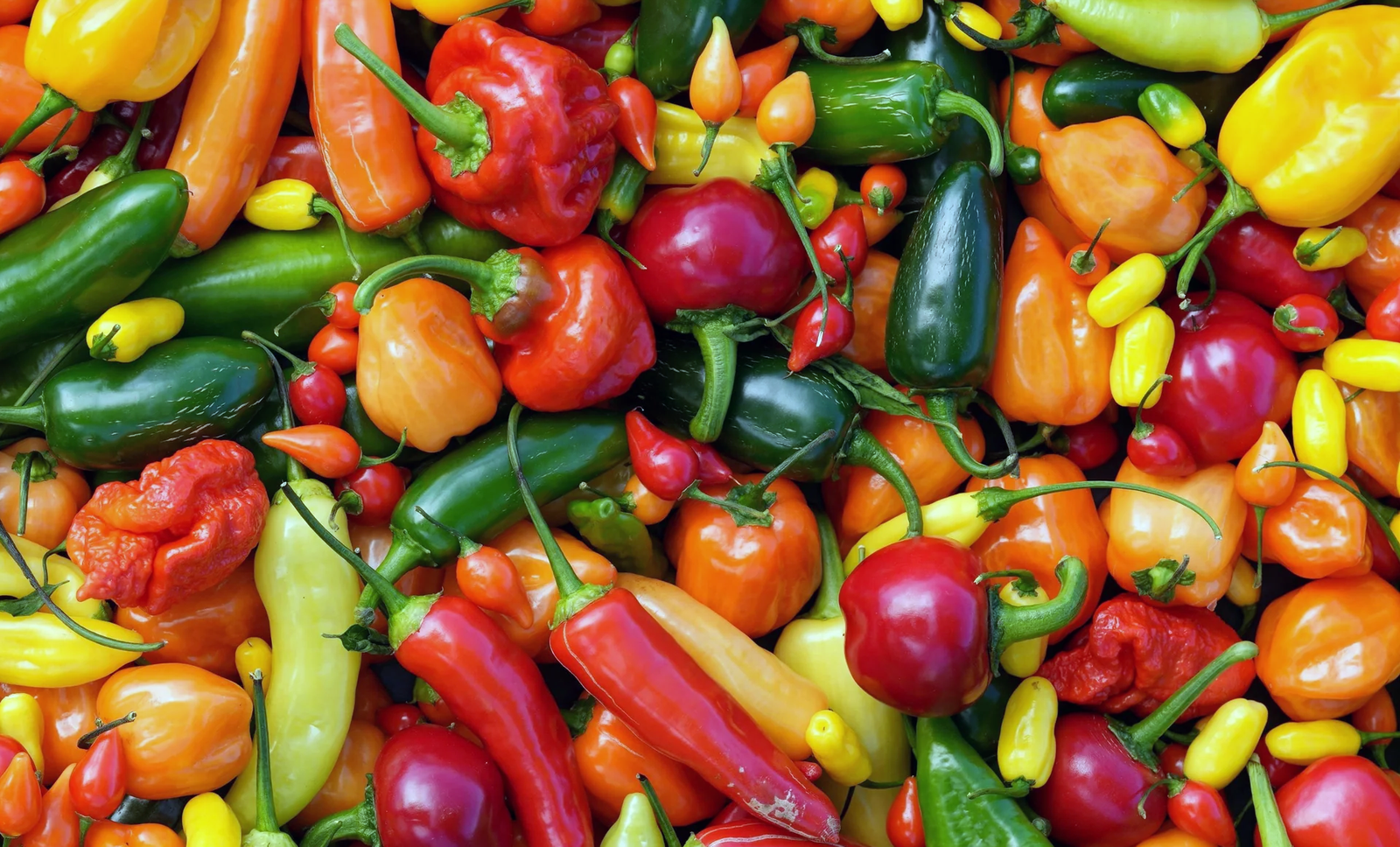 A mixture of different chilli peppers.
Welcome to FabulousFusionFood's Chilli-based Recipes Page — The recipes presented here all contain chilli peppers as a main ingredient. Chillies are the fruit of the chilli plant. Along with black pepper, they are unique spices in that they impart 'heat' to a dish without any associated bitterness. The dried and powdered fruit along with the fresh fruit and the dried fruit are all used as spices. As well as their capsaicin induced heat, chillies (depending on the variety or cultivar) can also imbue a dish with a fruity flavour. Smoked chillies are also used to impart a smokiness as well as heat to a dish.
Chilli peppers, also spelled chile or chili (from Classical Nahuatl chīlli [ˈt͡ʃiːlːi]) and known as hot peppers, are varieties of berry-fruit plants from the genus Capsicum, which are members of the nightshade family Solanaceae, cultivated for their pungency. Chilli peppers are widely used in many cuisines as a spice to add "heat" to dishes. Capsaicin and the related capsaicinoids give chillies their intensity when ingested or applied topically. Chilli peppers exhibit a range of heat and flavours. This diversity is the reason behind the availability of different types of chilli powder, each offering its own taste and heat level.
Chilli peppers originated in Central or South America and were first cultivated in Mexico. European explorers brought chillies back to the Old World in the late 16th century as part of the Columbian Exchange, which led to the cultivation of multiple varieties across the world for food and traditional medicine. Five Capsicum species have been widely cultivated: annuum, baccatum, chinense, frutescens, and pubescens.
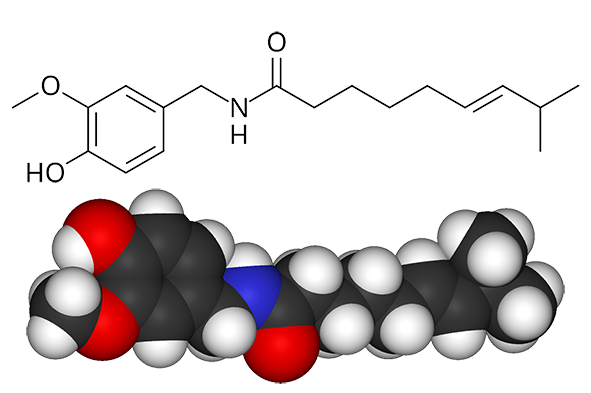 The capsaicin molecule, chemical structure (top) and space-filling model (bottom).
When peppers are consumed by mammals such as humans, capsaicin binds with pain receptors in the mouth and throat, potentially evoking pain via spinal relays to the brainstem and thalamus where heat and discomfort are perceived. However, birds are unable to perceive the hotness and so they can eat some of the hottest peppers. The intensity of the "heat" of chillies is commonly reported in Scoville heat units (SHU), invented by American pharmacist Wilbur Scoville in 1912. Historically, it was a measure of the dilution of an amount of chilli extract added to sugar syrup before its heat becomes undetectable to a panel of tasters; the more it has to be diluted to be undetectable, the more powerful the variety, and therefore the higher the rating. Since the 1980s, spice heat has been assessed quantitatively by high-performance liquid chromatography (HPLC), which measures the concentration of heat-producing capsaicinoids, typically with capsaicin content as the main measure
The alphabetical list of all the chilli-based on this site follows, (limited to 100 recipes per page). There are 2079 recipes in total:
Page 12 of 21
| Málàjiàng (Mala Hotpot Paste) Origin: China | Masoor Daal (Red Lentils) Origin: Bangladesh | Mexican Red Sauce Origin: American |
| Malawi Curry Powder Origin: Malawi | Massaman Curry Paste Origin: Thailand | Mexican Rice Origin: America |
| Malay Chicken Kurma Origin: Malaysia | Massaman Curry Paste Origin: Thailand | Mexican Spirals Origin: American |
| Malaysian Beriani Origin: Malaysia | Mataba au Poisson (Mataba with Fish) Origin: Comoros | Mexican-style Chilli Ribs Origin: South Africa |
| Malaysian Fish Curry Powder Origin: Malaysia | Matapa de Abóbora (Pumpkin Matapa) Origin: Mozambique | Mexican-style Steaks with Avocado Salsa Origin: Britain |
| Malaysian Goat Rendang Origin: Malaysia | Matata (Clam, Pumpkin and Peanut Stew) Origin: Sao Tome | Mhogo na tzouzi (Cassava in Coconut Sauce) Origin: Mayotte |
| Malaysian Laksa Origin: Malaysia | Matbucha (Spicy Cooked Tomato and Pepper Salad) Origin: Israel | Micronesian Fish with Coconut Milk and Lime Origin: Federated States Micronesia |
| Malaysian Lamb Rendang Origin: Malaysia | Maté (Barbecued Chicken Skewers) Origin: Wallis Futuna | Migas de Extremadura (Migas with Serrano Ham) Origin: Spain |
| Malaysian Peanut Sauce Origin: Malaysia | Matsavo (Pumpkin Leaf and Peanut Flour Stew) Origin: Mozambique | Mimini (Grouper and Cassava Stew) Origin: Mozambique |
| Maldives Meat Curry Powder Origin: Maldives | Mattar Paneer (Green Peas and Curd Cheese Curry) Origin: Britain | Mini Crab Cakes Origin: Fusion |
| Malian Simbala Powder Origin: Mali | Matura and Mahu Origin: Burundi | Mini Jackfruit Tacos with Charred Sweetcorn and Gochujang Mayo Origin: Fusion |
| Mallow Leaf Gumbo Origin: Britain | Mauritian Curry Masala Origin: Mauritius | Mint Chutney Origin: India |
| Mallow Leaf Peanut Sauce Origin: Fusion | Mauritian Prawn Curry Origin: Mauritius | Mirkapaya Mamsam Koora Origin: India |
| Mallow-leaf Stew Origin: African Fusion | Mayotte Brochettes de Boeuf Origin: Mayotte | Missi Roti Origin: India |
| Mambá (Spicy Peanut Butter) Origin: Dominican Republic | Mazavaroo Origin: Mauritius | Missi Roti Origin: India |
| Mambazha Pulissery Origin: India | Mazavaroo au Limon Origin: Mauritius | Mitmita Origin: Ethiopia |
| Mancarra with Citi (Chicken with Peanuts and Palm Oil) Origin: Guinea-Bissau | Mazze de Tamburo (Fried Shaggy Parasols) Origin: Italy | Mixed Mushroom Soup with Chu Hou Origin: Fusion |
| Mango and Aniseed Toadstool Chutney Origin: Fusion | Mbakhal Origin: Senegal | Miyan Kuka (Baobab Leaf Soup) Origin: Nigeria |
| Mango Atchar Origin: South Africa | MBakhal aux Arachides (MBakhal with Peanuts) Origin: Senegal | Miyan Kuka II (Baobab Leaf Soup II) Origin: Nigeria |
| Mangoé Rafalari (Spicy Mango Stew) Origin: Guinea | Mbolo Origin: Equatorial Guinea | Miyan Wake (Beans soup) Origin: Nigeria |
| Maraq Bilaash (Cherry Tomato Sauce) Origin: Somalia | Mboro Mboro (Sweet Potato Leaf and Palm Oil Stew) Origin: Senegal | Moambé Stew Origin: Congo |
| Maraq Fahfah (Somali Soup) Origin: Somalia | Mboto à l'oseille (Fish with Sorrel) Origin: Congo | Mofago (Boiled Chicken) Origin: Botswana |
| Maraq Fahfah (Somali Soup) Origin: Somaliland | Mboto à la Feuilles de Manioc (Fish with Cassava Leaves) Origin: Gabon | Mofo Sakay (Spiced Fritters) Origin: Madagascar |
| Marinade Verte (Green Seasoning) Origin: Saint Barthelemy | Mboto aux Champignons (Fish with Mushrooms) Origin: Congo | Mohinga Origin: Myanmar |
| Marinade Verte (Green Seasoning) Origin: Saint-Martin | MBoume au Néverdaye (Senegalese Fish, Peanut and Cassava Stew with Millet Couscous) Origin: Senegal | Mojo Picón (Spicy Canarian Chilli Sauce) Origin: Spain |
| Marinade Verte (Green Seasoning) Origin: Sint Maarten | Mbuzi ya masala (Goat Meat Dry Fry) Origin: Mayotte | Mokoto Origin: Benin |
| Marinated Chile Güerito Peppers Origin: Mexico | Mchuzi wa Biringani (Garden Egg Curry) Origin: Tanzania | Mole Negro Origin: Mexico |
| Markit Ommalah (Chickpea and Lentil Stew) Origin: Tunisia | Meat Steamed in Rumen Origin: Montenegro | Mole Seasoning Blend Origin: Mexico |
| Maroumbo ya Nadzi (Tripe with Bananas) Origin: Mayotte | Meatballs in Yoghurt Sauce Origin: Uganda | Mole Verde (Green Mole) Origin: Mexico |
| Marsh Samphire with Red Chilli and Olive Oil Origin: Fusion | Meen Moilee (Keralan Fish Curry) Origin: India | Mole-style Sweet Potato Chili Origin: American |
| Mas Huni Origin: Maldives | Mejillones con Salsa Picante (Mussels with Spicy Sauce) Origin: Spain | Molho de Piri-Piri (Mozambican Peri-peri Sauce) Origin: Mozambique |
| Masaaledaar Pudine wal Quimah (Minced Lamb with Mint and Spices) Origin: India | Messe of African Greens Origin: African Fusion | Molho do piri piri (Protuguese Piri-piri sauce) Origin: Portugal |
| Masala Meusi Origin: East Africa | Mexican Crockpot Chili Origin: American | |
| Masala Raita Origin: India | Mexican Pork'n'Beans Origin: American |
Page 12 of 21