FabulousFusionFood's Curaçaoan Recipes Home Page
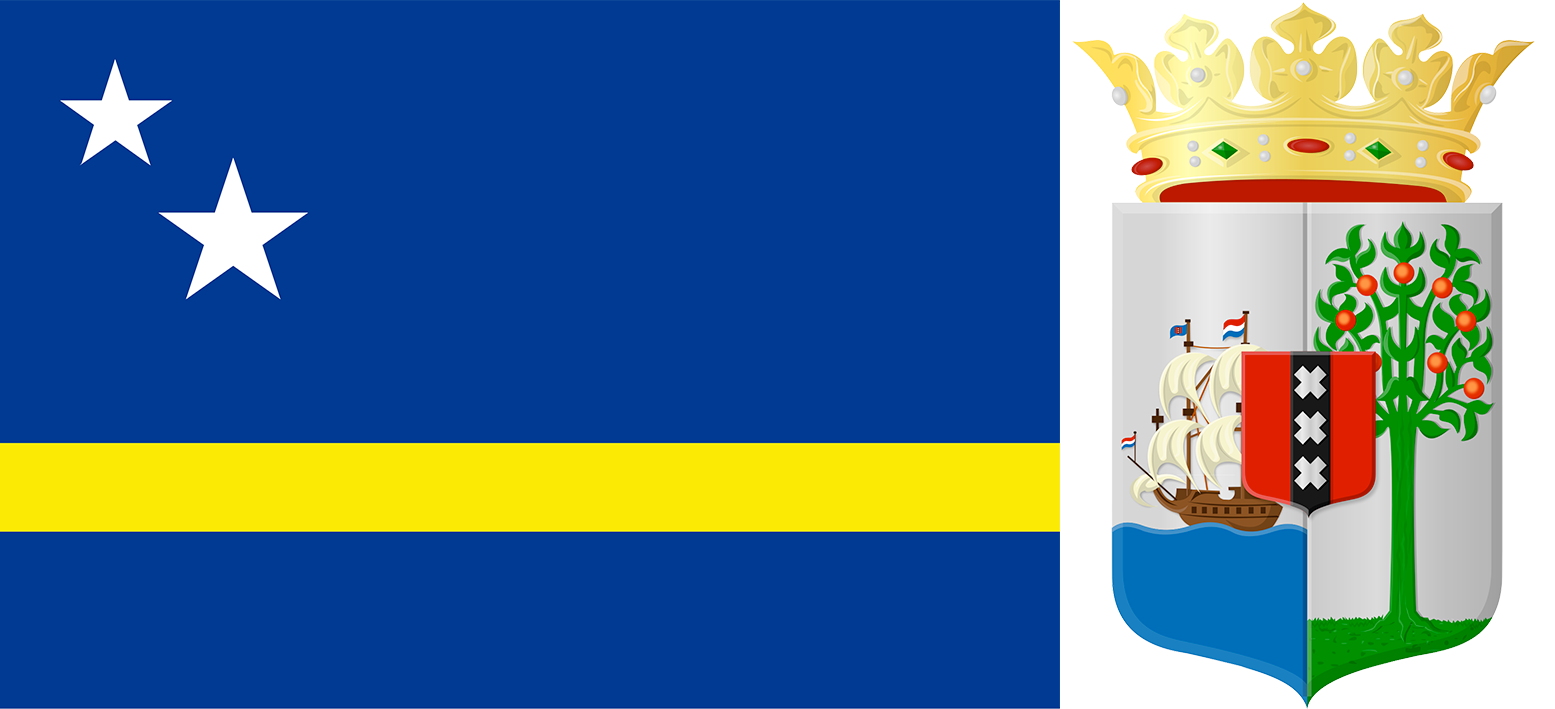 The flag of Curaçao (left) and the coat of
arms of Curaçao (right).
Welcome to the summary page for FabulousFusionFood's Curaçaoan recipes, part of the Caribbean. This page provides links to all the Curaçao recipes presented on this site, with 26 recipes in total.
This is a continuation of an entire series of pages that will, I hope, allow my visitors to better navigate this site. As well as displaying recipes by name, country and region of origin I am now planning a whole series of pages where recipes can be located by meal type and main ingredient. This page gives a listing of all the Curaçaoan recipes added to this site.
Curaçao is a constituent island country within the Kingdom of the Netherlands, located in the southern Caribbean Sea. Papiamentu, Dutch and English are the official languages. The capital and largest city is Willemstad.
Local Curaçaoan food is called Krioyo (pronounced the same as criollo, the Spanish word for "Creole") and boasts a blend of flavours and techniques best compared to Caribbean cuisine and Latin American cuisine. Dishes common in Curaçao are found in Aruba and Bonaire as well. Popular dishes include stobá (a stew made with various ingredients such as papaya, beef or goat), Guiambo (soup made from okra and seafood), kadushi (cactus soup), sopi mondongo (intestine soup), funchi (cornmeal paste similar to fufu, ugali and polenta) and fish and other seafood. The ubiquitous side dish is fried plantain.
Curaçao officially the Country of Curaçao (Kòrsou in Papiamento) is a constituent island country within the Kingdom of the Netherlands, located in the southern Caribbean Sea (specifically the Dutch Caribbean region), about 65 km north of Venezuela.
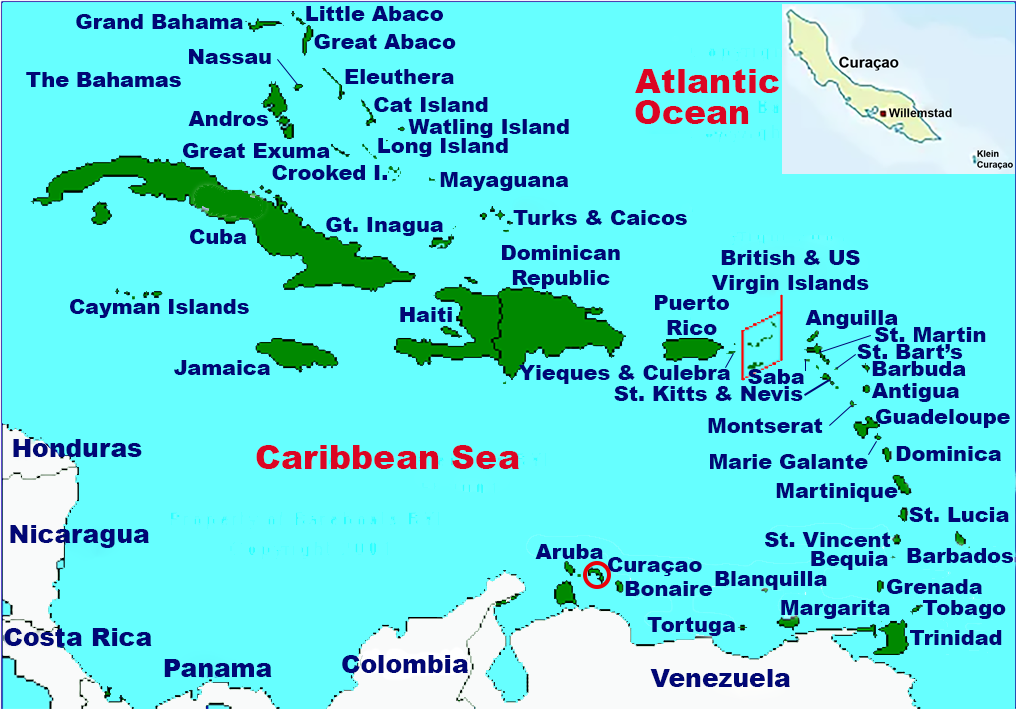 Image of the Caribbean with the location of Curaçao picked out
and circled, a blow-up map of Curaçao is show, inset.Curaçao includes the main island of Curaçao and the much smaller, uninhabited island of Klein Curaçao ('Little Curaçao'). Curaçao has a population of 158,665 (January 2019 estimate), with an area of 444 km2; its capital is Willemstad. Together with Aruba and Bonaire, Curaçao forms the ABC islands. Collectively, Curaçao, Aruba and other Dutch islands in the Caribbean are often called the Dutch Caribbean. It is the largest of the ABC islands in terms of area, as well as in terms of population, and is the largest of the six Dutch Caribbean islands.
Curaçao's history begins with the Arawak and Caquetio Amerindians; the island becoming a Spanish colony after Alonso de Ojeda's 1499 expedition. Though labelled 'the useless island' due to its poor agricultural yield and lack of precious metals, it later became a strategic cattle ranching area. When the Dutch colonized the island in 1634, they shifted the island's focus to trade and shipping, and later made it a hub of the Atlantic slave trade. Members of the Jewish community, fleeing persecution in Europe, settled here and significantly influenced the economy and culture.
British forces occupied Curaçao twice during the French Revolutionary and Napoleonic Wars but it was returned to Dutch rule. The abolition of slavery in 1863 led to economic shifts and migrations. Dutch remains the official language, though Papiamentu, English, and Spanish are widely spoken, reflecting the island's diverse cultural influences. Curaçao was formerly part of the Curaçao and Dependencies colony from 1815 to 1954 and later the Netherlands Antilles from 1954 to 2010, as Island Territory of Curaçao.
The discovery of oil in the Maracaibo Basin in 1914 transformed Curaçao into a critical refinery location, altering its economic landscape. There were efforts towards becoming a country within the Kingdom of the Netherlands; the island achieved autonomy in 2010.
Etymology: One explanation for the island's name is that Curaçao was the autonym by which its indigenous peoples identified themselves. Early Spanish accounts support this theory, referring to the indigenous peoples as Indios Curaçaos.
From 1525, the island was featured on Spanish maps as Curaçote, Curasaote, Curasaore, and even Curacaute. By the 17th century, it appeared on most maps as Curaçao or Curazao. On a map created by Hieronymus Cock in 1562 in Antwerp, the island was called Qúracao.
A persistent but undocumented story claims the following: in the 16th and 17th centuries—the early years of European exploration—when sailors on long voyages got scurvy from lack of vitamin C, sick Portuguese or Spanish sailors were left on the island now known as Curaçao. When their ship returned, some had recovered, probably after eating vitamin C-rich fruit there. From then on, the Portuguese allegedly referred to the island as Ilha da Curação (Island of Healing) or the Spanish as Isla de la Curación.
The ubiquitous breakfast dish is pastechi: fried pastry with fillings of cheese, tuna, ham, or ground meat. Around the holiday season special dishes are consumed, such as the hallaca and pekelé, made out of salt cod. At weddings and other special occasions a variety of kos dushi are served: kokada (coconut sweets), ko'i lechi (condensed milk and sugar sweet) and tentalaria (peanut sweets). The Curaçao liqueur was developed here, when a local experimented with the rinds of the local citrus fruit known as laraha. Surinamese, Chinese, Indonesian, Indian and Dutch culinary influences also abound. The island also has a number of Chinese restaurants that serve mainly Indonesian dishes such as satay, nasi goreng and lumpia (which are all Indonesian names for the dishes). Dutch specialties such as croquettes and oliebollen are widely served in homes and restaurants.
This is a continuation of an entire series of pages that will, I hope, allow my visitors to better navigate this site. As well as displaying recipes by name, country and region of origin I am now planning a whole series of pages where recipes can be located by meal type and main ingredient. This page gives a listing of all the Curaçaoan recipes added to this site.
Curaçao is a constituent island country within the Kingdom of the Netherlands, located in the southern Caribbean Sea. Papiamentu, Dutch and English are the official languages. The capital and largest city is Willemstad.
Local Curaçaoan food is called Krioyo (pronounced the same as criollo, the Spanish word for "Creole") and boasts a blend of flavours and techniques best compared to Caribbean cuisine and Latin American cuisine. Dishes common in Curaçao are found in Aruba and Bonaire as well. Popular dishes include stobá (a stew made with various ingredients such as papaya, beef or goat), Guiambo (soup made from okra and seafood), kadushi (cactus soup), sopi mondongo (intestine soup), funchi (cornmeal paste similar to fufu, ugali and polenta) and fish and other seafood. The ubiquitous side dish is fried plantain.
Curaçao officially the Country of Curaçao (Kòrsou in Papiamento) is a constituent island country within the Kingdom of the Netherlands, located in the southern Caribbean Sea (specifically the Dutch Caribbean region), about 65 km north of Venezuela.
Image of the Caribbean with the location of Curaçao picked outand circled, a blow-up map of Curaçao is show, inset.
Curaçao's history begins with the Arawak and Caquetio Amerindians; the island becoming a Spanish colony after Alonso de Ojeda's 1499 expedition. Though labelled 'the useless island' due to its poor agricultural yield and lack of precious metals, it later became a strategic cattle ranching area. When the Dutch colonized the island in 1634, they shifted the island's focus to trade and shipping, and later made it a hub of the Atlantic slave trade. Members of the Jewish community, fleeing persecution in Europe, settled here and significantly influenced the economy and culture.
British forces occupied Curaçao twice during the French Revolutionary and Napoleonic Wars but it was returned to Dutch rule. The abolition of slavery in 1863 led to economic shifts and migrations. Dutch remains the official language, though Papiamentu, English, and Spanish are widely spoken, reflecting the island's diverse cultural influences. Curaçao was formerly part of the Curaçao and Dependencies colony from 1815 to 1954 and later the Netherlands Antilles from 1954 to 2010, as Island Territory of Curaçao.
The discovery of oil in the Maracaibo Basin in 1914 transformed Curaçao into a critical refinery location, altering its economic landscape. There were efforts towards becoming a country within the Kingdom of the Netherlands; the island achieved autonomy in 2010.
Etymology: One explanation for the island's name is that Curaçao was the autonym by which its indigenous peoples identified themselves. Early Spanish accounts support this theory, referring to the indigenous peoples as Indios Curaçaos.
From 1525, the island was featured on Spanish maps as Curaçote, Curasaote, Curasaore, and even Curacaute. By the 17th century, it appeared on most maps as Curaçao or Curazao. On a map created by Hieronymus Cock in 1562 in Antwerp, the island was called Qúracao.
A persistent but undocumented story claims the following: in the 16th and 17th centuries—the early years of European exploration—when sailors on long voyages got scurvy from lack of vitamin C, sick Portuguese or Spanish sailors were left on the island now known as Curaçao. When their ship returned, some had recovered, probably after eating vitamin C-rich fruit there. From then on, the Portuguese allegedly referred to the island as Ilha da Curação (Island of Healing) or the Spanish as Isla de la Curación.
Curaçaoan Cuisine:
Local food is called Krioyo (pronounced the same as criollo, the Spanish word for 'Creole') and boasts a blend of flavours and techniques best compared to Caribbean cuisine and Latin American cuisine. Dishes common in Curaçao are found in Aruba and Bonaire as well. Popular dishes include stobá (a stew made with various ingredients such as papaya, beef or goat), Guiambo (soup made from okra and seafood), kadushi (cactus soup), sopi mondongo (intestine soup), funchi (cornmeal paste similar to fufu, ugali and polenta) and fish and other seafood. The ubiquitous side dish is fried plantain. Local bread rolls are made according to a Portuguese recipe. All around the island, there are snèks which serve local dishes as well as alcoholic drinks in a manner akin to the English pub.The ubiquitous breakfast dish is pastechi: fried pastry with fillings of cheese, tuna, ham, or ground meat. Around the holiday season special dishes are consumed, such as the hallaca and pekelé, made out of salt cod. At weddings and other special occasions a variety of kos dushi are served: kokada (coconut sweets), ko'i lechi (condensed milk and sugar sweet) and tentalaria (peanut sweets). The Curaçao liqueur was developed here, when a local experimented with the rinds of the local citrus fruit known as laraha. Surinamese, Chinese, Indonesian, Indian and Dutch culinary influences also abound. The island also has a number of Chinese restaurants that serve mainly Indonesian dishes such as satay, nasi goreng and lumpia (which are all Indonesian names for the dishes). Dutch specialties such as croquettes and oliebollen are widely served in homes and restaurants.
Curaçao's National Dishes:
Below are listed the dishes considered to be Curaçao's national foods along with links to the recipes for those dishes:| Keshi Yena (Stuffed Cheese) Origin: Curacao | Sopi di Bonchi Korá (Red Kidney Bean Soup) Origin: Curacao | Sopi di Piská (Fish Soup) Origin: Curacao |
The alphabetical list of all the Curaçaoan recipes on this site follows, (limited to 100 recipes per page). There are 26 recipes in total:
Page 1 of 1
| Keshi Yena (Stuffed Cheese) Origin: Curacao | Curaçao Sambal Tomat (Tomato Sambal) Origin: Curacao | Keshi Yena (Stuffed Cheese) Origin: Curacao |
| Sopi di Bonchi Korá (Red Kidney Bean Soup) Origin: Curacao | Funchi (Polenta) Origin: Curacao | Kokos Taart (Coconut Tart) Origin: Curacao |
| Sopi di Piská (Fish Soup) Origin: Curacao | Ham di Pasku (Easter or Holiday Ham) Origin: Curacao | Mankaron (Antillean Macaron) Origin: Curacao |
| Arepa di Pampuna (Pumpkin Pancakes) Origin: Curacao | Igra Stobá (Liver Stew) Origin: Curacao | Pastechi di Tonijn (Tuna Pastechi) Origin: Curacao |
| Bakiou Stobá (Salt Cod Stew) Origin: Curacao | Jambo (Okra Soup) Origin: Curacao | Pastechi Galiña (Chicken Pastechi) Origin: Curacao |
| Banana Stobá (Stewed Plantains) Origin: Curacao | Kabritu Stobá (Goat Meat Stew) Origin: Curacao | Pika (Onion and Chilli Pickle) Origin: Curacao |
| Bolo di Dadel (Date Cake) Origin: Curacao | Karko Stobá (Queen Conch Stew) Origin: Curacao | Seafood Pastechi Origin: Curacao |
| Cheese Pastechi Origin: Curacao | Karni Mulá ku Zuurkool (Minced Beef with Sauerkraut) Origin: Curacao | Sopi di Bonchi Korá (Red Kidney Bean Soup) Origin: Curacao |
| Curaçao Pastechi di Karni (Meat Pastechi) Origin: Curacao | Karni Stobá (Curaçao Stewed Beef) Origin: Curacao |
Page 1 of 1