FabulousFusionFood's Stew Recipes Home Page
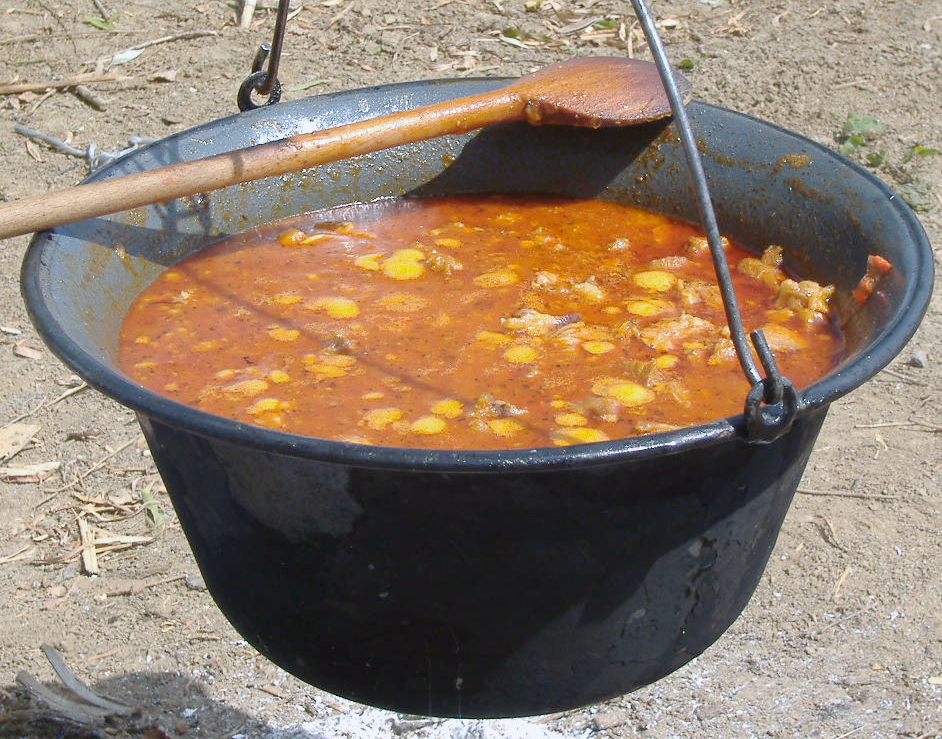 Classic goulash cooking outdoors in a traditional bogrács.
Welcome to FabulousFusionFood's Stew Recipes Page — Stews represent a combination of solid food ingredients that have been cooked in liquid and served in the resultant gravy. Ingredients can include any combination of vegetables and may include meat, especially tougher meats suitable for slow-cooking, such as beef, pork, venison, rabbit, lamb, poultry, sausages, and seafood. While water can be used as the stew-cooking liquid, stock is also common. A small amount of red wine or other alcohol is sometimes added for flavour. Seasonings and flavourings may also be added. Stews are typically cooked at a relatively low temperature (simmered, not boiled), allowing flavours to mingle.
Stews have been around almost nearly as long as humans have been cooking. All you need is a vessel to hold your ingredients and water and a means of heating that vessel. It can be as simple as a leather bag with stones heated in a fire dropped into it. So stews were almost certainly prepared during the Paleolithic and Neolithic periods, if not earlier. Once you have clay or metal pots you can prepare stews next to or set directly over a fire. Stews are low-maintenance cookery, generally not requiring that the cooking pot be observed continuously. The slow cooking is also ideal for tenderizing tougher cuts of meat (neck, shin, tail etc). As these also tend to be the most flavoursome parts of animals, this also means that stews can be extremely flavourful. Stews also pair well with the local staple: potatoes, rice, bread, yams, cassava etc.
Even in hunter-gatherer societies stews are useful in that the slow cooking can make the most of tough meat and it can be combined with foraged grains, leafy greens, nuts and starchy tubers to yield a flavourful, low maintenance and nutritious meal. With the advent of agriculture almost all grains are amenable to stewing and combining grains and legumes in a stew provides a ready way to gain all the essential amino acids that humans (particularly children) require.
The boiling process of making stews also helps sterilize the ingredients, killing harmful bacteria and viruses. It can also help neutralize harmful chemicals, such as the cyanogenic compounds in bitter cassava and helps reduce bitterness in leafy greens, making the food both safer to eat and more palatable. The addition of flavouring ingredients (fruit, spices, herbs) during the cooking process can also alter the flavours of stews, making them more palatable and more appealing. This is particularly the case when adding components with high umami content (certain fish, seaweed, cruciferous vegetables, beans, soy sauce, mushrooms etc).
It is little wonder that, taken globally, the list of stews presented on this site is a long one.
Some stews border on soups and the definition of whether a dish is a soup or a stew. A good example of this is Welsh cawl which can be served with more liquid as a soup or can be thickened as a stew and served with bread and/or potatoes. Most curries, due to their long, slow cooking and blend of ingredients can also be considered a subtype of stew.
Pretty much every culture on earth has a classic stew that's a major part of its cultural culinary repertoire. I have viewed and collected recipes for many of these on my travels. These and other classic stews from around the world are collected and presented here.
The alphabetical list of all the stew recipes on this site follows, (limited to 100 recipes per page). There are 2702 recipes in total:
Page 1 of 28
| A Bengal Currie Origin: Britain | Alitcha Birsen Origin: Eritrea | Amashaza mu gitoke (Peas with Plantains) Origin: Uganda |
| A Messe of Greens Origin: Britain | Aliter Coliclos I (Sprouts, Another Way, I) Origin: Roman | Ambotic Origin: Mozambique |
| A Potage of Roysons (A Pudding of Raisins) Origin: England | Aliter Coliclos II (Stalks, Another Way, II) Origin: Roman | Ambrevades au Curry (Pigeon Pea and Coconut Curry) Origin: Comoros |
| Aaloo Gosht (Mutton Curry with Potatoes) Origin: Pakistan | Aliter Coliclos III (Stalks, Another Way, III) Origin: Roman | Amêijoas na Cataplana (Steamed Clams and Sausage in Tomato Sauce) Origin: Portugal |
| Abacha Ncha (Dried Cassava with Garden Eggs) Origin: Nigeria | Aliter Coliclos IV (Stalks, Another Way, IV) Origin: Roman | Amiwo au Poulet 2 (Amiwo with Chicken) Origin: Benin |
| Abadejo a la Pimienta Verde (Pollock with Green Pepper) Origin: Spain | Aliter Coliclos V (Stalks, Another Way, V) Origin: Roman | Amulatum Aliter (Another Thick Sauce) Origin: Roman |
| Abak (Palm Nut Soup) Origin: Nigeria | Aliter Conchiclam Sic Facies (Legumes, Another Way, Are Made Thus) Origin: Roman | Anadl y Ddraig (Dragon's Breath) Origin: Welsh |
| Abgousht (Persian Beef Stew) Origin: Iran | Aliter cucumeres (Cucumber with Fennel Seed) Origin: Roman | Anardana Jheenga (Pomegranate-flavoured Prawns) Origin: India |
| Abura-miso Origin: Japan | Aliter Cucumeres Rasos (Peeled Cubumbers, Another Way) Origin: Roman | Anginares Yemistes (Stuffed Artichokes) Origin: Cyprus |
| Achu and Ndza Nikka (Cameroonian Achu Yellow Soup) Origin: Cameroon | Aliter Fabaciae (Green Beans, Another Way) Origin: Roman | Anguillan Rice and Peas Origin: Anguilla |
| Adalu (Bean and Sweetcorn Pottage) Origin: Nigeria | Aliter haedinam sive agninam excaldatam (Lamb Stew) Origin: Roman | Anguillan Saltfish Origin: Anguilla |
| Adobo de Pollo Origin: Peru | Aliter in Echino (Sauce for Sea Urchin) Origin: Roman | Angwa Mo (Ghanaian Rice Pilaf) Origin: Ghana |
| Adobo Marinade Origin: Puerto Rico | Aliter In Echino (Sea Urchin, Another Way) Origin: Roman | Ansjovisfisk (Fish with Anchovies) Origin: Sweden |
| Adun Origin: Nigeria | Aliter ius in pisce elixo (Sauce for Poached Fish, Another Way) Origin: Roman | Antiguan Callaloo Origin: Antigua |
| Adzuki Beans with Nori Origin: Japan | Aliter Lenticulam (Lentils, Another Way) Origin: Roman | Antipasto Rice Origin: Italy |
| Afia Efere (White Soup) Origin: Nigeria | Aliter Leporem ex Suo Iure (Another, Hare in its Own Gravy) Origin: Roman | Apelsinfisk (Fish with Orange) Origin: Sweden |
| Afia Efere Unen (White Soup with Chicken) Origin: Nigeria | Aliter Patina (Patina, Another Way) Origin: Roman | Apfel-Rosinen Risotto (Apple and Raisin Risotto) Origin: Namibia |
| Afrikaanse Yakhni Origin: South Africa | Aliter patina de aparagis (A Dish of Asparagus, Another Way) Origin: Roman | Apios et Porros (Celery and Leeks) Origin: Roman |
| Agatoke (Plantain and Vegetable Porridge) Origin: Burundi | Aliter patina de asparagis frigida (Cold Asparagus Dish with Woodock) Origin: Roman | Apple and Rhubarb Compote Origin: Britain |
| Agneau au Cari (Lamb Curry) Origin: Reunion | Aliter Patina de Asparagis II (A Dish of Asparagus, Another Way II) Origin: Roman | Apple and Tamarillo Compote Origin: British |
| Agnum Simplicem (Plain Lamb) Origin: Roman | Aliter Pisa Sive Faba (Peas or Beans, Another Way) Origin: Roman | Appulmoy (Apple Stew) Origin: England |
| Agushi Soup (Ghanaian Egusi Soup) Origin: Ghana | Aliter Pisam Sive Faba (Peas or Broad Beans, Another Way) Origin: Roman | Apricot and Bergamot Chicken Origin: Britain |
| Ah Mè Thar Hin (Myanmar Beef Curry) Origin: Myanmar | Aliter Sepias (Cuttlefish, Another Way) Origin: Roman | Arbi ki Bhaji (Taro Curry) Origin: India |
| Ah Mè Thar Hin (Beef Curry) Origin: Myanmar | Aliter tisanam (Barley Soup, Another Way) Origin: Roman | Ardshane House Irish Stew Origin: Ireland |
| Ahlu Hin (Potato Curry) Origin: Myanmar | Alligator in Sauce Piquante Origin: Cajun | Armenian Bamiya (Okra Stew) Origin: Armenia |
| Ailes de Poulet au Riz et Poivron (Chicken Wings with Rice and Chillies) Origin: Senegal | Almejas à la Naranja (Clams with Orange Sauce) Origin: Spain | Arni Kappamas (Lamb and Potatoes Cooked in Tomato Sauce) Origin: Cyprus |
| Ajiaco Criollo (Cuban Creole Stew) Origin: Cuba | Aloo Bhaji Origin: India | Arni me Fasolia (Lamb with Haricot Beans) Origin: Cyprus |
| Ajlouke et Potiron (Pumpkin Dip) Origin: Tunisia | Alu Achari Origin: India | Arni me kounouppidhi Mesaritico (Lamb with Cauliflower à la Mesaorias) Origin: Cyprus |
| Ak-Ni Korma Origin: India | Alu ko Achhar (Potatoes with Split Peas) Origin: Nepal | Arni me Spanaki (Lamb with Spinach) Origin: Cyprus |
| Akoho sy Voanio (Chicken in Coconut Milk) Origin: Madagascar | Alubias Blancas Con Almejas (White Beans with Clams) Origin: Spain | Aromatic Lamb with Ginger and Potatoes Origin: Ireland |
| Al Machboos (Emirati Spiced Rice With Chicken) Origin: UAE | Alubias blancas con calamar y aceite de romero (White Beans with Squid and Rosemary Oil) Origin: Spain | Arroz a la Cubana (Cuban-style Rice) Origin: Philippines |
| Alapa (Palm-oil Stew) Origin: Nigeria | Améijoas (Clams in Beer) Origin: Mozambique | Arroz al Horno con Perdiz (Baked Rice with Garlic) Origin: Spain |
| Alicam vel sucum tisanae (Spelt or Barley Gruel) Origin: Roman | Amala and Ewedu Origin: Nigeria | |
| Alicha Sega Wot (Mild Beef Stew) Origin: Ethiopia | Amaranth Porridge with Fruity Green Tea Compote Origin: Fusion |
Page 1 of 28