FabulousFusionFood's Lamb-based Recipes Home Page
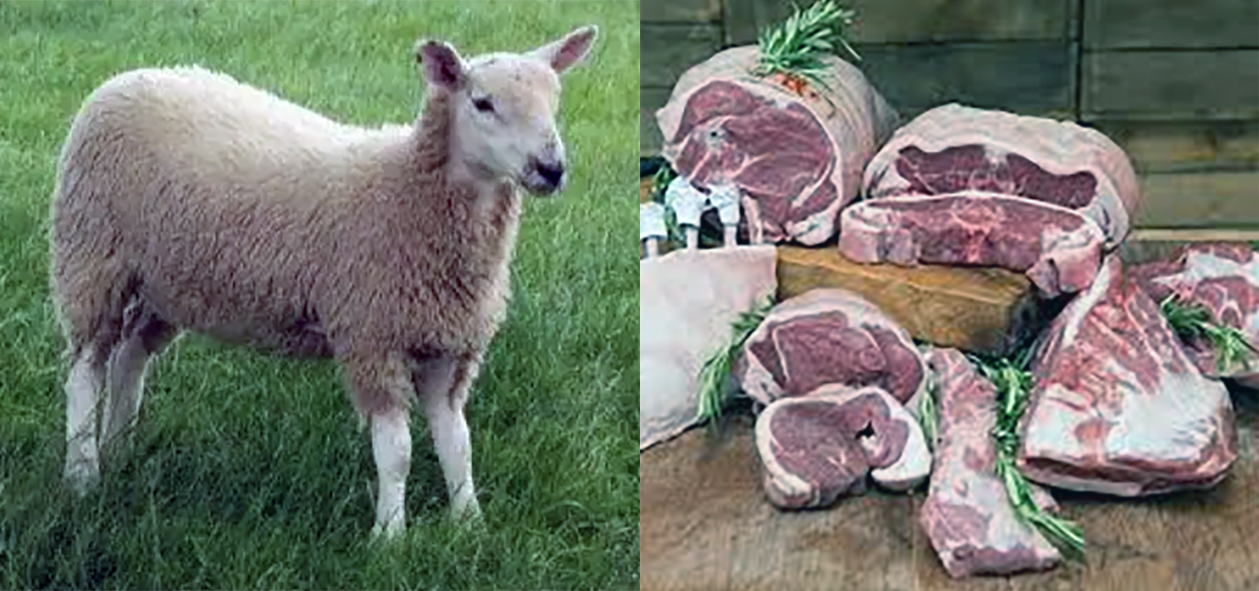 Mature lamb and a selection of lamb cuts.
Welcome to FabulousFusionFood's Lamb-based Recipes Page — The recipes presented here are all based on cow meat. Lamb represents a young sheep (Ovis aries) which is less than one year old.
Hogget is term for a sheep of either sex having no more than two permanent incisors in wear, or its meat. In the UK, it means animals that are 11 to 24 months old. Still common in farming usage and among speciality butchers, it is now a rare term in British, Australian and New Zealand supermarkets, where meat of all sheep less than two years old tends to be called 'lamb'.
Other types of lamb are as follows:
Suckling lamb or milk-fed lamb — meat from an unweaned lamb, typically 4–6 weeks old and weighing 5.5–8 kg. This is typically generally unavailable in the UK but can be sourced from speciality butchers and farm shops.
Young lamb — a milk-fed lamb between six and eight weeks old
Spring lamb — a lamb, usually three to five months old, born in late winter or early spring and sold usually before 1 July (in the northern hemisphere).
Yearling lamb — a young sheep between 12 and 24 months old
Salt marsh lamb (also known as 'saltmarsh lamb' or by its French name, agneau de pré-salé) is the meat of sheep which graze on salt marsh in coastal estuaries that are washed by the tides and support a range of salt-tolerant grasses and herbs, such as samphire, sparta grass, sorrel and sea lavender.
The meat of a lamb is taken from the animal between one month and one year old, with a carcass weight of between 5.5 and 30 kg (12 and 66 lb). This meat generally is more tender than that from older sheep and appears more often on tables in some Western countries.
Sheep are most likely descended from the wild mouflon of Europe and Asia, with Iran being a geographic envelope of the domestication centre. One of the earliest animals to be domesticated for agricultural purposes, sheep are raised for fleeces, meat (lamb, hogget or mutton), and milk. A sheep's wool is the most widely used animal fibre, and is usually harvested by shearing. In Commonwealth countries, ovine meat is called lamb when from younger animals and mutton when from older ones; in the United States, meat from both older and younger animals is usually called lamb. Sheep continue to be important for wool and meat today, and are also occasionally raised for pelts, as dairy animals, or as model organisms for science.
Sheep meat and milk were one of the earliest staple proteins consumed by human civilization after the transition from hunting and gathering to agriculture. Sheep meat prepared for food is known as either mutton or lamb, and approximately 540 million sheep are slaughtered each year for meat worldwide. "Mutton" is derived from the Old French moton, which was the word for sheep used by the Anglo-Norman rulers of much of the British Isles in the Middle Ages. This became the name for sheep meat in English, while the Old English word sceap was kept for the live animal. Throughout modern history, "mutton" has been limited to the meat of mature sheep usually at least two years of age; "lamb" is used for that of immature sheep less than a year.
Cuts of Lamb (UK, Canada, and other Commonwealth countries):
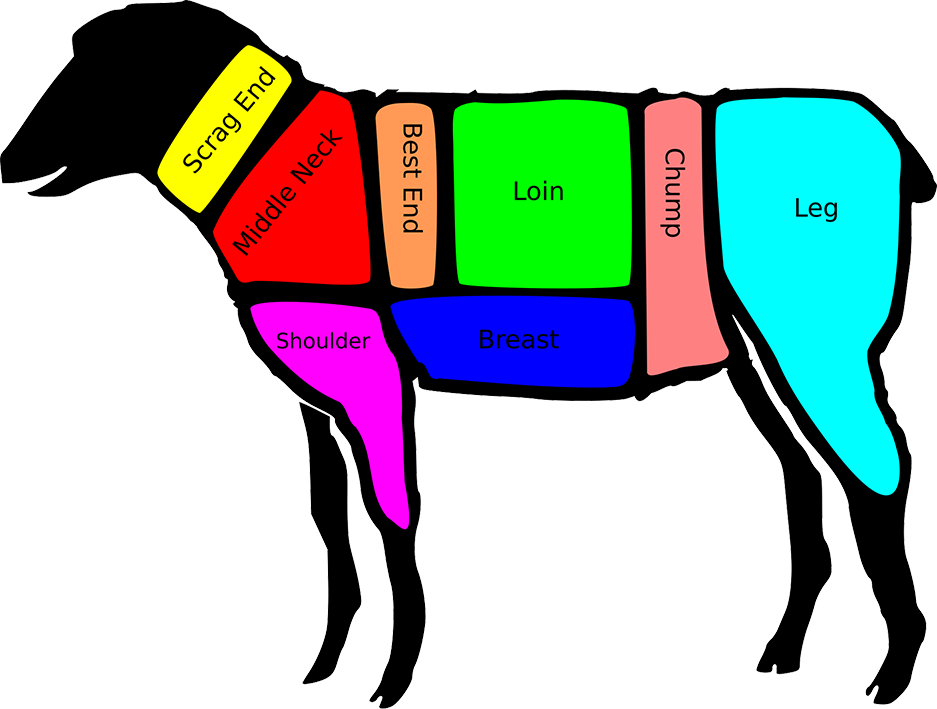 Cuts of Lamb:
Scrag end (of neck) — stewing
Middle neck — braising, stewing
Best End (of neck) — roasting, stewing, braising
Loin (including chops, racks and saddle) — roasting, frying, braising
Chump (and chump chops) — frying
Barnsley chop, a large double loin chop — frying
Leg (gigot in Scotland) including leg steaks — roasting, frying
Shank — braising
Shoulder — roasting Breast — braising
Offal — typically tongue, liver, heart, stomach, sweetbreads, testicles, intestines and kidneys
The alphabetical list of all the lamb-based recipes on this site follows, (limited to 100 recipes per page). There are 612 recipes in total:
Page 1 of 7
| Ćevapčići Origin: Serbia | Arni me kounouppidhi Mesaritico (Lamb with Cauliflower à la Mesaorias) Origin: Cyprus | BIR Kashmiri Curry Origin: Britain |
| Ćevapi Origin: Bosnia | Arni me Spanaki (Lamb with Spinach) Origin: Cyprus | BIR Lamb Chettinad Origin: Britain |
| Aaloo Gosht (Mutton Curry with Potatoes) Origin: Pakistan | Arni Psito (Oven-baked Lamb) Origin: Cyprus | BIR Lamb Jalfrezi Origin: Britain |
| Abbacchio alla Cacciatora Origin: Italy | Arni Souvla (Skewered Lamb) Origin: Cyprus | BIR Lamb Rogan Josh Origin: Britain |
| Abbacchio alla scottadito (Barbecued Milk-fed Lamb Chops) Origin: Vatican City | Arni Ttavas (Oven-roasted Lamb with Onions) Origin: Cyprus | BIR Pre-cooked Beef Origin: Britain |
| Abbachio al Forno (Italian Roast Baby Lamb) Origin: Italy | Aromatic Lamb with Ginger and Potatoes Origin: Ireland | Biscuit-topped Lamb Casserole Origin: America |
| Adana Kebab Origin: Turkey | Arroz a la Cubana (Cuban-style Rice) Origin: Philippines | Blanquette d'Agneau au Curry (Curried Blanquettes of Lamb) Origin: Cote dIvoire |
| Adana Kebap Origin: Turkey | Aruban Curried Mutton Origin: Aruba | Blue Sonic Curry Origin: Japan |
| Adobo Valentine Lamb Origin: American | Arvi aur Gosht ka Khatta Salan (Taro and Lamb in a Tangy Sauce) Origin: India | Bo-Kaap Kerrie (Cape Malay Curry) Origin: South Africa |
| Advieh-spiced Persian Meatballs Origin: Iran | Asharbal Leebia (Libyan Soup 2) Origin: Libya | Bonava (Meat and Potatoes Stew) Origin: Mauritania |
| Afghan Kofta Curry Origin: Afghanistan | Baamiye Suqaar (Meat and Okra Stew) Origin: Somalia | Bonava (Mauritanian Lamb Stew) Origin: Mauritania |
| Agneau au Cari (Lamb Curry) Origin: Reunion | Bak Kut Teh (Spicy Sparerib Soup) Origin: Malaysia | Bosanski Lonac (Bosnian Pot Stew) Origin: Bosnia |
| Agneau Provençal au Jus Menthe Verte (Roast Lamb Provençal with Mint Gravy) Origin: France | Bakalca (Slovenian Lamb Stew) Origin: Slovenia | Boti Kebab (Bite-sized Grilled Lamb) Origin: India |
| Agnum Simplicem (Plain Lamb) Origin: Roman | Baked Haggis with Whisky Cumberland Sauce Origin: Scotland | Bottle Masala Meatball Curry Origin: India |
| Air Fryer Lamb Chops Origin: Britain | Baked Lamb with Potatoes and Artichokes Origin: Ireland | Bourek me Kima (Pastries Stuffed with Minced Meat) Origin: Cyprus |
| Air Fryer Lamb Koftas Origin: Britain | Balmoral Chicken Origin: Scotland | Bouti Arniou Rosto (Roast Leg of Lamb) Origin: Cyprus |
| Air Fryer Liver and Sausage Curry Origin: Britain | Balti Tandoori Keema Origin: Britain | Bozartma (Lamb Stewed with Vegetables and Cherry Plums) Origin: Azerbaijan |
| Air Fryer Pancakes Origin: Britain | Bamieh (Okra Stew) Origin: Iraq | Braised Greek-style Lamb Chops Origin: Fusion |
| Aish bel-Lahm (Bread with Lamb) Origin: Saudi Arabia | Bangaou Origin: Chad | Braised Lamb Shanks with Cannellini Beans Origin: Britain |
| Al Mechoui (Spit-roasted Baby Lamb) Origin: Mauritania | Bangladeshi Vindaloo Origin: Britain | Brik Dannouni (Stuffed Lamb Turnovers) Origin: Tunisia |
| Al Mechoui (Spit-roasted Baby Lamb) Origin: Western Sahara | Barbecue Baharat Lamb Chops with Vegetable Salad Origin: Australia | Brochettes Burkinabé (Spiced Lamb Kebabs) Origin: Burkina Faso |
| Aliter haedinam sive agninam excaldatam (Lamb Stew) Origin: Roman | Barbecued Butterflied Leg of Lamb Origin: Australia | Brown Windsor Soup Origin: British |
| Aliter Haedinam sive Agninam Excaldatam (Roast Kid or Lamb) Origin: Roman | Barbecued Kibbeh Origin: African Fusion | Brunei Murtabak (Meat Rotis) Origin: Brunei |
| Aliter Haedinam sive Agninam Excaldatam (Stew of Kid or Lamb) Origin: Roman | Barbecued Lamb Chops with Redcurrant Mustard Glaze Origin: British | Brunei Murtabak (Meat Rotis) Origin: Singapore |
| Aliter Haedinam sive Agninam Excaldatam (Stew of Kid or Lamb, Another Way) Origin: Roman | Barbecued Lamb Ribs Origin: Britain | Brunei Satay Origin: Brunei |
| Aliter Haedum sive Agnum Assum (Roast Kid or Lamb, Another Way) Origin: Roman | Barbecued Leg of Lamb with Olives Origin: Australia | Burkinabé Riz au Gras Origin: Burkina Faso |
| Aliter Haedus sive Agnus Syringiatus (Boned Suckling Kid or Lamb, Another Way) Origin: Roman | Barbecued Spice-crusted Lamb Origin: Britain | Butterflied Lamb Shoulder with Salsa Verde Origin: Britain |
| Aliter [Iecinera] in Pulmonibus (Another, of Lungs) Origin: Roman | Barley Kail Origin: Scotland | Butterfly Chops with Redcurrant Glaze Origin: Britain |
| Alter Haedinam Sive Agninam Excaldatam (Steamed Lamb) Origin: Roman | Bengali Hot Dry Meat Curry Origin: India | Butterfly Lamb with Balsamic Vinegar and Mint Origin: Britain |
| Anardana Gosht (Lamb Curry with Pomegranate) Origin: India | Beshbarmak Origin: Turkmenistan | Byrger cig oen a bara lawr gydag awch iogwrt â mintys (Lamb and Laverbread Burger with Yoghurt and Mint Relish) Origin: Welsh |
| Ardshane House Irish Stew Origin: Ireland | Bhindi Gosht (Pakistani Mutton and Okra Curry) Origin: Pakistan | Byrgers Rwdan, Rhosmari ac Oen (Swede, Lamb and Rosemary Burgers) Origin: Welsh |
| Arni Gemisto me Horta ke Feta (Leg of Lamb Stuffed with Greens and Feta) Origin: Greece | Bhuna Ghost Origin: Britain | Cafréal de Cordeiro (Lamb Cafréal) Origin: Angola |
| Arni Kappamas (Lamb and Potatoes Cooked in Tomato Sauce) Origin: Cyprus | Bihari Lamb Curry Origin: India | |
| Arni me Fasolia (Lamb with Haricot Beans) Origin: Cyprus | BIR Chicken Vindaloo Origin: Britain |
Page 1 of 7