FabulousFusionFood's Lamb-based Recipes 4th Page
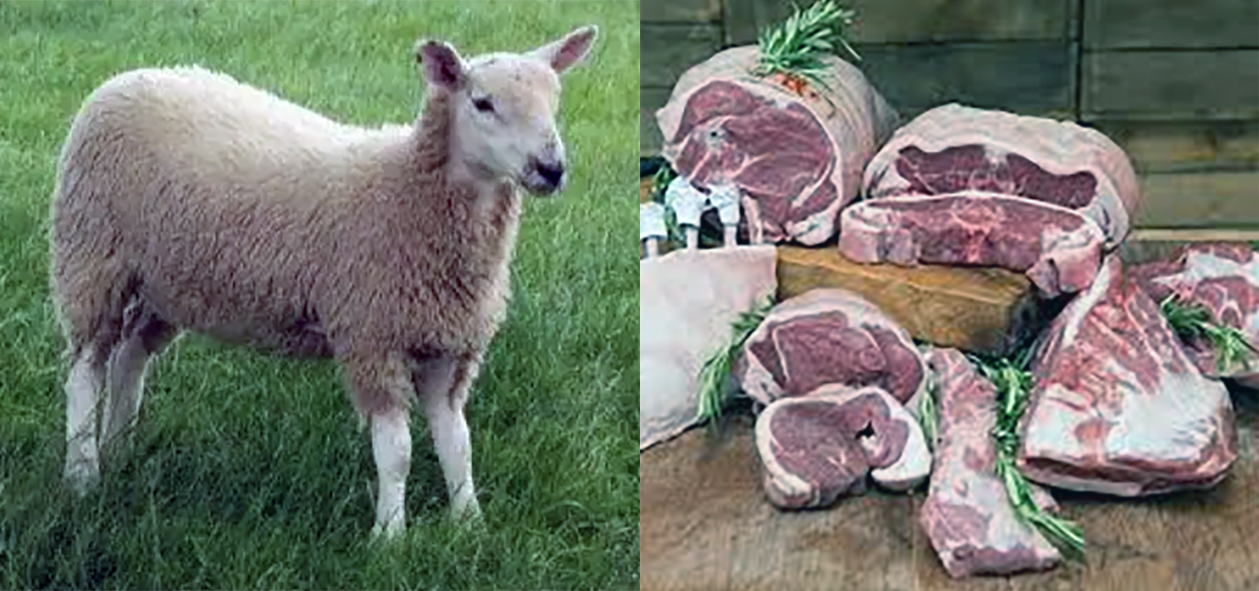 Mature lamb and a selection of lamb cuts.
Welcome to FabulousFusionFood's Lamb-based Recipes Page — The recipes presented here are all based on cow meat. Lamb represents a young sheep (Ovis aries) which is less than one year old.
Hogget is term for a sheep of either sex having no more than two permanent incisors in wear, or its meat. In the UK, it means animals that are 11 to 24 months old. Still common in farming usage and among speciality butchers, it is now a rare term in British, Australian and New Zealand supermarkets, where meat of all sheep less than two years old tends to be called 'lamb'.
Other types of lamb are as follows:
Suckling lamb or milk-fed lamb — meat from an unweaned lamb, typically 4–6 weeks old and weighing 5.5–8 kg. This is typically generally unavailable in the UK but can be sourced from speciality butchers and farm shops.
Young lamb — a milk-fed lamb between six and eight weeks old
Spring lamb — a lamb, usually three to five months old, born in late winter or early spring and sold usually before 1 July (in the northern hemisphere).
Yearling lamb — a young sheep between 12 and 24 months old
Salt marsh lamb (also known as 'saltmarsh lamb' or by its French name, agneau de pré-salé) is the meat of sheep which graze on salt marsh in coastal estuaries that are washed by the tides and support a range of salt-tolerant grasses and herbs, such as samphire, sparta grass, sorrel and sea lavender.
The meat of a lamb is taken from the animal between one month and one year old, with a carcass weight of between 5.5 and 30 kg (12 and 66 lb). This meat generally is more tender than that from older sheep and appears more often on tables in some Western countries.
Sheep are most likely descended from the wild mouflon of Europe and Asia, with Iran being a geographic envelope of the domestication centre. One of the earliest animals to be domesticated for agricultural purposes, sheep are raised for fleeces, meat (lamb, hogget or mutton), and milk. A sheep's wool is the most widely used animal fibre, and is usually harvested by shearing. In Commonwealth countries, ovine meat is called lamb when from younger animals and mutton when from older ones; in the United States, meat from both older and younger animals is usually called lamb. Sheep continue to be important for wool and meat today, and are also occasionally raised for pelts, as dairy animals, or as model organisms for science.
Sheep meat and milk were one of the earliest staple proteins consumed by human civilization after the transition from hunting and gathering to agriculture. Sheep meat prepared for food is known as either mutton or lamb, and approximately 540 million sheep are slaughtered each year for meat worldwide. "Mutton" is derived from the Old French moton, which was the word for sheep used by the Anglo-Norman rulers of much of the British Isles in the Middle Ages. This became the name for sheep meat in English, while the Old English word sceap was kept for the live animal. Throughout modern history, "mutton" has been limited to the meat of mature sheep usually at least two years of age; "lamb" is used for that of immature sheep less than a year.
Cuts of Lamb (UK, Canada, and other Commonwealth countries):
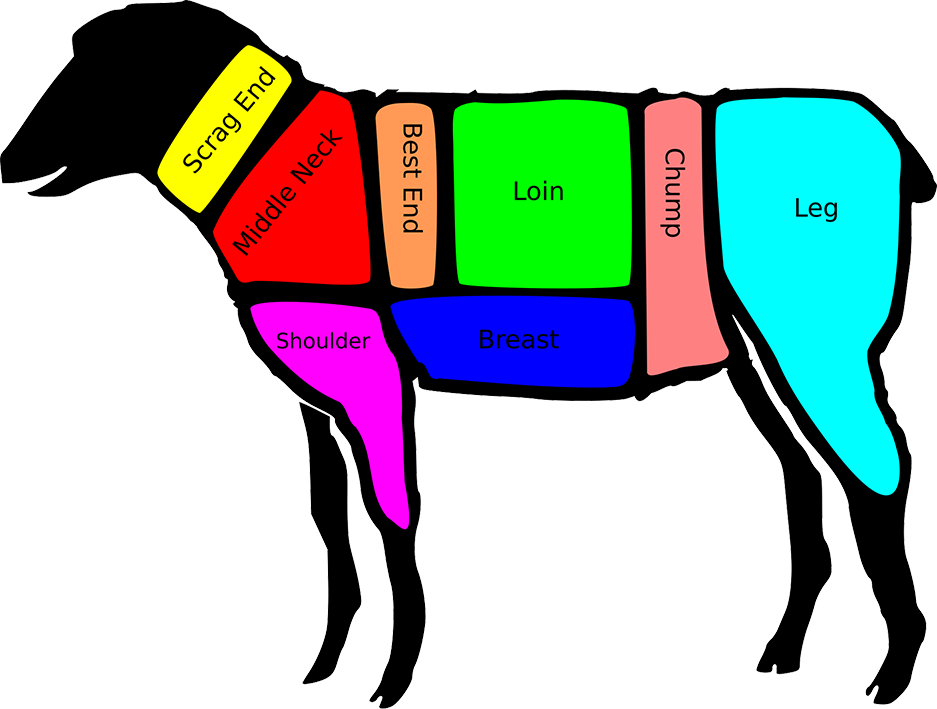 Cuts of Lamb:
Scrag end (of neck) — stewing
Middle neck — braising, stewing
Best End (of neck) — roasting, stewing, braising
Loin (including chops, racks and saddle) — roasting, frying, braising
Chump (and chump chops) — frying
Barnsley chop, a large double loin chop — frying
Leg (gigot in Scotland) including leg steaks — roasting, frying
Shank — braising
Shoulder — roasting Breast — braising
Offal — typically tongue, liver, heart, stomach, sweetbreads, testicles, intestines and kidneys
The alphabetical list of all the lamb-based recipes on this site follows, (limited to 100 recipes per page). There are 612 recipes in total:
Page 4 of 7
| Lamb Cutlet Casserole Origin: Britain | Lamb with New Potatoes and Coriander Origin: Ireland | Mantı (Turkmen lamb dumplings) Origin: Turkmenistan |
| Lamb Cutlets and Spinach Origin: Britain | Lamb with Red Wine and Chorizo Origin: Britain | Manx Lamb Liver and Onions Origin: Manx |
| Lamb Dhan Saag Origin: India | Lamb with Spinach Origin: Mauritius | Maraq Fahfah (Somali Soup) Origin: Somalia |
| Lamb Dhansak Origin: Britain | Lamb, Apricot and Prune Casserole Origin: African Fusion | Maraq Fahfah (Somali Soup) Origin: Somaliland |
| Lamb doner Origin: Britain | Lammfärsfyllda squashbåtar (Lamb-stuffed Squash Boats) Origin: Sweden | Marolaym Origin: Mauritania |
| Lamb Dopiaza Origin: Britain | Lancashire Hot Pot Origin: England | Masaaledaar Pudine wal Quimah (Minced Lamb with Mint and Spices) Origin: India |
| Lamb Flaps Origin: Papua New Guinea | Lebanese Mlukhiyea (Jute Mallow and Meat Stew) Origin: Lebanon | Masala Lamb Chops Origin: Pakistan |
| Lamb Jalfrezi Origin: India | Leftover Roast Lamb Kota Origin: South Africa | Masaledaar Bakre ki Kaleji Gurda Phepsa (Lamb Offal Curry) Origin: India |
| Lamb Julienne with Crispy Dumplings Origin: Britain | Leftovers Lamb Ragu Origin: Britain | Massak'a (Egyptian Moussaka) Origin: Egypt |
| Lamb Karahi Origin: India | Leftovers Stir-fry with Green Papaya Origin: American | Mayiritsa (Easter Soup) Origin: Greece |
| Lamb Koftas Origin: North Africa | Leksour (Lamb Stew on Millet Pancakes) Origin: Mauritania | Meatballs in Garlic Broth Origin: Algeria |
| Lamb Madras Origin: India | Libyan Lamb Couscous Origin: Libya | Mechoui (Dried-fruit Stuffed Leg of Lamb) Origin: Mauritania |
| Lamb Noisettes with Bilberries Origin: Britain | Limoo Amani (Persian Dried Limes) Origin: Iran | Mediterranean Lamb in a Dijon Mustard Sauce Origin: Mediterranean |
| Lamb Noisettes with Tomato Salsa Origin: Britain | Liula-kebab Origin: Georgia | Merguez Sausage Origin: Algeria |
| Lamb Paprikash Origin: Hungary | Liula-Kebab (Minced Lamb Kofte) Origin: Azerbaijan | Meshoui (Moroccan Lamb) Origin: Morocco |
| Lamb Pasanda Origin: Britain | Liver and Mushrooms with Fusilli Pasta Origin: Italy | Microwave Loin of Lamb Florentine Origin: Britain |
| Lamb Rogan Josh Origin: India | Liver and Onion Kebabs Origin: Britain | Mijoté d'agneau aux gombos (Braised Lamb with Okra) Origin: Mali |
| Lamb Rogan Josh Origin: India | Liver Oxyrhynchus Origin: Roman | Mini Curried Shepherd's Pie Origin: South Africa |
| Lamb Rogan Josh Origin: Britain | Llwynau Cig Oen Rhost (Roast Saddle of Welsh Lamb) Origin: Welsh | Minted Racks of Lamb Origin: Canada |
| Lamb Saag Restaurant Style Origin: India | Lū (Baked Taro Leaf Parcels) Origin: Tonga | Mixed Grill Origin: Britain |
| Lamb Shank and Parsnip Pie Origin: New Zealand | Lū (Baked Taro Leaf Parcels) Origin: Wallis Futuna | Mixed Grill Skewers Origin: Britain |
| Lamb Shank Madras Origin: India | Macedonian Souvlaki Origin: North Macedonia | Moroccan Braised Lamb Origin: Morocco |
| Lamb Shashliks with Rosemary and Garlic Origin: Turkey | Machboos Laham Origin: Kuwait | Moroccan Harira Origin: Morocco |
| Lamb Sheek Kebabs Origin: Britain | Mafé Origin: Senegal | Moroccan Lamb Couscous Origin: Morocco |
| Lamb shish with olive and walnut tahini Origin: Britain | Maffe aux Legumes Arachide (Beef or Lamb in Peanut Butter) Origin: Senegal | Moroccan Shish Sesame Skewers Origin: Morocco |
| Lamb Souvlaki with Tzatziki Origin: Greece | Magic Lamb Origin: Namibia | Moroccan Spice-rubbed Leg of Lamb Origin: Morocco |
| Lamb Stew with Chestnuts and Pomegranates Origin: Georgia | Magiritsa (Greek Easter Lamb Soup) Origin: Greece | Moroccan Spiced Lamb Shanks Origin: Morocco |
| Lamb Stifado Origin: Cyprus | Majboos al Laham (Lamb with Rice) Origin: Kuwait | Moroccan-style Lamb Kebabs Origin: Fusion |
| Lamb Stuffed with Chicken Origin: Montenegro | Malaysian Beriani Origin: Malaysia | Mouton à l'Arachide (Lamb with Peanuts) Origin: Benin |
| Lamb Tagine Pie Origin: Fusion | Malaysian Lamb Rendang Origin: Malaysia | Mrefisa Origin: Western Sahara |
| Lamb Tagine with Artichokes Origin: Morocco | Mallorcan-style Easter Lamb Origin: Britain | Mughlai Lamb Biriani Origin: India |
| Lamb Tarkari (Lamb Yoghurt Curry) Origin: Nepal | Mansaf Origin: Jordan | Mughlai Malai Kofta (Spiced Lamb Meatballs in a Creamy Sauce) Origin: Britain |
| Lamb Tikka Origin: India | Manti (Meat-filled Boat-shaped Pastry) Origin: Armenia | |
| Lamb with Mango and Chilli Origin: Fusion | Mantı (Turkish lamb dumplings) Origin: Turkey |
Page 4 of 7