FabulousFusionFood's Herb-based Recipes 15th Page
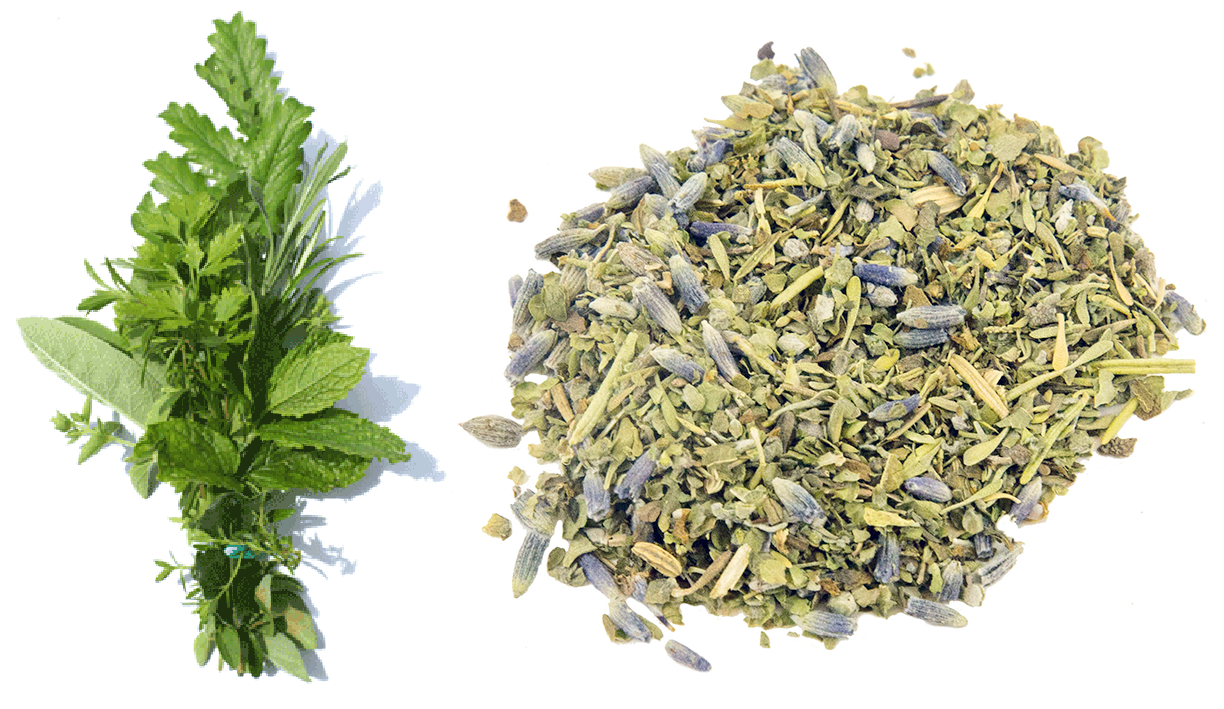 Bunch of fresh herbs and the classic dried Herbes de Provence blend.
Welcome to FabulousFusionFood's Herb-based Recipes Page — Herbs are typically the milder of the flavourings added to food. By definition a herb is any herbaceous part of a plant. This means any combination of the stems the leaves and the flowers. Basically those parts of a plant that live above ground (in contrast the roots of a plant if used as a flavouring are generally considered as spices, as are the seeds and fruit of a plant). The list below therefore describes as many parts of a plant as possible if they are used (either fresh or dried) as a food flavouring. The exception here is the woody stem, which tends to be thought of as a spice rather than an herb.
In terms of flavouring, at least for economic impact, herbs have tended to play second fiddle to spices. The majority of herbs need to be used fresh, their flavour chemicals tend to be volatile. As a result, herbs, typically, are grown locally, added fresh and used towards the end of cookery. Which is not to say that they're not important in cookery. They can be vital and some combinations, like French fines herbes, herbes de provence or bouquets garnis are key to the flavour profile of a dish.
Culinary herbs are typically added fresh towards the end of cooking though dried herb blends such as herbes de provence are available. Most herbs lose their potency on drying. The exception being oregano, which is typically superior dried as opposed to fresh.
Herbs are a widely distributed and widespread group of plants, excluding vegetables, with savory or aromatic properties that are used for flavoring and garnishing food, for medicinal purposes, or for fragrances. Culinary use typically distinguishes herbs from spices. Herbs generally refers to the leafy green or flowering parts of a plant (either fresh or dried), while spices are usually dried and produced from other parts of the plant, including seeds, bark, roots and fruits.
Herbs have a variety of uses including culinary, medicinal, aromatic and in some cases, spiritual. General usage of the term "herb" differs between culinary herbs and medicinal herbs; in medicinal or spiritual use, any parts of the plant might be considered "herbs", including leaves, roots, flowers, seeds, root bark, inner bark (and cambium), resin and pericarp.
In botany, the term herb refers to a herbaceous plant, defined as a small, seed-bearing plant without a woody stem in which all aerial parts (i.e. above ground) die back to the ground at the end of each growing season. Usually the term refers to perennials, although herbaceous plants can also be annuals (plants that die at the end of the growing season and grow back from seed next year), or biennials. This term is in contrast to shrubs and trees which possess a woody stem. Shrubs and trees are also defined in terms of size, where shrubs are less than ten meters tall, and trees may grow over ten meters. The word herbaceous is derived from Latin herbāceus meaning "grassy", from herba "grass, herb".
Culinary herbs are distinguished from vegetables in that, like spices, they are used in small amounts and provide flavour rather than substance to food.
Herbs can be perennials such as thyme, oregano, sage or lavender, biennials such as parsley, or annuals like basil. Perennial herbs can be shrubs such as rosemary (Rosmarinus officinalis), or trees such as bay laurel (Laurus nobilis) – this contrasts with botanical herbs, which by definition cannot be woody plants. Some plants are used as both herbs and spices, such as dill weed and dill seed or coriander leaves and seeds. There are also some herbs, such as those in the mint family, that are used for both culinary and medicinal purposes.
For more information on culinary herbs, please visit this site's herb guide where you will find information on over 100 herbs.
This is a continuation of the recipes listings for the herb-based recipes and dishes on this site (the page in fact). If you would like to learn a little more about this history of herbs and the methods of cooking with spices then please go to the first listing page for these Herb-based recipes information page. Here you will get just a list of the additional Herb-based recipes on this site.
The alphabetical list of all the herb-based recipes on this site follows, (limited to 100 recipes per page). There are 1954 recipes in total:
Page 15 of 20
| Potted Herrings Origin: Ireland | Pullum Oxyzomum (Chicken with Piquant Sauce) Origin: Roman | Red Lentil, Chickpea and Chilli Soup Origin: Britain |
| Potted Prawns II Origin: Britain | Pullum Paroptum (Lightly-roasted Chicken) Origin: Roman | Red Onion and Mozzarella Pizza Origin: Britain |
| Poule au pot à l'ancienne (Old-Fashioned Chicken in a Pot) Origin: France | Pumpkin Rösti Origin: Switzerland | Red Wine Lamb Skewers Origin: Britain |
| Poulet à la Basque (Basque-style Chicken) Origin: France | Pumpkin Ricotta gnocchi (Gnocchi de Zucca e Ricotta) Origin: Italy | Red Zhug (Yemenite Hot Sauce) Origin: Yemen |
| Poulet à la Provençale (Provence-style Chicken) Origin: France | Pumpkin Soup Origin: American | Redbush Ginger Beer Origin: South Africa |
| Poulet au Beurre de Cacahuète (Chicken with Peanut Butter) Origin: Senegal | Pumpkin with Nilgiri Sauce Origin: India | Redbush Raisin Cupcakes Origin: South Africa |
| Poulet aux Bananes Plantains (Chicken with Plantains) Origin: Cameroon | Pupusas de Chicharrón (Pork Pupusas) Origin: El Salvador | Redbush Stewed Beef and Potatoes Origin: South Africa |
| Poulet Colombo Origin: French Guiana | Pyggus in sauce (Pork in Sauce) Origin: England | Redbush Tea Origin: Botswana |
| Poulet Princesse (Chicken with Asparagus Garnish) Origin: France | Pyrizhky (Ukrainian Meat Patties) Origin: Ukraine | Relajo (Salvadorean Red Chilli Sauce) Origin: El Salvador |
| Poulet Rôti Tchadienne (Chadian-style Roast Chicken) Origin: Chad | Qabooli Rice Origin: Oman | Relleno de Empanada de Pollo (Chicken Empanada Filling) Origin: Mexico |
| Poulette Sauce Origin: Britain | Quassatat with Ricotta Filling Origin: Malta | Rhubarb and Lamb Koresh Origin: Fusion |
| Poultry Seasoning Origin: American | Qurutob Origin: Tajikistan | Rhubarb Fool with Lemongrass Origin: Britain |
| Prawn Cocktail Origin: Britain | Râble de Lièvre à la Poivrade (Saddle of Hare à la Poivrade) Origin: France | Ribnoye Kharcho (Salmon and Walnut Soup) Origin: Georgia |
| Pressure Cooker Cajun Meatball Stew Origin: American | Rôti de Lapin aux Herbes (Roast Rabbit with Herbs) Origin: France | Rice Bujambura Origin: Mozambique |
| Pressure Cooker Greek Meatballs with Spaghetti Sauce Origin: American | Rösti Origin: Switzerland | Rice Pilaf with Avocado Leaf Origin: Fusion |
| Pressure Cooker Quick Lentil Soup Origin: Britain | Rabbit in Tomato and Emperor's Mint Sauce Origin: Britain | Rich Gravy for Hashes, Ragoûts, etc Origin: Britain |
| Pressure Cooker Ratatouille Origin: Britain | Rabbit in Tomato and Mint Sauce Origin: Andorra | Rich Herb Pastry Origin: Britain |
| Pressure Cooker White Stock Origin: Britain | Rabbit Stew with Mallow Cheeses Origin: British | Rich Minestrone Soup Origin: Britain |
| Prezganka (Flour Soup) Origin: Slovenia | Rabo Encendido (Spicy Dominican Oxtail Stew) Origin: Dominican Republic | Rich Strong Stock Origin: British |
| Prosciutto and Pesto wrapped Monkfish Tail Origin: Britain | Rack & Ruin Origin: Britain | Risoto o Ddail Poethion a Pherlysiau Gwyllt (Risotto of Nettles and Wild Herbs) Origin: Welsh |
| Provençale Sauce Origin: Britain | Rack of Lamb with Sénégal Pepper Emulsion Origin: African Fusion | Risotto al Funghi Porcini e Nepitella (Risotto with Porcini Mushrooms and Lesser Calamint) Origin: Italy |
| Provoleta (Argentinian Cheese Salad) Origin: Argentina | Ragoût of Turkey Origin: Britain | Risotto alle Erbe e Niputedda (Catmint and Herb Risotto) Origin: Italy |
| Prudhomme's Cajun Seasoning Mix Origin: American | Ragoût de cabri créole (Creole Goat Stew) Origin: Guadeloupe | Risotto of nettles and wild herbs Origin: Cape Verde |
| Psarosoupa (Fish Soup) Origin: Cyprus | Ragoût de chatrou créole (Creole Chatrou Stew) Origin: Guadeloupe | Risotto Rucola (Wild Rocket Risotto) Origin: Italy |
| Psemeno kotopoylo me te saltsa lemoni-maintanou (Roasted Chicken With Lemon-Parsley Sauce) Origin: Greece | Ragoût de lambi (Conch stew) Origin: Saint-Martin | Riz au Gras (Ivorian Fat Rice) Origin: Cote dIvoire |
| Pudina Chutney (Mint Chutney) Origin: India | Ragoût de poisson (Creole-style fish Stew) Origin: Saint-Martin | Riz haricots rouges antillais (Antillean Red Beans and Rice) Origin: Guadeloupe |
| Puerto Rican Adobo Seasoning Origin: Puerto Rico | Ragù d'anatra (Venetian Duck Ragu) Origin: Italy | Roast Fillet of Beef Origin: Britain |
| Puerto Rican Arroz Con Pollo Origin: Puerto Rico | Raised Gooseberry Pie Origin: Britain | Roast Haunch of Venison Origin: Britain |
| Puerto Rican Sofrito Origin: Puerto Rico | Raspberry and Rosemary Barbecued Lamb Chops Origin: British | Roast Lamb with Pesto Stuffing Origin: Britain |
| Puffball Patties Origin: Britain | Recado Rojo (Red Achiote Paste) Origin: South America | Roast Loin of Pork a la Provencale Origin: France |
| Pulë me Arra (Chicken with Walnuts) Origin: Albania | Recado Rojo (Red Achiote Paste) Origin: Costa Rica | Roast Loin of Pork with Garlic and Bergamot Origin: France |
| Pullum Elixum ex Iure Suo (Chicken in its Own Broth) Origin: Roman | Red Bell Pepper Coulis Origin: France | Roast Megrim with Parsley and Caper Butter Origin: England |
| Pullum Elixum ex Iure Suo (Boiled Chicken with Boiled Egyptian Beans) Origin: Roman | Red Chicken Mole Origin: Mexico | |
| Pullum Frontonianum (Chicken a la Fronto) Origin: Roman | Red Enchilada Sauce Origin: America |
Page 15 of 20