FabulousFusionFood's Herb-based Recipes 18th Page
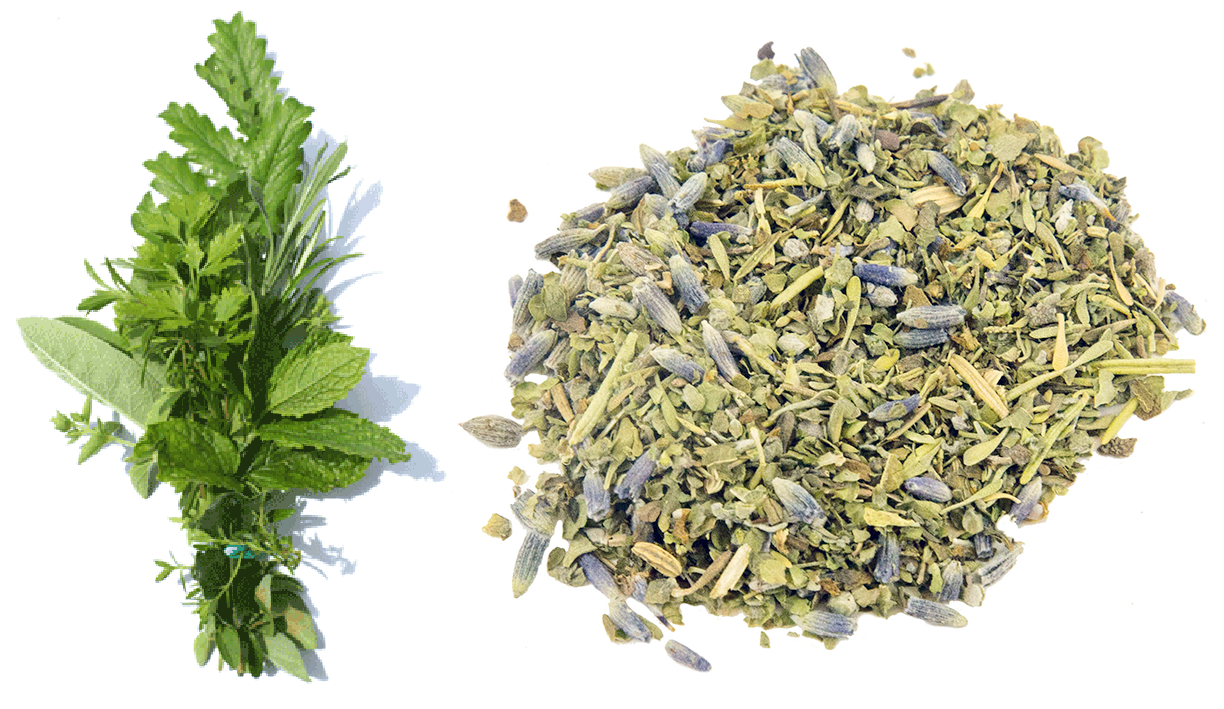 Bunch of fresh herbs and the classic dried Herbes de Provence blend.
Welcome to FabulousFusionFood's Herb-based Recipes Page — Herbs are typically the milder of the flavourings added to food. By definition a herb is any herbaceous part of a plant. This means any combination of the stems the leaves and the flowers. Basically those parts of a plant that live above ground (in contrast the roots of a plant if used as a flavouring are generally considered as spices, as are the seeds and fruit of a plant). The list below therefore describes as many parts of a plant as possible if they are used (either fresh or dried) as a food flavouring. The exception here is the woody stem, which tends to be thought of as a spice rather than an herb.
In terms of flavouring, at least for economic impact, herbs have tended to play second fiddle to spices. The majority of herbs need to be used fresh, their flavour chemicals tend to be volatile. As a result, herbs, typically, are grown locally, added fresh and used towards the end of cookery. Which is not to say that they're not important in cookery. They can be vital and some combinations, like French fines herbes, herbes de provence or bouquets garnis are key to the flavour profile of a dish.
Culinary herbs are typically added fresh towards the end of cooking though dried herb blends such as herbes de provence are available. Most herbs lose their potency on drying. The exception being oregano, which is typically superior dried as opposed to fresh.
Herbs are a widely distributed and widespread group of plants, excluding vegetables, with savory or aromatic properties that are used for flavoring and garnishing food, for medicinal purposes, or for fragrances. Culinary use typically distinguishes herbs from spices. Herbs generally refers to the leafy green or flowering parts of a plant (either fresh or dried), while spices are usually dried and produced from other parts of the plant, including seeds, bark, roots and fruits.
Herbs have a variety of uses including culinary, medicinal, aromatic and in some cases, spiritual. General usage of the term "herb" differs between culinary herbs and medicinal herbs; in medicinal or spiritual use, any parts of the plant might be considered "herbs", including leaves, roots, flowers, seeds, root bark, inner bark (and cambium), resin and pericarp.
In botany, the term herb refers to a herbaceous plant, defined as a small, seed-bearing plant without a woody stem in which all aerial parts (i.e. above ground) die back to the ground at the end of each growing season. Usually the term refers to perennials, although herbaceous plants can also be annuals (plants that die at the end of the growing season and grow back from seed next year), or biennials. This term is in contrast to shrubs and trees which possess a woody stem. Shrubs and trees are also defined in terms of size, where shrubs are less than ten meters tall, and trees may grow over ten meters. The word herbaceous is derived from Latin herbāceus meaning "grassy", from herba "grass, herb".
Culinary herbs are distinguished from vegetables in that, like spices, they are used in small amounts and provide flavour rather than substance to food.
Herbs can be perennials such as thyme, oregano, sage or lavender, biennials such as parsley, or annuals like basil. Perennial herbs can be shrubs such as rosemary (Rosmarinus officinalis), or trees such as bay laurel (Laurus nobilis) – this contrasts with botanical herbs, which by definition cannot be woody plants. Some plants are used as both herbs and spices, such as dill weed and dill seed or coriander leaves and seeds. There are also some herbs, such as those in the mint family, that are used for both culinary and medicinal purposes.
For more information on culinary herbs, please visit this site's herb guide where you will find information on over 100 herbs.
This is a continuation of the recipes listings for the herb-based recipes and dishes on this site (the page in fact). If you would like to learn a little more about this history of herbs and the methods of cooking with spices then please go to the first listing page for these Herb-based recipes information page. Here you will get just a list of the additional Herb-based recipes on this site.
The alphabetical list of all the herb-based recipes on this site follows, (limited to 100 recipes per page). There are 1954 recipes in total:
Page 18 of 20
| Somlar Kari Saek Mouan (Chicken Red Curry) Origin: Cambodia | Spicy Chicken Seasoning Mix Origin: American | Stuffed Nasturtium Leaves Origin: Fusion |
| Somlar Mochu Sachko (Sour Beef Stew) Origin: Cambodia | Spicy Coriander Pesto with Himalayan Balsam Seeds and Lime Origin: Fusion | Stuffed Poussin with Madeira Sauce Origin: Britain |
| Sonoran Picadillo Origin: Mexico | Spicy Papaya Origin: Ghana | Stuffed Sardines Origin: Britain |
| Sopa de Caracol (Honduran Conch Soup) Origin: Honduras | Spicy Pork Ribs Origin: Britain | Stuffed Shaggy Parasols Origin: America |
| Sopa de Frijol Negro (Cuban Black Bean Soup) Origin: Cuba | Spicy Ranch Dressing Origin: American | Stwffin Nionyn a Saets (Sage and Onion Stuffing) Origin: Welsh |
| Sopa de Hígado de Pollo (Chicken Liver Soup) Origin: Peru | Springtime Sauce for Lamb Origin: Britain | Stwffin Saeta a Nionyn (Sage and Onion Stuffing) Origin: Welsh |
| Sopa de Pescado Salvadoreña (Salvadorean Fish Head Soup) Origin: El Salvador | Sri Lankan Aubergine Curry Origin: Sri Lanka | Succotash Origin: Equatorial Guinea |
| Sopa Puertoriqueña de Frijoles Negros (Puerto Rican Black Bean Soup) Origin: Puerto Rico | Sri Lankan Chicken Curry Origin: Sri Lanka | Summer Vegetable Parcels Origin: Britain |
| Sorrel Drink Origin: Bahamas | Sri Lankan Dal Origin: Sri Lanka | Suomen Kalakeitto (Finnish Fish Soup) Origin: Finland |
| Soto Ayam Origin: Indonesia | Sri Lankan Green Bean Curry Origin: Sri Lanka | Şurpa (Shurpa) Origin: Turkmenistan |
| Soto Ayam Origin: Malaysia | Sri Lankan Green Pumpkin Curry Origin: Sri Lanka | Svekla Pkhali (Beet Pkhali) Origin: Georgia |
| Soto Ayam Origin: Singapore | Sri Lankan Rice and Curry Origin: Sri Lanka | Swazi Babotie Origin: eSwatini |
| Sou-Boerag (Cheese-filled Flaky Pastry) Origin: Armenia | St Helena Crab Soup Origin: St Helena | Sweet Chilli and Pepper Salsa Origin: Ascension |
| Soupe a la Paysanne (Country-woman Soup) Origin: France | St Helena Fishcakes Origin: St Helena | Sweet Cicely and Lemon Drizzle Cupcakes Origin: Britain |
| Soupe De Pesach (Passover Soup) Origin: Morocco | St Kitts Bouillon Seasoning Origin: Saint Kitts | Sweet Cicely and Raspberry Jelly Origin: Britain |
| Soupoukanja (Goat Stew with Okra) Origin: Senegal | St Kitts Creole Seasoning Origin: Saint Lucia | Sweet Coconut Pumpkin with Pandan Leaves Origin: Kiribati |
| Souse Origin: Saint Lucia | St Kitts Jerk Seasoning Origin: Saint Kitts | Sweet Pickled Reedmace Hearts and Fennel Origin: Britain |
| Sousi Pa (Fish with Coconut Cream) Origin: Laos | St Kitts Stewed Fish Origin: Saint Kitts | Sweet Woodruff and Marzipan Cake Origin: Britain |
| South African Braai Chicken Spice Origin: South Africa | St Lucia Creole Seasoning Origin: Saint Lucia | Swordfish Steaks with Chermoula Origin: South Africa |
| South African Potato Salad Origin: South Africa | St Vincent Curry Powder Origin: Saint Vincent | Tabah Moostafah (Tagine of Marrakech Lamb) Origin: Morocco |
| Souvlaki Origin: Greece | Staghorn Sumac Za'atar Origin: America | Tabasco Steaks with Watercress Butter Origin: Fusion |
| Spagetti biz-zalza tal-Qarnit (Spaghetti with Octopus Sauce) Origin: Malta | Steak and Blue Cheese Origin: Britain | Tabbouleh with Pomegranate Origin: Lebanon |
| Spanakorizo (Spinach Rice) Origin: Greece | Stegt Flæsk (Danish Roast Pork with Potatoes and Parsley Sauce) Origin: Denmark | Tabouleh (Parsley and Bulgur Wheat Salad) Origin: Middle East |
| Spanish Prawns Origin: Britain | Stewed Beef in Coconut Milk with Dumplings Origin: Trinidad | Tacos de Cabra (Goat Tacos) Origin: Mexico |
| Spas (Yoghurt and Barley Soup with Herbs) Origin: Armenia | Sticky Stout-glazed Salt Beef with Chimichurri Origin: South Africa | Tacos de Comida Callejera (Mexican Street-food Tacos) Origin: Mexico |
| Spatchcocked Poussin with Garlic and Herbs Origin: Britain | Stir-fried Squid with Herbs and Sea Aster Origin: Fusion | Tacos di Pesce (Fish Tacos) Origin: Mexico |
| Special Pizza Tomato Sauce Origin: Italy | Stone Age Venison and Bulrush Stew Origin: Ancient | Tagine of Yam, Carrots and Prunes Origin: Algeria |
| Speckknoedel (Austrian Bacon Dumplings) Origin: Austria | Stoved Chicken Origin: Scotland | Tahinat el Beid (Tahini with Eggs) Origin: Lebanon |
| Speedy Italian Pizzas Origin: Britain | Stracotto alla Romana Origin: Italy | Tajine el Bey (Spinach and Rocotta Tagine) Origin: Algeria |
| Spelt, Fig and Pomegranate Salad Origin: Britain | Street Corn Salsa Origin: America | Tajine Kefta aux Oeufs (Vegetarian Koftas with Eggs) Origin: Algeria |
| Spiced Chestnut, Feta and Squash Filo Pie Origin: Britain | Street Food Pad Thai Origin: Thailand | Tajine Maadnous (Tunisian Tajine with Eggs, Parsley and Chicken) Origin: Tunisia |
| Spicy Carlin Pea Soup with Roasted Peppers Origin: Britain | Stuffat Tal-Fenek (Rabbit Stew) Origin: Malta | Tansy Cordial Origin: Britain |
| Spicy Cheese Log Origin: American | Stuffat Tal-Qarnit (Octopus Stew) Origin: Malta | |
| Spicy Chicken Gizzards Origin: South Africa | Stuffed Grilled Fish Origin: Liberia |
Page 18 of 20