FabulousFusionFood's Herb-based Recipes 16th Page
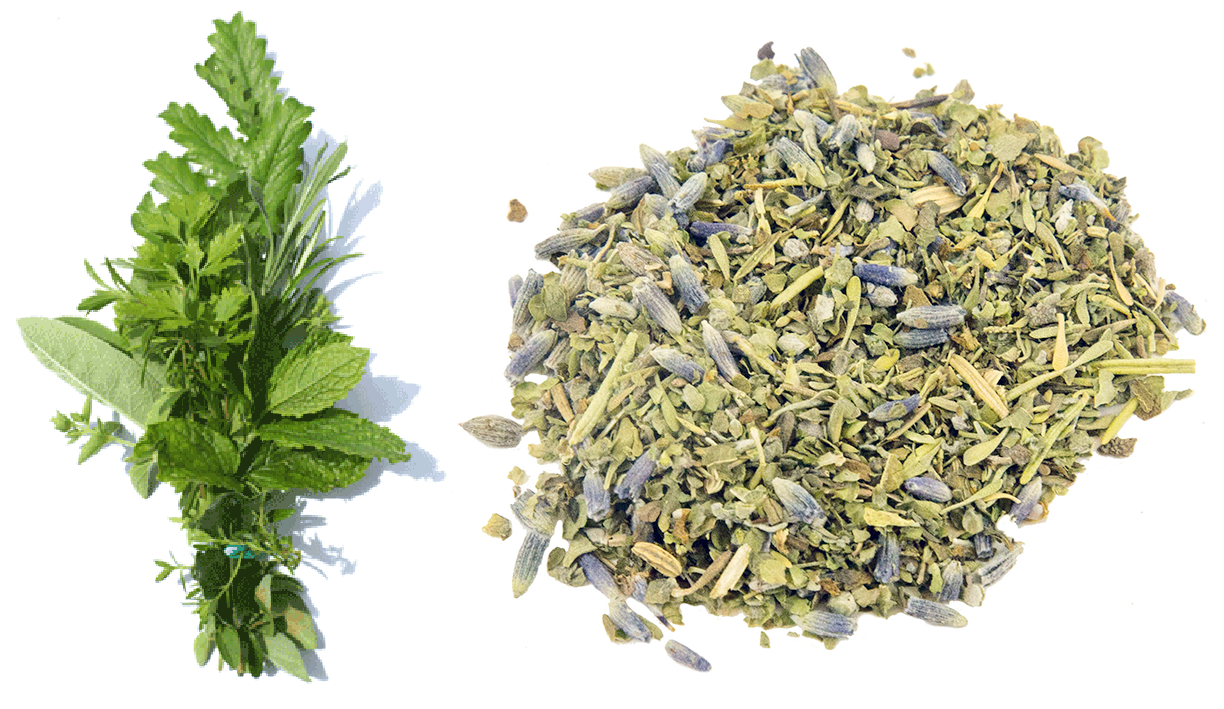 Bunch of fresh herbs and the classic dried Herbes de Provence blend.
Welcome to FabulousFusionFood's Herb-based Recipes Page — Herbs are typically the milder of the flavourings added to food. By definition a herb is any herbaceous part of a plant. This means any combination of the stems the leaves and the flowers. Basically those parts of a plant that live above ground (in contrast the roots of a plant if used as a flavouring are generally considered as spices, as are the seeds and fruit of a plant). The list below therefore describes as many parts of a plant as possible if they are used (either fresh or dried) as a food flavouring. The exception here is the woody stem, which tends to be thought of as a spice rather than an herb.
In terms of flavouring, at least for economic impact, herbs have tended to play second fiddle to spices. The majority of herbs need to be used fresh, their flavour chemicals tend to be volatile. As a result, herbs, typically, are grown locally, added fresh and used towards the end of cookery. Which is not to say that they're not important in cookery. They can be vital and some combinations, like French fines herbes, herbes de provence or bouquets garnis are key to the flavour profile of a dish.
Culinary herbs are typically added fresh towards the end of cooking though dried herb blends such as herbes de provence are available. Most herbs lose their potency on drying. The exception being oregano, which is typically superior dried as opposed to fresh.
Herbs are a widely distributed and widespread group of plants, excluding vegetables, with savory or aromatic properties that are used for flavoring and garnishing food, for medicinal purposes, or for fragrances. Culinary use typically distinguishes herbs from spices. Herbs generally refers to the leafy green or flowering parts of a plant (either fresh or dried), while spices are usually dried and produced from other parts of the plant, including seeds, bark, roots and fruits.
Herbs have a variety of uses including culinary, medicinal, aromatic and in some cases, spiritual. General usage of the term "herb" differs between culinary herbs and medicinal herbs; in medicinal or spiritual use, any parts of the plant might be considered "herbs", including leaves, roots, flowers, seeds, root bark, inner bark (and cambium), resin and pericarp.
In botany, the term herb refers to a herbaceous plant, defined as a small, seed-bearing plant without a woody stem in which all aerial parts (i.e. above ground) die back to the ground at the end of each growing season. Usually the term refers to perennials, although herbaceous plants can also be annuals (plants that die at the end of the growing season and grow back from seed next year), or biennials. This term is in contrast to shrubs and trees which possess a woody stem. Shrubs and trees are also defined in terms of size, where shrubs are less than ten meters tall, and trees may grow over ten meters. The word herbaceous is derived from Latin herbāceus meaning "grassy", from herba "grass, herb".
Culinary herbs are distinguished from vegetables in that, like spices, they are used in small amounts and provide flavour rather than substance to food.
Herbs can be perennials such as thyme, oregano, sage or lavender, biennials such as parsley, or annuals like basil. Perennial herbs can be shrubs such as rosemary (Rosmarinus officinalis), or trees such as bay laurel (Laurus nobilis) – this contrasts with botanical herbs, which by definition cannot be woody plants. Some plants are used as both herbs and spices, such as dill weed and dill seed or coriander leaves and seeds. There are also some herbs, such as those in the mint family, that are used for both culinary and medicinal purposes.
For more information on culinary herbs, please visit this site's herb guide where you will find information on over 100 herbs.
This is a continuation of the recipes listings for the herb-based recipes and dishes on this site (the page in fact). If you would like to learn a little more about this history of herbs and the methods of cooking with spices then please go to the first listing page for these Herb-based recipes information page. Here you will get just a list of the additional Herb-based recipes on this site.
The alphabetical list of all the herb-based recipes on this site follows, (limited to 100 recipes per page). There are 1954 recipes in total:
Page 16 of 20
| Roast Minted Lamb Origin: Britain | Saban Pot Origin: Saba | Salmon à la Génévese Origin: British |
| Roast Monkfish Tail with Garlic and Rosemary Origin: British | Sabzi Polo (Herbed Rice) Origin: Iran | Salmon Tostadas Origin: Fusion |
| Roast Turkey with Herbs Origin: Britain | Sabzi Polo ba Mahi (Fried Fish with Saffron and Herb Rice) Origin: Iran | Salmoriglio Origin: Italy |
| Roast Veal Loin with Garlic, Rosemary and Lemon Pesto Origin: Britain | Sach Ko Nung Slirk S'krey Chomkak (Lemongrass Beef Kebab) Origin: Cambodia | Salsa Bandera Origin: Mexico |
| Roast Wild Mallard with Chanterelles Origin: Britain | Sach Ko Tirk Prahok (Beef in Fish Sauce) Origin: Cambodia | Salsa de Frutas (Fruit Salsa) Origin: Mexico |
| Roasted Aubergine with Techina Origin: Israel | Sach Mon Chha Khnei (Stir-fried Chicken with Ginger) Origin: Cambodia | Salsa de Mango (Mexican Mango Salsa) Origin: Mexico |
| Roasted Carlin Peas Origin: Britain | Saffron Milk Cap Fricassee Origin: Britain | Salsa de Molcajete (Stone-ground Mexican Salsa) Origin: Mexico |
| Roasted Red Pepper and Garlic Sauce Origin: Italy | Saffron Milk Cap Pâté Origin: Britain | Salsa de Rajas Origin: Mexico |
| Roasted Rosemary Lamb Origin: Britain | Saffron Prawn Both Origin: Britain | Salsa de Tomate Casero (Home-style Tomato Sauce) Origin: Spain |
| Rock-baked Savoury Bannocks Origin: Britain | Sage and Lemon Poussin Origin: Britain | Salsa de Tomate Casero (Home-style Tomato Sauce) Origin: Gibraltar |
| Rogan Josh Masala Origin: Britain | Sage and Onion Stuffing Origin: Britain | Salsa di Pomodoro (Tomato Sauce) Origin: Italy |
| Rolo (Minced Meat Loaf) Origin: Cyprus | Sage and Onion Stuffing Origin: Britain | Salsa di Pomodoro II (Tomato Sauce II) Origin: Italy |
| Rooibos and Apricot Muffins Origin: South Africa | Sage Jelly Origin: Britain | Salsa Guacamole (Creamy Guacasalsa) Origin: Mexico |
| Rooibos Candies Origin: South Africa | Sage Pork Chops Origin: Ireland | Salsa Pizzaiola (Neapolitan Tomato Sauce) Origin: Italy |
| Rooibos Chai Origin: South Africa | Saint Kitts Chicken Bouillon Origin: Saint Kitts | Salsa Roja Origin: Mexico |
| Rooibos Iced Tea Origin: Namibia | Saint Lucia Green Seasoning Origin: Saint Lucia | Salsa Verde (Mexican Green Sauce) Origin: Mexico |
| Rooibos Krummelpap (Rooibos Crumbly Maize Meal) Origin: South Africa | Saint Lucia Jerk Seasoning Blend Origin: Saint Lucia | Šaltibarščiai (Cold Beetroot Soup) Origin: Lithuania |
| Rooibos Poached Pears Origin: South Africa | Saint Lucian Accras Origin: Saint Lucia | Saltimbocca alla Romana (Fried Veal Strips with Butter, Ham and Sage) Origin: Vatican City |
| Rooibos Slappap (Rooibos Soft Maize Porridge) Origin: South Africa | Saint Martin Sauce Chien Origin: Saint-Martin | Sambal Kacang (Indonesian Peanut Sauce) Origin: Indonesia |
| Rooibos Stywepap (Rooibos Stiff Maize Porridge) Origin: South Africa | Saint Vincent Chicken Pelau Origin: Saint Vincent | Samia' Metchou Peng Pa (Khmer Fish Stew with Lemongrass) Origin: Cambodia |
| Rooibos Tea Bread Origin: South Africa | Saint Vincent Curry Goat Origin: Saint Vincent | Samlor Korko (Cambodian 'Mixing Soup') Origin: Cambodia |
| Rosatum Siue Rosa Sic Facies (Rose wine, made without roses) Origin: Roman | Saint Vincent Green Seasoning Origin: Saint Vincent | Samlor Machu Trey (Sweet and Sour Soup with Fish) Origin: Cambodia |
| Rose Geranium Scented Sugar Origin: South Africa | Saint Vincent Pig Feet Souse Origin: Saint Vincent | Sancocho de siete carnes (Seven meat stew) Origin: Dominican Republic |
| Rosemary Goat Curry Origin: Zimbabwe | Saint-Martin Whelk Soup Origin: Saint-Martin | Sancocho Dominicano (Dominican Stew) Origin: Dominican Republic |
| Rosemary Pesto Crusted Lamb Valentine Steaks Origin: Britain | Sajilo Kukhura ko Momo (Nepalese Chicken Momo Dumplings) Origin: Nepal | Saramura (Grilled Carp Fillets) Origin: Hungary |
| Rosemary-scented Lamb Origin: Britain | Sala Cattabia (Potted Salads) Origin: Roman | Saratoga Wine Origin: England |
| Rostbraten Mit Pilzfulle (Roast Beef with Mushroom Stuffing) Origin: Germany | Salad with Asparagus, Samphire and Sea-blite Origin: Britain | Sarda ita Fit (Bonito are Prepared Thus) Origin: Roman |
| Rosto Chirino (Roast Pork) Origin: Cyprus | Salade au Fonio (Fonio Salad) Origin: Mali | Sarda ita fit (Stuffed Bonito) Origin: Roman |
| Rougail de Mangues Vertes (Green Mango Rougail) Origin: Madagascar | Salade de Pissenlit (Dandelion Salad) Origin: France | Sardines with Chermoula Origin: Western Sahara |
| Rougail Saucisse (Sausage Rougail) Origin: Mauritius | Salat (Salad) Origin: England | Sardinhas Assadas (Grilled Sardines) Origin: Portugal |
| Rougaille de Poisson Salé (Salted Fish Rougaille) Origin: Mauritius | Salata Ducos (Green Coriander Salad) Origin: Saudi Arabia | Sareng Thongba (Manipuri Catfish Curry) Origin: India |
| Russian Sauce Origin: Britain | Salata od hobotnice na Prigorski (Prigorski-style octopus salad) Origin: Croatia | Sashimi Origin: Japan |
| Saba Pigeon Pea Stew Origin: Saba | Salmagundi Origin: Britain | |
| Saba Rice and Black Beans Origin: Saba | Salmagundi with Herby Rack of Lamb Origin: Britain |
Page 16 of 20