FabulousFusionFood's Herb-based Recipes 14th Page
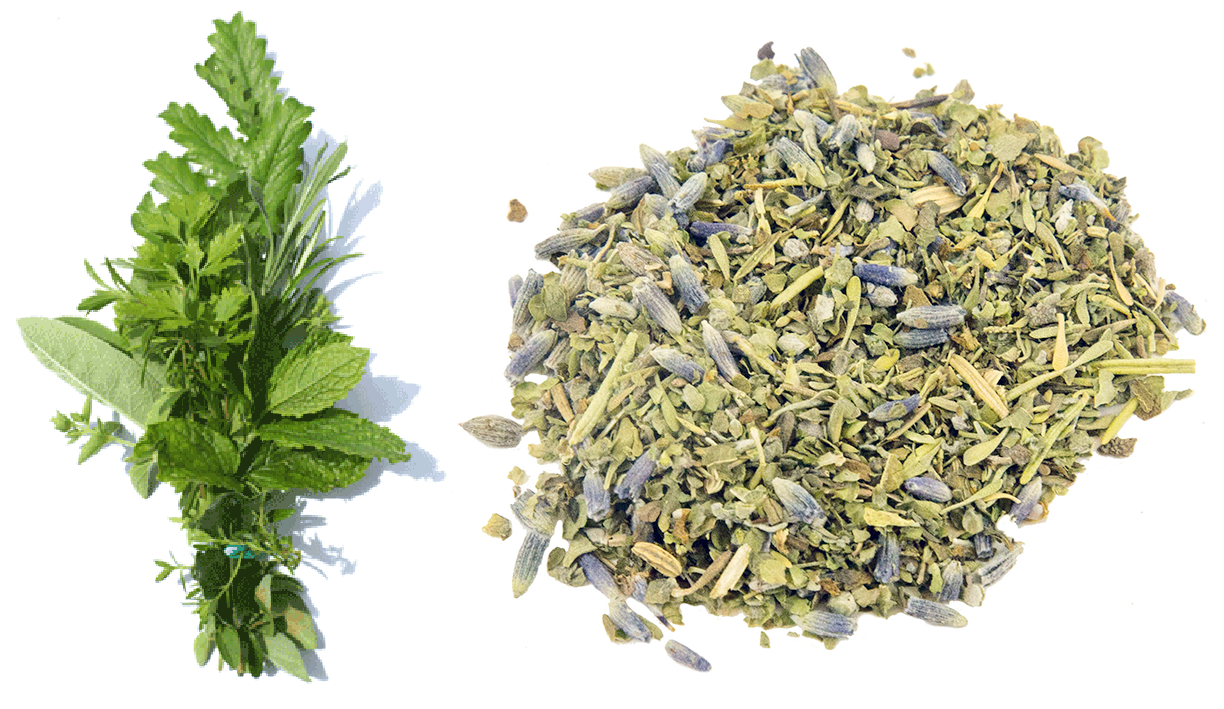 Bunch of fresh herbs and the classic dried Herbes de Provence blend.
Welcome to FabulousFusionFood's Herb-based Recipes Page — Herbs are typically the milder of the flavourings added to food. By definition a herb is any herbaceous part of a plant. This means any combination of the stems the leaves and the flowers. Basically those parts of a plant that live above ground (in contrast the roots of a plant if used as a flavouring are generally considered as spices, as are the seeds and fruit of a plant). The list below therefore describes as many parts of a plant as possible if they are used (either fresh or dried) as a food flavouring. The exception here is the woody stem, which tends to be thought of as a spice rather than an herb.
In terms of flavouring, at least for economic impact, herbs have tended to play second fiddle to spices. The majority of herbs need to be used fresh, their flavour chemicals tend to be volatile. As a result, herbs, typically, are grown locally, added fresh and used towards the end of cookery. Which is not to say that they're not important in cookery. They can be vital and some combinations, like French fines herbes, herbes de provence or bouquets garnis are key to the flavour profile of a dish.
Culinary herbs are typically added fresh towards the end of cooking though dried herb blends such as herbes de provence are available. Most herbs lose their potency on drying. The exception being oregano, which is typically superior dried as opposed to fresh.
Herbs are a widely distributed and widespread group of plants, excluding vegetables, with savory or aromatic properties that are used for flavoring and garnishing food, for medicinal purposes, or for fragrances. Culinary use typically distinguishes herbs from spices. Herbs generally refers to the leafy green or flowering parts of a plant (either fresh or dried), while spices are usually dried and produced from other parts of the plant, including seeds, bark, roots and fruits.
Herbs have a variety of uses including culinary, medicinal, aromatic and in some cases, spiritual. General usage of the term "herb" differs between culinary herbs and medicinal herbs; in medicinal or spiritual use, any parts of the plant might be considered "herbs", including leaves, roots, flowers, seeds, root bark, inner bark (and cambium), resin and pericarp.
In botany, the term herb refers to a herbaceous plant, defined as a small, seed-bearing plant without a woody stem in which all aerial parts (i.e. above ground) die back to the ground at the end of each growing season. Usually the term refers to perennials, although herbaceous plants can also be annuals (plants that die at the end of the growing season and grow back from seed next year), or biennials. This term is in contrast to shrubs and trees which possess a woody stem. Shrubs and trees are also defined in terms of size, where shrubs are less than ten meters tall, and trees may grow over ten meters. The word herbaceous is derived from Latin herbāceus meaning "grassy", from herba "grass, herb".
Culinary herbs are distinguished from vegetables in that, like spices, they are used in small amounts and provide flavour rather than substance to food.
Herbs can be perennials such as thyme, oregano, sage or lavender, biennials such as parsley, or annuals like basil. Perennial herbs can be shrubs such as rosemary (Rosmarinus officinalis), or trees such as bay laurel (Laurus nobilis) – this contrasts with botanical herbs, which by definition cannot be woody plants. Some plants are used as both herbs and spices, such as dill weed and dill seed or coriander leaves and seeds. There are also some herbs, such as those in the mint family, that are used for both culinary and medicinal purposes.
For more information on culinary herbs, please visit this site's herb guide where you will find information on over 100 herbs.
This is a continuation of the recipes listings for the herb-based recipes and dishes on this site (the page in fact). If you would like to learn a little more about this history of herbs and the methods of cooking with spices then please go to the first listing page for these Herb-based recipes information page. Here you will get just a list of the additional Herb-based recipes on this site.
The alphabetical list of all the herb-based recipes on this site follows, (limited to 100 recipes per page). There are 1954 recipes in total:
Page 14 of 20
| Peli bara lawr, perlysiau a lemwn gyda saws iogwrt (Laverbread, Herb and Lemon Balls with Yoghurt Sauce) Origin: Welsh | Pisces Assos (Baked Fish) Origin: Roman | Porcellum Coriandratum (Suckling Pig with Coriander Sauce) Origin: Roman |
| Peli Sbarion Cig Oen (Lamb Leftover Meatballs) Origin: Welsh | Pisces Zomoteganon (Fish Stewed in its Own Juices) Origin: Roman | Porcellum Lacte Pastum Elixum (Suckling Pig Crowned with Bayleaves) Origin: Roman |
| Pennywise Fruit Cake Origin: Britain | Pisces Zomoteganon II (Fish Stewed in its Own Juice) Origin: Roman | Porcellum Oxyzomum (Suckling Pig in Sour Sauce) Origin: Roman |
| Penwaig wedi Stwffio (Stuffed Herring) Origin: Welsh | Pissenlit au Lard (Dandelion Salad with Bacon) Origin: France | Porcellum Thymo Sparsum (Suckling Pig Sprinkled with Thyme) Origin: Roman |
| Penzance Grey Mullet Origin: Cornwall | Pit-oven Cooked Rabbit or Hare Origin: British | Pork and Chestnut Pie Origin: British |
| Pepperpot Origin: Antigua | Pitche-Patche de Ostras (Oyster and Rice Soup) Origin: Guinea-Bissau | Pork and Sage Kebabs Origin: Britain |
| Pernae Cocturam (Preparation of a Ham) Origin: Roman | Pizza alla Marinara Origin: Italy | Pork and Veal Terrine Origin: Britain |
| Pernam (Ham) Origin: Roman | Pizza alla Rustica Origin: Italy | Pork and Wild Food Curry Origin: Britain |
| Pernil (Puerto Rican Roast Pork) Origin: Puerto Rico | Pizza Sauce Origin: Italy | Pork and Yam Pepper Soup Origin: Nigeria |
| Peruvian Goat Stew Origin: Peru | Pizzoccheri Origin: Italy | Pork Black Curry Origin: Sri Lanka |
| Peruvian Salsa Criolla Origin: Peru | Planked Trout Origin: American | Pork Pasty Origin: England |
| Peruvian Seviche Origin: Peru | Plantain and Coconut Beef Soup Origin: Gambia | Pork Tenderloins with Bergamot Sauce Origin: British |
| Pescado Frito (Puerto Rican Fried Red Snapper) Origin: Puerto Rico | Plantain Pie Origin: Dominica | Pork, Potato and Fennel Casserole Origin: Ireland |
| Pesto alla Genovese (Genoan-style Pesto) Origin: Italy | Plantains and Fried Fish Origin: Liberia | Portokaladha Siropi (Orange Squash) Origin: Cyprus |
| Pesto Pastry Stars Origin: Britain | Pó de Caril São Tomé (Sao Tomean Curry Powder) Origin: Sao Tome | Portuguese Tomato Sauce Origin: Portugal |
| Petit Salé with Winter Root Vegetables and Ceps Origin: Britain | Poached Chicken Origin: Britain | Pot-roast chicken with stock Origin: Britain |
| Pheasant Game Soup Origin: Britain | Poached Sea Trout with Green Mayonnaise Origin: Britain | Pot-roasted Pheasant with Cider and Calvados Origin: Britain |
| Picadillo de Vainicas (Green Bean Picadillo) Origin: Costa Rica | Podina Chutney (Mint Chutney) Origin: Pakistan | Potage St Germain (Pea Soup St Germain) Origin: France |
| Picado de Rábano (Radish Salad) Origin: Guatemala | Pois d'Angole (Pigeon Peas) Origin: Guadeloupe | Potato and Coriander Soup Origin: Ireland |
| Pickled Baby Corn Origin: America | Poisson aux Fines Herbes (Herbed Fish) Origin: Mauritius | Potato and Herb Terrine Origin: Ireland |
| Pickled Dill Cucumbers Origin: Britain | Poisson Capitaine en Feuille de Bananaier (White Grouper in Banana Leaves) Origin: Burkina Faso | Potato and Parsley Galettes Origin: Ireland |
| Pickled Evening Primrose Roots Origin: Britain | Poisson Farci (Fish Stuffed with Forcemeat and Eggs) Origin: Senegal | Potato Omelette Origin: England |
| Pickled Honey Fungus Origin: Britain | Poisson Farci à la Saint-Louisienne (Stuffed Fish, in the Manner of St Louis) Origin: Senegal | Potato Pizza Origin: Britain |
| Pickled Spruce Tips Rémoulade Sauce Origin: Canada | Poisson Grillé (Grilled Fish) Origin: Seychelles | Potato Pizza with Tomatoes, Aubergines and Basil Origin: Ireland |
| Pico de Gallo Origin: Mexico | Poisson Salé (Salt Fish) Origin: Mauritius | Potato Salad with Herb Sauce Origin: Ireland |
| Pig Tail Bouillon with Dumplings Origin: Saint Lucia | Pokhlyobka (Mushroom and Barley Soup) Origin: Russia | Potato Salad with Thyme, Watercress and Lovage Origin: Britain |
| Pigeon Breasts Origin: Scotland | Polenta aux Herbes (Herbed Polenta) Origin: Guinea | Potato Scones with Herbs Origin: Ireland |
| Pilav Limon (Lemon Pasta Pilaf) Origin: Georgia | Pollack Pie with Crushed Potato Topping Origin: Britain | Potato Soup with Salmon and Chives Origin: Ireland |
| Pineapple Sage Pound Cake Origin: American | Pollo Alla Cacciatora (Sammarinese Chicken Cacciatore) Origin: San Marino | Potato, Leek and Chorizo Soup Origin: Britain |
| Piperade Origin: Fusion | Pollo con Ajo (Chicken with Garlic) Origin: Mexico | Potato, Smoked Salmon and Dill Galette Origin: Ireland |
| Piroshki Origin: Russia | Pollo en Manteqiulla (Butter Chicken) Origin: Puerto Rico | Potato, Tomato and Basil Soup Origin: Ireland |
| Pisam Adulteram Versatilem (Peas Turnover) Origin: Roman | Pollo en Salsa Origin: Costa Rica | Potatoes in Fresh Tomato Sauce Origin: Ireland |
| Pisam Adulteram Versatilem (Peas or Beans à la Vitellus) Origin: Roman | Pollo Encebolladoaa (Chicken Smothered with Onions) Origin: El Salvador | |
| Pisca den Foil (Foil-cooked Fish) Origin: Aruba | Pollo Guisado (Dominican Stewed Chicken) Origin: Dominican Republic |
Page 14 of 20