FabulousFusionFood's Herb-based Recipes 17th Page
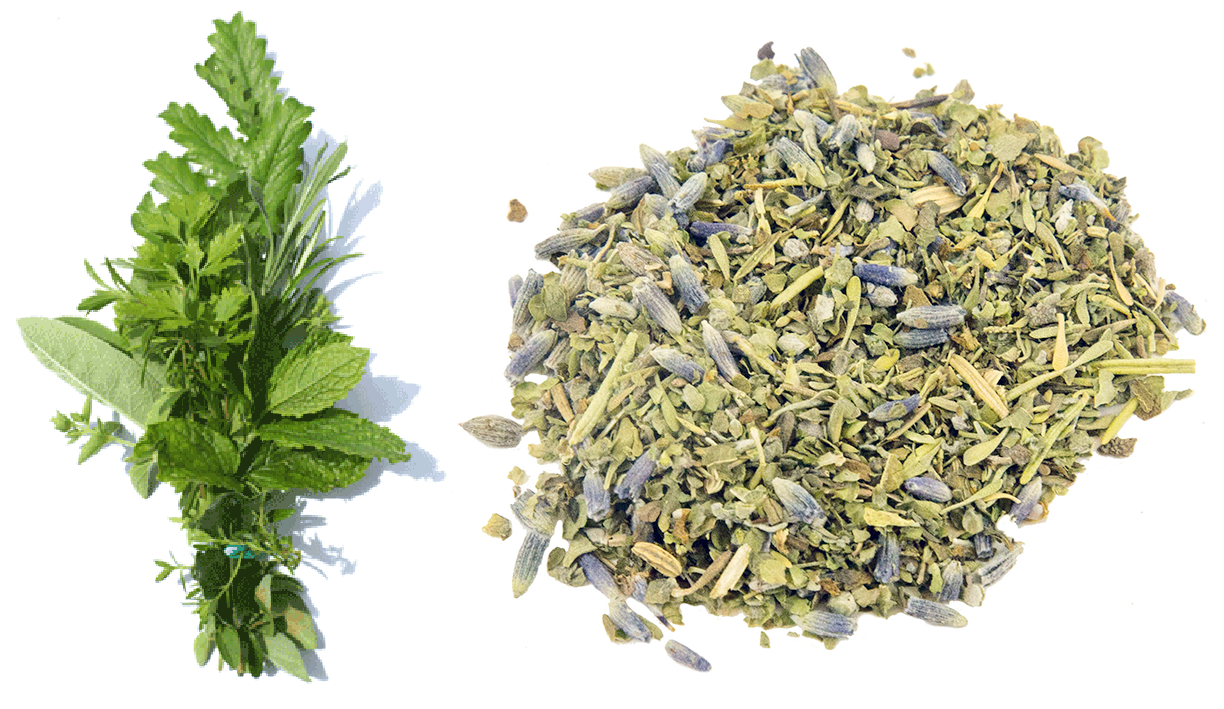 Bunch of fresh herbs and the classic dried Herbes de Provence blend.
Welcome to FabulousFusionFood's Herb-based Recipes Page — Herbs are typically the milder of the flavourings added to food. By definition a herb is any herbaceous part of a plant. This means any combination of the stems the leaves and the flowers. Basically those parts of a plant that live above ground (in contrast the roots of a plant if used as a flavouring are generally considered as spices, as are the seeds and fruit of a plant). The list below therefore describes as many parts of a plant as possible if they are used (either fresh or dried) as a food flavouring. The exception here is the woody stem, which tends to be thought of as a spice rather than an herb.
In terms of flavouring, at least for economic impact, herbs have tended to play second fiddle to spices. The majority of herbs need to be used fresh, their flavour chemicals tend to be volatile. As a result, herbs, typically, are grown locally, added fresh and used towards the end of cookery. Which is not to say that they're not important in cookery. They can be vital and some combinations, like French fines herbes, herbes de provence or bouquets garnis are key to the flavour profile of a dish.
Culinary herbs are typically added fresh towards the end of cooking though dried herb blends such as herbes de provence are available. Most herbs lose their potency on drying. The exception being oregano, which is typically superior dried as opposed to fresh.
Herbs are a widely distributed and widespread group of plants, excluding vegetables, with savory or aromatic properties that are used for flavoring and garnishing food, for medicinal purposes, or for fragrances. Culinary use typically distinguishes herbs from spices. Herbs generally refers to the leafy green or flowering parts of a plant (either fresh or dried), while spices are usually dried and produced from other parts of the plant, including seeds, bark, roots and fruits.
Herbs have a variety of uses including culinary, medicinal, aromatic and in some cases, spiritual. General usage of the term "herb" differs between culinary herbs and medicinal herbs; in medicinal or spiritual use, any parts of the plant might be considered "herbs", including leaves, roots, flowers, seeds, root bark, inner bark (and cambium), resin and pericarp.
In botany, the term herb refers to a herbaceous plant, defined as a small, seed-bearing plant without a woody stem in which all aerial parts (i.e. above ground) die back to the ground at the end of each growing season. Usually the term refers to perennials, although herbaceous plants can also be annuals (plants that die at the end of the growing season and grow back from seed next year), or biennials. This term is in contrast to shrubs and trees which possess a woody stem. Shrubs and trees are also defined in terms of size, where shrubs are less than ten meters tall, and trees may grow over ten meters. The word herbaceous is derived from Latin herbāceus meaning "grassy", from herba "grass, herb".
Culinary herbs are distinguished from vegetables in that, like spices, they are used in small amounts and provide flavour rather than substance to food.
Herbs can be perennials such as thyme, oregano, sage or lavender, biennials such as parsley, or annuals like basil. Perennial herbs can be shrubs such as rosemary (Rosmarinus officinalis), or trees such as bay laurel (Laurus nobilis) – this contrasts with botanical herbs, which by definition cannot be woody plants. Some plants are used as both herbs and spices, such as dill weed and dill seed or coriander leaves and seeds. There are also some herbs, such as those in the mint family, that are used for both culinary and medicinal purposes.
For more information on culinary herbs, please visit this site's herb guide where you will find information on over 100 herbs.
This is a continuation of the recipes listings for the herb-based recipes and dishes on this site (the page in fact). If you would like to learn a little more about this history of herbs and the methods of cooking with spices then please go to the first listing page for these Herb-based recipes information page. Here you will get just a list of the additional Herb-based recipes on this site.
The alphabetical list of all the herb-based recipes on this site follows, (limited to 100 recipes per page). There are 1954 recipes in total:
Page 17 of 20
| Satatsuri (Georgian Asparagus Soup) Origin: Georgia | Scottish Jugged Hare Origin: Scotland | Simple Court Bouillon Origin: France |
| Saté ku batata (Satay with Potatoes) Origin: Bonaire | Scottish Pickled Eggs Origin: Scotland | Sint Eustatius Rice and Black Beans Origin: Sint Eustatius |
| Sauce à L'Estragon (Tarragon Sauce) Origin: France | Scottish Pickled Herring Origin: Scotland | Sint Maarten Lokri Origin: Sint Maarten |
| Sauce au Citron (Lemon Sauce) Origin: France | Scurvy Grass Salt Origin: Britain | Sint Maarten Stewed Saltfish Origin: Sint-Maarten |
| Sauce Beaumanoir (Breton Fish Stew) Origin: France | Sea Arrowgrass Spice Blend Origin: Britain | Sint Maarten Whelk Soup Origin: Sint Maarten |
| Sauce Chien Origin: Saint Barthelemy | Sea Aster Rice Origin: British | Sirop de Menthe (Mint Syrup) Origin: France |
| Sauce Chien Origin: Sint Maarten | Sea Plantain Spice Blend Origin: Britain | Sirop de Menthe au Lait (Mint Syrup with Milk) Origin: Gabon |
| Sauce Chivry Origin: France | Sea-buckthorn Berry Jelly with Italian Flavours Origin: Britain | Şiş Kebab Origin: Northern Cyprus |
| Sauce Choron (Choron Sauce) Origin: France | Seafood-stuffed Morel Mushrooms Origin: America | Siwin (Sewin) Origin: Welsh |
| Sauce de Tamarin Pimentée (Spicy Tamarind Sauce) Origin: Burkina Faso | Seasoning Pudding Origin: Manx | Skillet Chicken Con Queso Origin: America |
| Sauce Madame Origin: England | Seaweed Ribollita Origin: Fusion | Skilpadjie (Afrikaans Faggots) Origin: South Africa |
| Sauce piquante créole (Creole Hot Sauce) Origin: Guadeloupe | Seaweed, Greens, and Feta Spring Omelette Origin: Britain | Slow Cooker Vegetable Curry Origin: Britain |
| Sauce Poulette Origin: France | Seco de Chivo (Dry-fried Goat Meat) Origin: Ecuador | Slow-cooked Lamb Madras Origin: Britain |
| Sauce Tartare Origin: France | Şeftali kebabı Origin: Northern Cyprus | Slow-cooked Ox Cheek Rendang Origin: Singapore |
| Sauce Verde Origin: Italy | Sekanjabin Origin: Roman | Slow-roast Lamb Shoulder with Honey, Herbs and Harissa Origin: Britain |
| Sausage Ragu Origin: Britain | Selsyg Kernowek (Cornish Sausages) Origin: England | Slow-roasted Lamb with Advieh Origin: Fusion |
| Sausage, Apple and Cranberry Stuffing Origin: American | Semn (Clarified Butter) Origin: Yemen | Smen (Moroccan Butter) Origin: Morocco |
| Sautéd Wild Mushrooms Origin: Belgium | Senfgurken (Pickled Gherkins) Origin: Germany | Smoked Haddock Chowder Origin: Ireland |
| Sautó Turkey Cutlets Origin: British | Setsamandi (Lamb, Rice and Herb Gruel) Origin: Georgia | Smoked haddock with Potato Mash Origin: Ireland |
| Sauté de cerf a la calédonienne (New Caledonian-Style Venison Sauté) Origin: New Caledonia | Sewin Gyda Saws Perlysiau (Sea Trout with Herb Sauce) Origin: Welsh | Smoky Fish Skewers Origin: Britain |
| Sautéed Daisy Greens with Roasted Baby Beetroot Origin: Britain | Sharba Ramadan (Ramadan Soup) Origin: Libya | Smoky Prawns with Tomato and Coriander Origin: Fusion |
| Sautéed Honey Fungus Origin: Britain | Shchi (Russian Cabbage Soup) Origin: Russia | Smoky Pumpkin Chili Origin: American |
| Savoury Baked Island Chicken Origin: British Virgin Islands | Sheftalia (Grilled Spiced Meat Rolls) Origin: Cyprus | Smoky Sweetcorn and Avocado Salsa Origin: South Africa |
| Savoury Corn Muffins Origin: American | Sheftalia Kebab Origin: Cyprus | Smörgåstårta (Swedish Savoury Sandwich Cake) Origin: Sweden |
| Savoury Duck Origin: English | Shi San Xiang Fen (Thirteen Spice Powder) Origin: China | Smørbrødterte (Norwegian Savoury Sandwich Cake) Origin: Norway |
| Sawgeat (A Sage-flavoured Dish) Origin: England | Shigni (Somali Hot Sauce) Origin: Somalia | Smørrebrød (Danish Open-faced Herring Sandwich) Origin: Denmark |
| Saws Ffenigl (Fennel Sauce) Origin: Welsh | Shisa Nyama Spice Blend Origin: South Africa | Snoek Tacos Origin: South Africa |
| Saws Persli (Parsley Sauce) Origin: Welsh | Shish Kebabs Origin: Britain | Snyboontjies Bredie (Green Bean Bredie) Origin: South Africa |
| Sazón Goya Origin: Puerto Rico | Shurpa Origin: Uzbekistan | Soda Bread Pizza Origin: Ireland |
| Sazón Seasoning Origin: Puerto Rico | Sieftalia (Caul-wrapped Lamb Sausages) Origin: Cyprus | Sofrito Cubano (Cuban Sofrito) Origin: Cuba |
| Scallop and Prawn Chu Chee Origin: Thailand | Sierra Leonean Fish Balls Origin: Sierra Leone | Sole Fillets Stuffed with Mixed Wild Mushrooms and Ricotta Cheese Origin: Britain |
| Schalada Origin: Morocco | Sierra Leonean White Okra Draw Soup Origin: Sierra Leone | Somlah Machou Khmer (Sour Soup with Tomato and Lotus Roots) Origin: Cambodia |
| Schyconys with the Bruesse (Stewed Chicken) Origin: England | Siljo (Fermented Safflower Seed and Broad Bean Flour Paste) Origin: India | |
| Scottish Green Pea Soup Origin: Scotland | Sill Potatis (Pickled Herring with Boiled Potatoes and Sour Cream) Origin: Sweden |
Page 17 of 20