FabulousFusionFood's Frying Recipes 5th Page
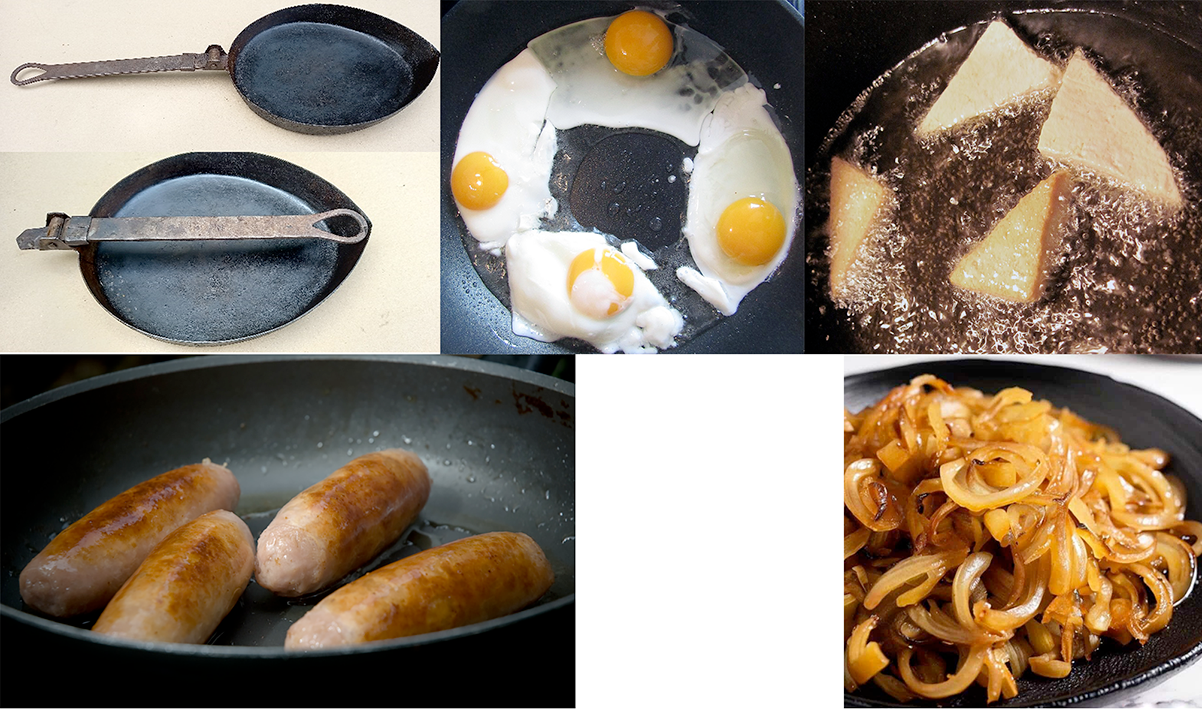 Clockwise from top left: Ancient Roman Frying pan, gentle-fried eggs,
shallow-fried tofu, sautéed onions and pan-fried sausages.
Welcome to FabulousFusionFood's Frying Recipes Page — Frying is the cooking of food in oil or another fat. Similar to sautéing, pan-fried foods are generally turned over once or twice during cooking to make sure that the food is evenly cooked, using tongs or a spatula, whilst sautéed foods are cooked by "tossing in the pan". A large variety of foods may be fried.
Historically, for frying, metalware is required as the temperature reached by cooking in hot oil generally far exceeds the boiling point of water 100°C (212°F). As such a society needs to attain bronze age metalwork before frying in hot oil becomes a viable cooking method. In the west, frying is believed to have first appeared in the Ancient Egyptian kitchen, during the Old Kingdom, around 2500 BCE. The Romans had special cookware, the fretale a special frying pan made of bronze round or oval in shape, with a lip for pouring. Though it must be mentioned here that Romans also had rectangular iron trays with handles for roasting or frying. "Oven-to-table ware," in the form of shallow pans and earthenware dishes was common — these are referred to as patellae and patinae. The fretale with a foldable handle (see image) was part of the field kit for a Roman soldier (see image). Frying may originally have been developed as a way to preserve food, as the frying process sterilises the food then bottling the fried food in the frying oil excludes air and helps prevent decay.
Frying techniques vary in the amount of fat required, the cooking time, the type of cooking vessel required, and the manipulation of the food. Sautéing, stir-frying, pan frying, shallow frying, and deep frying are all standard frying techniques. There are separate entries for stir-frying and deep frying and this page is about shallow frying methods: sautéing, pan frying and shallow frying.
Pan-frying, sautéing, and stir-frying involve cooking foods in a thin layer of fat on a hot surface, such as a frying pan, griddle, wok, or sauté pan. Stir frying involves frying quickly at very high temperatures, requiring that the food be stirred continuously to prevent it from adhering to the cooking surface and burning. Shallow frying is a type of pan frying using only enough fat to immerse approximately one-third to one-half of each piece of food; fat used in this technique is typically only used once.
Gentle frying or low-temperature frying is an oil- or fat-based cooking method used for relatively fragile or starchy foods. While gentle frying is most notably used to cook fried eggs, it is also used for delicate fish, tender cuts of meat, sausages, and as a first step in preparing fried potatoes. Low-temperature frying is useful if the frying fat scorches at higher heat levels (e.g. butter), or if the frying fat has flavour that the cook wants to preserve (e.g. olive oil). Overheated oils can produce unhealthy, even carcinogenic, compounds.
Pan frying or pan-frying is a form of frying food characterized by the use of minimal cooking oil or fat (compared to shallow frying or deep frying), typically using just enough to lubricate the pan. In the case of a greasy food such as bacon, no oil or fats may need to be added. As a form of frying, the technique relies on oil or fat as the heat transfer medium, and on correct temperature and time to not overcook or burn the food. Pan frying can serve to retain the moisture in foods such as meat and seafood. The food is typically flipped at least once to ensure that both sides are cooked properly. Pan frying takes place at lower heat than sautéing. This is because the food to be pan fried – such as chicken breasts, steak, pork chops, or fish fillets – is not cut into small pieces before cooking. It requires a lower heat so that the exterior of the food does not overcook by the time the interior reaches the proper temperature, and to keep foods in a moister state. However, the oil should always be hot enough to ensure that the moisture in the food can escape in the form of steam; the force of the steam escaping keeps the oil from soaking into the food. The same amount of oil is used as for sautéing – just enough to glaze the pan.
Sautéing or sauteing (UK: /ˈsoʊteɪɪŋ/, US: /soʊˈteɪɪŋ, sɔː-/; from French sauté, French: [sote], 'jumped', 'bounced', in reference to tossing while cooking) is a method of cooking that uses a relatively small amount of oil or fat in a shallow pan over relatively high heat. Various sauté methods exist. Ingredients for sautéing are usually cut into small pieces or thinly sliced to provide a large surface area, which facilitates fast cooking. The primary mode of heat transfer during sautéing is conduction between the pan and the food being cooked. Food that is sautéed is browned while preserving its texture, moisture, and flavour. If meat, chicken, or fish is sautéed, the sauté is often finished by deglazing the pan's residue to make a sauce. Sautéing may be compared with pan frying, in which larger pieces of food (for example, chops or steaks) are cooked quickly in oil or fat, and flipped onto both sides. Some cooks make a distinction between the two based on the depth of the oil used, while others use the terms interchangeably
Shallow frying is a hot oil-based cooking technique. Pieces of food are cooked by partial submersion in hot oil. It is typically used to prepare portion-sized cuts of meat, fish, potatoes and patties such as fritters. Shallow frying can also be used to cook vegetables. Shallow frying is distinct from deep frying, which uses enough oil to fully submerge the food to be cooked, and pan frying, which only uses a negligible depth of oil. t is a medium-high to high heat cooking process. Temperatures between 160–190°C (320–374°F) are typical, but shallow frying may be performed at temperatures as low as 150°C (302°F) for a longer period of time. The high heat promotes protein denaturation-browning and, in some cases, a Maillard reaction. Deep frying usually takes place at temperatures between 177–205°C (351–401°F) so shallow-frying can oftentimes be considered a less intense cooking technique. Foods to be shallow fried are commonly pre-portioned into single servings before being placed in oil. Since the food is only partly submerged, it must be turned over partway through the cooking process. Some cooks recommend cooking the "presentation" side of the food first.
The alphabetical list of all the frying-based recipes on this site follows, (limited to 100 recipes per page). There are 1693 recipes in total:
Page 5 of 17
| Chocolate Banana Flour Patties Origin: Britain | Comadore (Fruit Pie Delicacies) Origin: England | Crempog Las (Green Pancake) Origin: Welsh |
| Chocolate Dock Flour Patties Origin: Britain | Common Hogweed Flower Bud Tempura Origin: Britain | Crempog Traddodiadol (Traditional Pancakes) Origin: Welsh |
| Chocolate Pancakes with Coffee Sauce Origin: British | Compota de Uvas con Crujiente de Boniato (Grape Compote with Crispy Sweet Potato) Origin: Spain | Crempogau Cennin a Madarch (Savoury Steamed Leek Pudding) Origin: Welsh |
| Chop Suey Origin: Fusion | Conch Fritters Origin: British Virgin Islands | Crempogau Cocos Brecwast (Breakfast Cockle Pancakes) Origin: Welsh |
| Chorreadas Origin: Costa Rica | Conch Fritters Origin: US Virgin Islands | Crempogau Ynys Môn (Anglesey Crépes) Origin: Welsh |
| Chou Sautés au Boeuf (Cabbage Sautéed with Beef) Origin: Cameroon | Confiture de Poivrons (Confit of Peppers) Origin: Monaco | Creole Calamari Origin: Aruba |
| Chremzel (Sweet Matzo Pancakes) Origin: Poland | Corn Tortilla Origin: Mexico | Creole Fried Fish with Green Seasoning Origin: Trinidad |
| Chu Hou Paste Origin: Hong Kong | Corn Tortilla Origin: Guatemala | Crêpe dentelle (Lace crepe) Origin: France |
| Chuleta de Chancho a la Naranja (Pork Chop with Orange) Origin: Ecuador | Corn Tortilla Origin: Costa Rica | Crêpe Farine de Mil (Senegalese Millet Flour Crêpes) Origin: Senegal |
| Chuletas al Limón (Lemon Pork Chops) Origin: Colombia | Cornish Buttered Lobster Origin: Britain | Crêpes au Nutella (Crepes with Nutella) Origin: Saint Pierre |
| Chulitas de Cordero (Spanish Lamb Cutlets) Origin: Spain | Cornish Crab Cakes Origin: Britain | Crêpes Banane Dakar (Dakar-style Banana Crêpes) Origin: Senegal |
| Churros (Fried Choux Pastries) Origin: Spain | Cornish Fish Cakes Origin: Britain | crêpes bretonnes au caramel au beurre salé (Breton pancakes with Salted Butter Caramel) Origin: France |
| Churros Mexicanos (Mexican Churros) Origin: Mexico | Cornish Hog's Pudding Origin: England | Crépinettes Origin: Seychelles |
| Cig Oen â Saws Llus (Lamb with Bilberry Sauce) Origin: Welsh | Cornish King Scallops and Black Pudding Origin: England | Crisp Fried Onion Rings Origin: British |
| Citrus Pepper Pork with Crushed Potatoes Origin: Britain | Cornish Potato Cakes Origin: England | Crisp-fried Gutweed Origin: Fusion |
| Claclo (Ivorian Plantain Fritter) Origin: Cote dIvoire | Cornish Wrasse with Spring Onions, Cream and White Wine Origin: England | Crisp-fried Wood Avens Leaves Origin: Britain |
| Classic Crêpes Suzette Origin: France | Cornmeal Chapati Origin: Fusion | Crispy Antarctic Krill Origin: China |
| Clitocybe Odora Fritta (Fried, Breaded, Aniseed Toadstool) Origin: Italy | Cossey (Bean Fritters) Origin: Chad | Crispy Crab Wontons Origin: Fusion |
| Cochleas lacte pastas (Milk-fed Snails) Origin: Roman | Courgette Poêlêe (Courgette Skillet) Origin: Madagascar | Crispy Flautas with Chicken or Beef Origin: Mexico |
| Coconut Peas Origin: Rwanda | Couscouma Origin: Comoros | Crispy Tilapia Origin: American |
| Coconut Shrimp Origin: Aruba | Crâpes Suzettes Origin: France | Croquetas de Papa y Quinoa (Chilean Quinoa Croquettes) Origin: Chile |
| Coconut-crusted Fish Origin: Nauru | Crème Fraîche and Coriander Chicken Origin: Britain | Croquets of Meat or Fish Origin: Britain |
| Coconut-crusted Shrimp Origin: Nauru | Crèpes avec Raisins Sec (French Currant Pancakes) Origin: France | Croquette de Marron (Chestnut Croquettes) Origin: Luxembourg |
| Cocos ac Wyau (Cockles and Scrambled Eggs) Origin: Welsh | Crêpe Aux Poires Et Aux Amandes Effilees (Pear and Almond filled Crêpes) Origin: France | Croquette de poisson et manioc (Fish and Cassava Croquettes) Origin: New Caledonia |
| Cocos Mewn Cytew (Cockles in Batter) Origin: Welsh | Crêpes aux myrtilles (Bilberry Crêpes) Origin: France | Croquettes d'ignames (Yam Croquettes) Origin: Guinea |
| Cocosian Crispy-fried Fish Origin: Cocos Islands | Crab Cakes Origin: British Virgin Islands | Croquettes de fonio (Fonio croquettes) Origin: Senegal |
| Cocoyam Chips Origin: Ghana | Crab Cakes Origin: Fusion | Croquettes de Manioc (Cassava Croquettes) Origin: Senegal |
| Cocoyam Flour Pancakes Origin: Britain | Crab Fried Rice Origin: China | Croquettes de Mboa (Cameroonian Croquettes) Origin: Cameroon |
| Cocoyam Flour Waffles Origin: Britain | Crempoethau (Crumpets) Origin: Welsh | Croquettes de Pommes de Terre Dauphine (Dauphine Potato Croquettes) Origin: France |
| Cod à L'Indienne Origin: Britain | Crempog (Welsh Pancakes) Origin: Welsh | Croquettes de Samoun (Salmon Croquettes) Origin: Canada |
| Cod, Brown Butter Sauce, St George Mushrooms and Sea Arrowgrass Origin: Britain | Crempog Cennin a Chaws Caerffili (Leek and Caerphilly Cheese Pancakes) Origin: Welsh | Crulla Origin: Scotland |
| Cod-fish Balls Origin: Dominica | Crempog Geirch (Welsh Oaten Pancakes) Origin: Welsh | Crumbed Chicken with Green Mayonnaise Origin: Britain |
| Coda di rospo con Barba di Frate (Monkfish with Monk's Beard Greens) Origin: Vatican City | Crempog Gri (Currant Pancakes) Origin: Welsh | |
| Colcannon Croquettes Origin: Ireland | Crempog Gri (Welsh Currant Pancake) Origin: Welsh |
Page 5 of 17