FabulousFusionFood's Seaweed-based Recipes Home Page
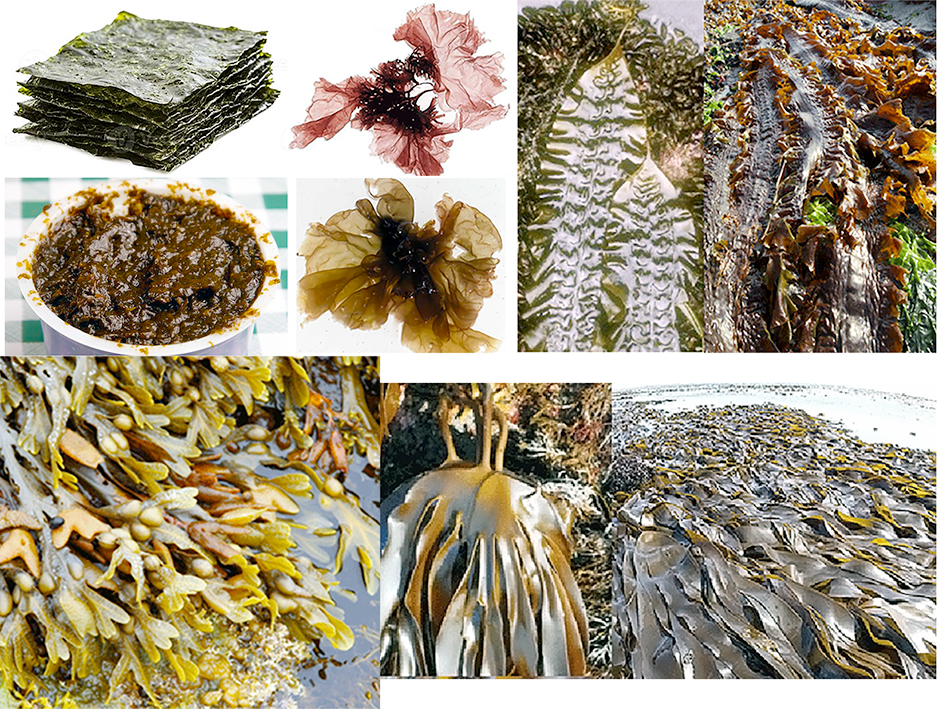 Examples of edible seaweed (clockwise from top left): dried nori and Welsh laverbread,
purple and brown laver, sugar kelp, oarweed, bladderwrack.
Welcome to FabulousFusionFood's Seaweed-based Recipes Page —Seaweed, or macroalgae, refers to thousands of species of macroscopic, multicellular, marine algae. The term includes some types of Rhodophyta (red), Phaeophyta (brown) and Chlorophyta (green) macroalgae. Seaweed species such as kelps provide essential nursery habitat for fisheries and other marine species and thus protect food sources; other species, such as planktonic algae, play a vital role in capturing carbon and producing at least 50% of Earth's oxygen.
Humans have a long history of cultivating seaweeds for their uses. In recent years, seaweed farming has become a global agricultural practice, providing food, source material for various chemical uses (such as carrageenan), cattle feed and fertilizers. Due to their importance in marine ecologies and for absorbing carbon dioxide, recent attention has been on cultivating seaweeds as a potential climate change mitigation strategy for biosequestration of carbon dioxide, alongside other benefits like nutrient pollution reduction, increased habitat for coastal aquatic species, and reducing local ocean acidification. The IPCC Special Report on the Ocean and Cryosphere in a Changing Climate recommends "further research attention" as a mitigation tactic.
"Seaweed" lacks a formal definition, but seaweed generally lives in the ocean and is visible to the naked eye. The term refers to both flowering plants submerged in the ocean, like eelgrass, as well as larger marine algae. Generally, it is one of several groups of multicellular algae; red, green and brown. They lack one common multicellular ancestor, forming a polyphyletic group. In addition, blue-green algae (Cyanobacteria) are occasionally considered in seaweed literature. The number of seaweed species is still a topic of discussion among scientists, but it is most likely that there are several thousand species of seaweed.
Seaweed farming or kelp farming is the practice of cultivating and harvesting seaweed. In its simplest form farmers gather from natural beds, while at the other extreme farmers fully control the crop's life cycle. The seven most cultivated taxa are Eucheuma spp., Kappaphycus alvarezii, Gracilaria spp., Saccharina japonica, Undaria pinnatifida, Pyropia spp., and Sargassum fusiforme. Eucheuma and K. alvarezii are attractive for carrageenan (a gelling agent); Gracilaria is farmed for agar; the rest are eaten after limited processing. Seaweeds are different from mangroves and seagrasses, as they are photosynthetic algal organisms and are non-flowering.
Seaweed is also commonly foraged from shoreline and shore cliff sites. The most commonly foraged and consumed seaweed in the UK and Ireland are described in this site's guide to edible seaweed.
Seaweed is consumed across the world, particularly in East Asia, e.g., Japan, China, Korea, Taiwan and Southeast Asia, e.g. Brunei, Singapore, Thailand, Burma, Cambodia, Vietnam, Indonesia, the Philippines, and Malaysia, as well as in South Africa, Belize, Peru, Chile, the Canadian Maritimes, Scandinavia, South West England, Ireland, Wales, Hawaii and California, and Scotland.
Gim (김, Korea), nori (海苔, Japan) and zicai (紫菜, China) are sheets of dried Porphyra used in soups, sushi or onigiri (rice balls). Gamet in the Philippines, from dried Pyropia, is also used as a flavouring ingredient for soups, salads and omelettes. Chondrus crispus ('Irish moss' or carrageenan moss) is used in food additives, along with Kappaphycus and Gigartinoid seaweed. Porphyra is used in Wales to make laverbread [bara lafwr, cy] (sometimes with oat flour). In northern Belize, seaweed is mixed with milk, nutmeg, cinnamon and vanilla to make "dulce" ("sweet").
Alginate, agar and carrageenan are gelatinous seaweed products collectively known as hydrocolloids or phycocolloids. Hydrocolloids are food additives. The food industry exploits their gelling, water-retention, emulsifying and other physical properties. Agar is used in foods such as confectionery, meat and poultry products, desserts and beverages and moulded foods. Carrageenan is used in salad dressings and sauces, dietetic foods, and as a preservative in meat and fish, dairy items and baked goods.
Not only are seaweed foraged, they are now also becoming increasingly commercially available, from dried seaweed like Japanese nori available in sheets to powdered bladderwrack used as health supplements. They are also sold as seasoning blends like French Quatre Algues or Seaweed Salt sold as a low-sodium alternative to ordinary table or sea salt.
The alphabetical list of all the seaweed-based recipes on this site follows, (limited to 100 recipes per page). There are 143 recipes in total:
Page 1 of 2
| Adzuki Beans with Nori Origin: Japan | Dried Petalonia Origin: Britain | Maelgi Rhost a Saws Bara Lawr (Roast Monkfish and Laverbread Sauce) Origin: Welsh |
| Ahi Poke Origin: Hawaii | Dulce Origin: Belize | Mallow Cheese with Seaweed Paste Origin: Fusion |
| Bara Ceirch Lafwr Sych (Dried Laver Oatcakes) Origin: Welsh | Dulse and Beans Origin: Britain | Miyeok Julgi Bokkeum (Korean Kelp Stem Accompaniment) Origin: Korea |
| Bara Lawr (Laver Bread) Origin: Welsh | Dulse and Chocolate Bouchons Origin: France | Naengi-guk (Shepherd's Purse Soup) Origin: Korea |
| Bara Lawr (Laverbread) Origin: Welsh | Dulse Potato Cakes Origin: Ireland | Niban Dashi (Stock For Vegetables and Dipping Sauces) Origin: Japan |
| Barbecued Spiral Wrack Capers Origin: Britain | Dulse Soda Bread Origin: Ireland | Nori-crusted Sirloin with Shiitake Mushrooms and Wasabi Origin: Fusion |
| Barra Dulse Origin: Scotland | Egg Wrack Capers Origin: Britain | Nori-nettle Gomasio Origin: Britain |
| Bibimap (Korean Mixed Rice with Meat and Assorted Vegetables) Origin: Korea | Eog Wedi Crasu Gyda Bara Lawr â Chaws (Baked Salmon with Laver Bread and Cheese) Origin: Welsh | Nori-wrapped Mochiko Chicken Origin: Hawaii |
| Black Mustard Flowers, Mushroom and Seaweed Soup Origin: Britain | Filedi Pysgod a Chaws Pob (Fish Fillet Rarebit) Origin: Welsh | Nori-wrapped Mochiko Pork Origin: Hawaii |
| Bladderwrack Soup Origin: Britain | Fish Terrine Origin: Britain | Oarweed and Bell Pepper Sauce Origin: Ireland |
| Brecwast Abertawe (Swansea Breakfast) Origin: Welsh | Fried Fish with Sea Lettuce Oatmeal Crust Origin: England | Oarweed Chips Origin: Britain |
| Brecwast Bara Lawr (Laver Bread Breakfast) Origin: Welsh | Fruit Salad with Kirsched Sea Spaghetti Origin: Ireland | Oarweed-cured Tuna Origin: Ireland |
| Brithyll wedi'i serio gyda Stwnsh Bara Lawr, Samffir, Sbigoglys a Phys (Seared Trout with Laver Mash, Samphire, Spinach and Peas) Origin: Welsh | Fukusazushi Origin: Japan | Ochazuke (Japanese Green Tea Rice) Origin: Japan |
| Brown Rice with Kombu Origin: Ireland | Ganmodoki (Fried Tofu Patties) Origin: Japan | Okra with Seaweed Paste Origin: Fusion |
| Bruschetta Bara Lawr Brecwast (Breakfast Laverbread Bruschetta) Origin: Welsh | Gingko Rice Origin: Fusion | Oysters in Stout Batter with Carrageen Origin: Ireland |
| Buttered Petalonia Origin: Britain | Golwyth Bacwn, Bara Lawr a Chocos (Bacon Chop with Laver Bread and Cockles) Origin: Welsh | Paratoi Bara Lafwr (Preparing Laverbread) Origin: Welsh |
| Byrger cig oen a bara lawr gydag awch iogwrt â mintys (Lamb and Laverbread Burger with Yoghurt and Mint Relish) Origin: Welsh | Good Luck Chilli Biscuits Origin: Fusion | Peli bara lawr, perlysiau a lemwn gyda saws iogwrt (Laverbread, Herb and Lemon Balls with Yoghurt Sauce) Origin: Welsh |
| Byrgers Bara Lawr (Laver Bread Burgers) Origin: Welsh | Gratin Tatws a Bara Lawr (Potato and Laverbread Gratin) Origin: Welsh | Pesto Bara Lawr a Garlleg Gwyllt (Laverbread and Wild Garlic Pesto) Origin: Welsh |
| Cake sarrasin au blé noir, aux (Savoury cake with buckwheat, seaweed and trout) Origin: France | Green Olive and Seaweed Tapanade Origin: Britain | Pesto Gwymon (Seaweed Pesto) Origin: Welsh |
| Carrageen Chocolate Jelly Origin: Ireland | Gutweed Salad with Fennel and Orange Origin: Britain | Petalonia Croquettes Origin: Britain |
| Carrageen Pudding Origin: Ireland | Gwymon Codog wedi Stemio (Steamed Bladderwrack) Origin: Welsh | Pice Tatws, Cocos a Bara Lawr (Potato, Cockle and Laverbread Patties) Origin: Welsh |
| Carragheen and Wild Cherry Mousse Origin: Britain | Hebridean Carrageen Pudding with Rose Water and Cardamom Origin: Scotland | Pickled Bladderwrack Origin: Britain |
| Cawl Bara Lawr (Laver Soup) Origin: Welsh | Henan Hu La Tang (Hot Pepper Soup) Origin: China | Pickled Dulse Origin: Britain |
| Cawl Cennin a Dilysg (cawl-cennin-dilysg) Origin: Welsh | Home-made Ikura (Marinated Salmon Roe) Origin: Japan | Pickled Kelp Origin: Britain |
| Cawl Cocos gyda Draenogiad y Môr wedi Ysmygu dros Fwg Derw (Cockle Broth with Oak-smoked Sea Bass) Origin: Welsh | Honey-roasted Sea Lettuce Origin: Britain | Pickled Kombu Origin: Japan |
| Char-grilled Seaweed Ice Cream with Wasabi Origin: Britain | Ichiban Dashi (Basic Japanese Soup Stock) Origin: Japan | Pickled Oarweed with Ginger and Chilli Origin: Britain |
| Cig oen bys a bawd gyda saws bara lawr (Lamb Finger Food with Laverbread Sauce) Origin: Welsh | Iraqi Adana Kebab Origin: Iraq | Pickled Sea Lettuce Origin: Britain |
| Cig Oen gyda Saws Bara Lawr Llysieuog (Lamb with Herby Laverbread Sauce) Origin: Welsh | JRamene (Ramen) Origin: Japan | Pickled Serrated Wrack Origin: Britain |
| Cocos Penclawdd gyda Pasta Penne a Saws Gwin gyda Garlleg Gwyllt a Bara Lawr (Penclawdd Cockles with Penne Pasta and a Wild Garlic and Laverbread Wine Sauce) Origin: Welsh | Kelp Flour Origin: Britain | Pit-roasted Pig Origin: Ancient |
| Confit d'Algue (Confit of Seaweed) Origin: France | Korean Instant Mild Curry Powder Origin: Korea | Plantain Seed Crackers Origin: Britain |
| Corned Beef Musubi Origin: Hawaii | Korean Style Dashi Origin: Korea | Pork and Seaweed Pie with Potato Crust Origin: England |
| Cornish Crab Chowder Origin: England | Lightly-stewed Sea Plantains Origin: Britain | Pwdin Berw Bara Lawr (Laverbread Suet Pudding) Origin: Welsh |
| Dried Kombu Origin: Japan | Mackerel and Seaweed Pâté Origin: Britain | |
| Dried Laver Origin: Ireland | Macrell wedi'i Grilio gyda Phiwrî Ffa a Garlleg a Iogwrt Bara Lawr (Mackerel Grilled with Broad Bean Puree, Garlic and Laver Bread Yoghurt) Origin: Welsh |
Page 1 of 2