FabulousFusionFood's Roasting Recipes 3rd Page
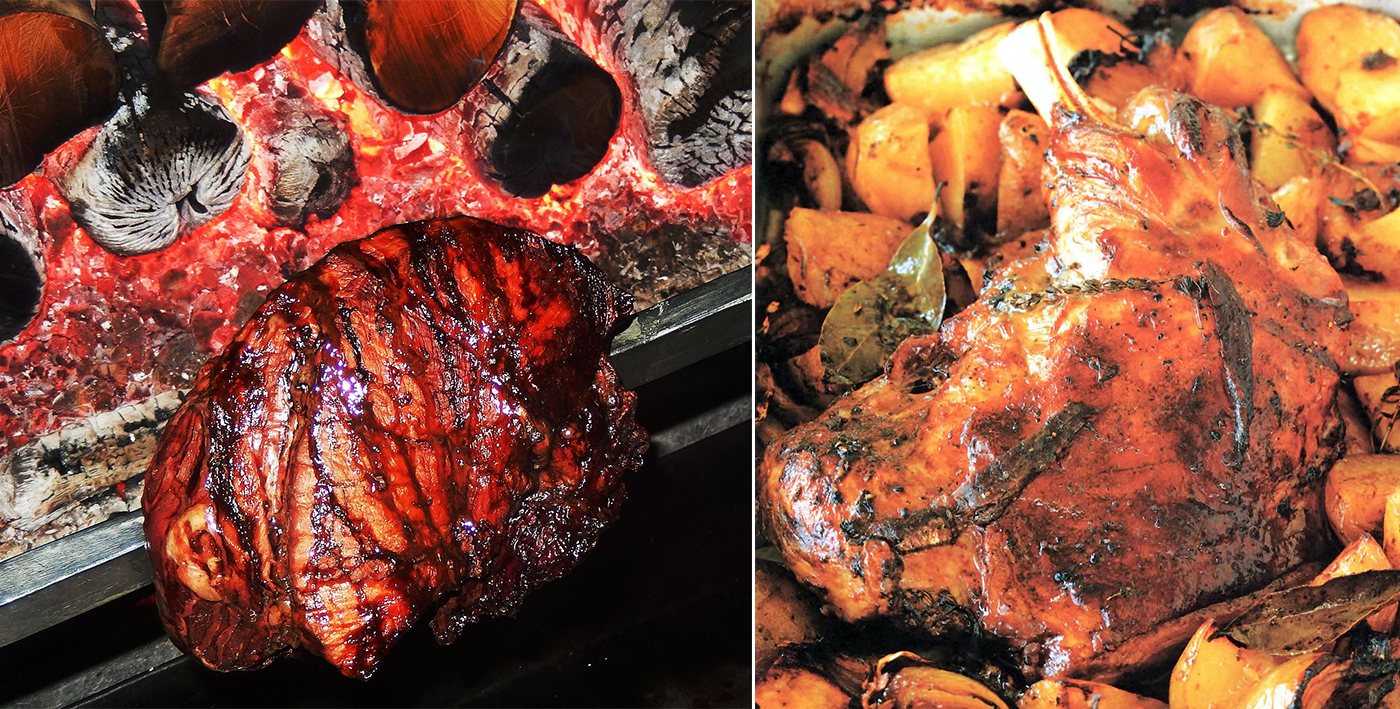 A shoulder of lamb roasting on an Elizabethan-style spit (left) and in a modern oven, (right).
Welcome to FabulousFusionFood's Roasting Recipes Page — This is a continuation of an entire series of pages that will, I hope, allow my visitors to better navigate this site. As well as displaying recipes by name, country and region of origin I am now planning a whole series of pages where recipes can be located by meal type and main ingredient. This page gives a listing of all the roasting recipes. The technique of roasting is perhaps the oldest cooking technique. After all you can roast meat by simply placing it in the embers of a fire or on hot stones or a pit. This is why the simplest way of cooking meat is to roast it. With modern ovens roasting has become a common and complex technique and roasting can be defined as a high temperature method of cooking over a prolonged period of time where the temperature about the product being roasted is even. Roasting is an excellent method of tenderizing meat, which is why it's a common technique for cooking meat. But it also works well for vegetables, especially potatoes and other staple carbohydrate sources. Being a simple cooking technique, roasting recipes are known from every culture and every major cuisine on earth.
Roasting is a cooking method that uses dry heat where hot air covers the food, cooking it evenly on all sides with temperatures of at least 150°C from an open flame, oven, or other heat source. Roasting can enhance the flavour through caramelization and Maillard browning on the surface of the food. Roasting uses indirect, diffused heat (as in an oven), and is suitable for slower cooking of meat in a larger, whole piece.[1] Meats and most root and bulb vegetables can be roasted. Any piece of meat, especially red meat, that has been cooked in this fashion is called a roast. Meats and vegetables prepared in this way are described as being 'roasted', e.g., roast chicken or roast squash.
Before the invention and widespread use of stoves, food was primarily cooked over open flames from a hearth. To roast meat, racks with skewers, or, if accessible, complicated gear arrangements, would be utilized to turn the piece(s). In the past, this method was often associated with the upper class and special occasions, rather than customary mealtimes, because it required freshly killed meat and close attention during cooking. It was easy to ruin the meat's taste with a smoky fire or negligence to rotate it at regular intervals. Thus, elite families, who were able to afford quality meat, appointed this task to servants or invested in technology like automatic turning devices. With further technological advances, cooking came to accommodate new opportunities. By the 1860s, working families were able to afford low-priced stove models that became sufficiently available. However, the key element of observation during roasting became difficult and dangerous to do with the coal oven. Hence, traditional roasting disappeared as kitchens became no longer equipped for this custom and soon thereafter, "baking" came to be "roasting".
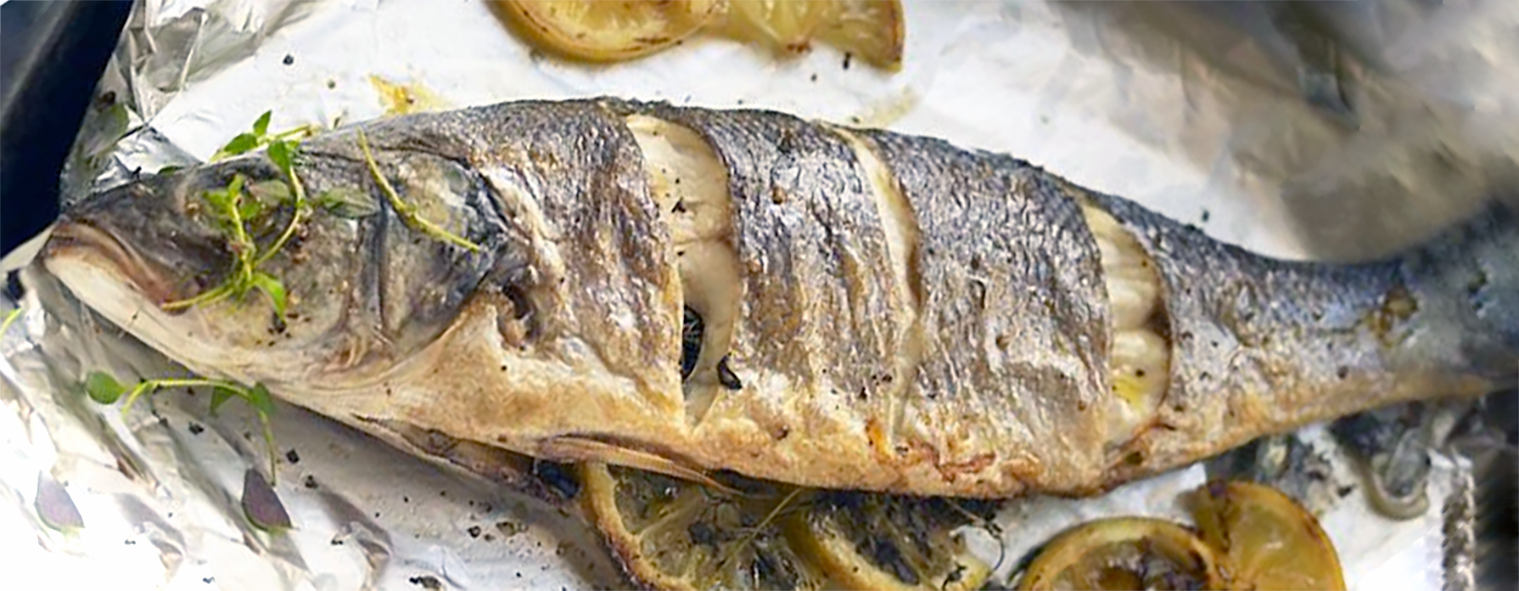 Roast fish (sea bass).
For roasting, the food may be placed on a rack, in a roasting pan or, to ensure even application of heat, may be rotated on a spit or rotisserie. If a pan is used, the juice can be retained for use in gravy, Yorkshire pudding, etc. During oven roasting, hot air circulates around the meat, cooking all sides evenly. There are several plans for roasting meat: low-temperature cooking, high-temperature cooking, and a combination of both. Each method can be suitable, depending on the food and the tastes of the people.
For more information on how best to roast various dishes, see this site's roasting guide.
The alphabetical list of all the roasting recipes on this site follows, (limited to 100 recipes per page). There are 425 recipes in total:
Page 3 of 5
| Leporem Passenianum (Hare à la Passenius) Origin: Roman | Paprika Potatoes Origin: Israel | Porcellum Lacte Pastum Elixum (Suckling Pig à la Vitellius) Origin: Roman |
| Leporem Pipere (Hare Sprinkled with Dry Pepper) Origin: Roman | Parmentier Potatoes Origin: France | Porcellum Lasaratum (Suckling Pig Seasoned with Laser) Origin: Roman |
| Limerick Ham Origin: Ireland | Parseli daenog y môr gyda pesto (Sea Bass Parcels with Pesto) Origin: Welsh | Porcellum Liquaminatum (Roast Suckling Pig with a Pastry and Honey Stuffing) Origin: Roman |
| Llwynau Cig Oen Rhost (Roast Saddle of Welsh Lamb) Origin: Welsh | Party Poussins Origin: Britain | Porcellum Oenococtum (Suckling Pig with Wine Sauce) Origin: Roman |
| Lombo Enrolado (Stuffed and Rolled Pork Loin) Origin: Brazil | Patate e Finocchida Lucca (Roast Potatoes with Fennel Seeds) Origin: Britain | Porcellum Thymo Sparsum (Suckling Pig Sprinkled with Thyme) Origin: Roman |
| Lomo de Cerdo Relleno (Stuffed Pork Loin) Origin: Spain | Pavo de Navidad (Spanish-style Christmas Turkey) Origin: Spain | Porcellum Traianum (Suckling Pig à la Trajan) Origin: Roman |
| Lumbuli assi ita fiunt (Stuffed Kidneys or Testicles) Origin: Roman | Peach Preserve Glazed Ham Origin: Britain | Porcellum Traianum (For a Very Young Piglet) Origin: Roman |
| Mackerel Stuffed with Samphire and Seasoned with Alexanders and Wild Fennel Seeds Origin: Britain | Peking Duck Origin: China | Pork Chops with Roasted Grapes Origin: New Zealand |
| Magret de Canard Rôti (Roast Duck Magret) Origin: France | Penhaearn Pob (Roast Gurnard) Origin: Welsh | Pork Tenderloins with Adobo Sauce Origin: American |
| Mahi Shekam Por (Persian Stuffed Fish) Origin: Iran | Pepper Chicken Origin: Sierra Leone | Port, Clementine and Five-spice Ham Origin: Britain |
| Malardis Origin: England | Perdhikes sto Fourno (Oven-baked Partridges) Origin: Cyprus | Poulet braisé à l'Ivorienne (Ivorian-style Roast Chicken) Origin: Cote dIvoire |
| Mallorcan-style Easter Lamb Origin: Britain | Perfect Roast Potatoes Origin: Britain | Poulet Farci au Riz (Chicken Stuffed with Rice) Origin: Cote dIvoire |
| Martinsgans (St Martin's Goose) Origin: Switzerland | Perfectly Roasted Chicken with Advieh Origin: Fusion | Poulet Meshi (Tunisian Roast Chicken) Origin: Tunisia |
| Martinsgans (St Martin's Goose) Origin: Vatican City | Peri-peri Chicken Origin: South Africa | Poulet Rôti Tchadienne (Chadian-style Roast Chicken) Origin: Chad |
| Mechoui (Dried-fruit Stuffed Leg of Lamb) Origin: Mauritania | Pernil (Puerto Rican Roast Pork) Origin: Puerto Rico | Poullaille farcie (Stuffed Poultry) Origin: France |
| Mediterranean Lamb in a Dijon Mustard Sauce Origin: Mediterranean | Pernil (Puerto Rican Roast Pork) Origin: Puerto Rico | Pourcelet farci (Stuffed Suckling Pig) Origin: France |
| Minted Racks of Lamb Origin: Canada | Persian Leg of Lamb Origin: Iran | Prosciutto and Pesto wrapped Monkfish Tail Origin: Britain |
| Moroccan Spice-rubbed Leg of Lamb Origin: Morocco | Phoenicoptero (Of Flamingo) Origin: Roman | Prune-stuffed Chicken Origin: Israel |
| Musakhkhan (Baked Chicken and Onions With Sumac) Origin: Palestine | Pineapple Preserve Glazed Ham Origin: Britain | Psemeno kotopoylo me te saltsa lemoni-maintanou (Roasted Chicken With Lemon-Parsley Sauce) Origin: Greece |
| Mushroom-stuffed Chicken with Gravy Origin: Britain | Pintade avec Farcie à la Française (Guineafowl with French-style Stuffing) Origin: Burkina Faso | Pulled Pork Tacos Origin: America |
| Mustard Lamb Origin: Scotland | Pintade Farcie au Patates Douces (Stuffed Guineafowl with Sweet Potatoes) Origin: Burkina Faso | Pullum Anethatum (Aniseed Chicken) Origin: Roman |
| Mustard Pork Loin Chops with Butternut Squash Roast Origin: Britain | Pit Oven Roasted Pig Origin: Ancient | Pullum elixum cum cucurbitis elixis (Ancient Roman Aniseed Chicken) Origin: Roman |
| Myma (Baked Plaice) Origin: Roman | Pit-roasted Pig Origin: Ancient | Pullum Frontonianum (Chicken a la Fronto) Origin: Roman |
| New Zealand Classic Roast Lamb with Mint Sauce Origin: New Zealand | Poisson Farci (Fish Stuffed with Forcemeat and Eggs) Origin: Senegal | Pullum Numidicum (Numidian Guinea Fowl) Origin: Roman |
| Nigerian Uziza Ribs Origin: Nigeria | Poisson Farci à la Saint-Louisienne (Stuffed Fish, in the Manner of St Louis) Origin: Senegal | Pullus Farsilis (Chicken with Liquid Filling) Origin: Roman |
| North-Africa Style Breast of Lamb Origin: Fusion | Pollo a la Brasa (Peruvian Blackened Chicken) Origin: Peru | Pullus Vardanus (Chicken à la Varus) Origin: Roman |
| Ofellas Apicianas (Starters, Apician Style) Origin: Roman | Pollo con Ajo (Chicken with Garlic) Origin: Mexico | Pykes in Brasey (Pikes in Spiced Wine) Origin: England |
| Ofellas Ostienses (Ostian-style Starters) Origin: Roman | Porcellum Assum (Roast Suckling Pig) Origin: Roman | Râble de Lièvre à la Poivrade (Saddle of Hare à la Poivrade) Origin: France |
| Orange-glazed Ham with Mustard Cream Origin: Canada | Porcellum Celsinianum (Suckling Pig à la Celsinus) Origin: Roman | Rôti de Chevreuil, Pommes et Confiture de Groseille (Roast Venison, Apples and Gooseberry Jelly) Origin: France |
| Oven Roasted Dandelion Root Slivers Origin: Britain | Porcellum Coriandratum (Suckling Pig with Coriander Sauce) Origin: Roman | Rôti de Lapin aux Herbes (Roast Rabbit with Herbs) Origin: France |
| Oven-dried Fish Origin: Nigeria | Porcellum Eo Irue (Suckling Pig with Thick Sauce) Origin: Roman | Rôti de Lapin Farci (Roast, Stuffed, Rabbit) Origin: France |
| Oven-roasted Grey Snapper with Caribbean Sauce Origin: Turks Caicos | Porcellum Farsilem Duobus Generis (Suckling Pig, Stuffed in Two Ways) Origin: Roman | Rack of Lamb Persillade Origin: France |
| Pado'lalo' (Spicy coconut Aubergine) Origin: Guam | Porcellum Hortulanum (Suckling Pig Stuffed with Garden Vegetables) Origin: Roman | |
| Pado'lalo' (Spicy coconut Aubergine) Origin: Northern Mariana Islands | Porcellum Lacte Pastum Elixum (Suckling Pig Crowned with Bayleaves) Origin: Roman |
Page 3 of 5