FabulousFusionFood's Northern Marianan Recipes Home Page
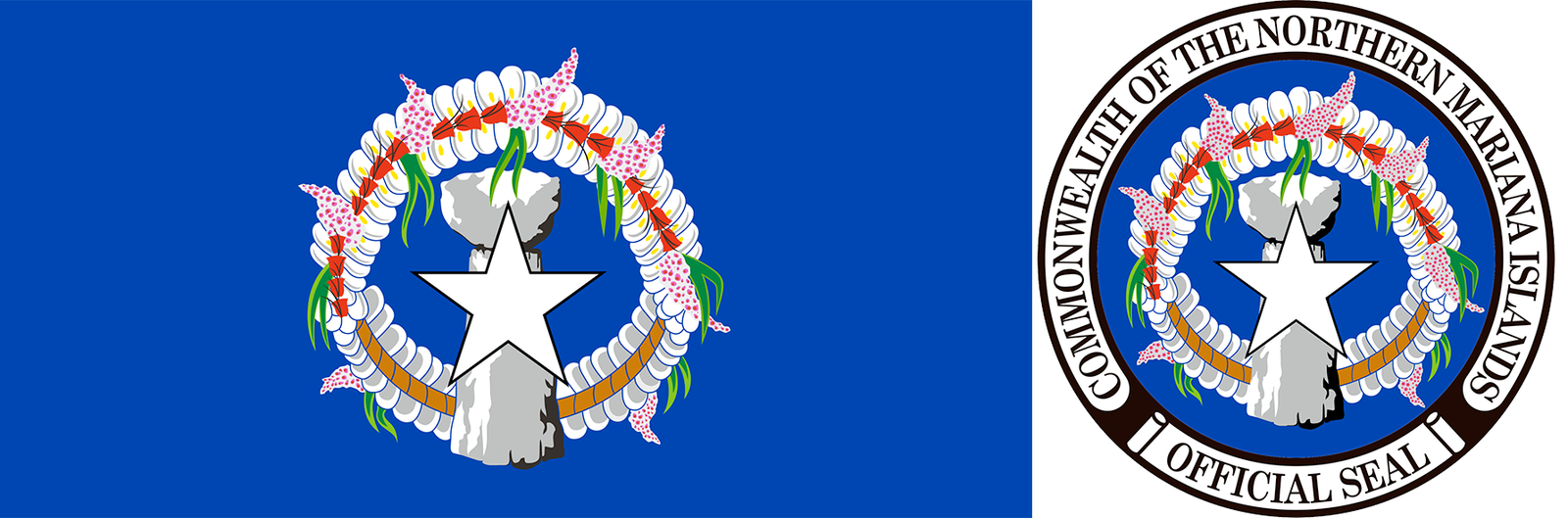 The flag of the Northern Mariana Islands (left) and the seal of arms
of the Northern Mariana Islands (right).
Welcome to the summary page for FabulousFusionFood's Northern Marianan recipes, part of Oceania. This page provides links to all the Northern Marianan recipes presented on this site, with 11 recipes in total.
This is a continuation of an entire series of pages that will, I hope, allow my visitors to better navigate this site. As well as displaying recipes by name, country and region of origin I am now planning a whole series of pages where recipes can be located by meal type and main ingredient. This page gives a listing of all the Northern Marianan recipes added to this site.
Much of Chamorro cuisine is influenced by various cultures. Popular foods of foreign origin include various types of sweet or savory empanada, initially introduced by Spain, and pancit, a noodle dish from the Philippines. Local specialties include kelaguen, a dish in which meat is cooked in whole or in part by the action of citric acid rather than heat; tinaktak, a meat dish made with coconut milk; and kå'du fanihi (flying fox/fruit bat soup). Fruit bats have become scarce in modern times on several islands, primarily due to the overharvesting of the species and loss of habitat; hunting them is now illegal even though poaching still occurs.
These recipes, for the major part, originate in Northern Mariana Islands. Otherwise they are fusion recipes with major Northern Marianan influences.
The Northern Mariana Islands, officially the Commonwealth of the Northern Mariana Islands (CNMI) (Sankattan Siha Na Islas Mariånas in Chamorro, Commonwealth Téél Falúw kka Efáng llól Marianas in Carolinian) is an unincorporated territory and commonwealth of the United States consisting of 14 islands in the northwestern Pacific Ocean. The CNMI includes the 14 northernmost islands in the Mariana Archipelago; the southernmost island, Guam, is a separate U.S. territory. The Northern Mariana Islands were listed by the United Nations as a non-self-governing territory until 1990.
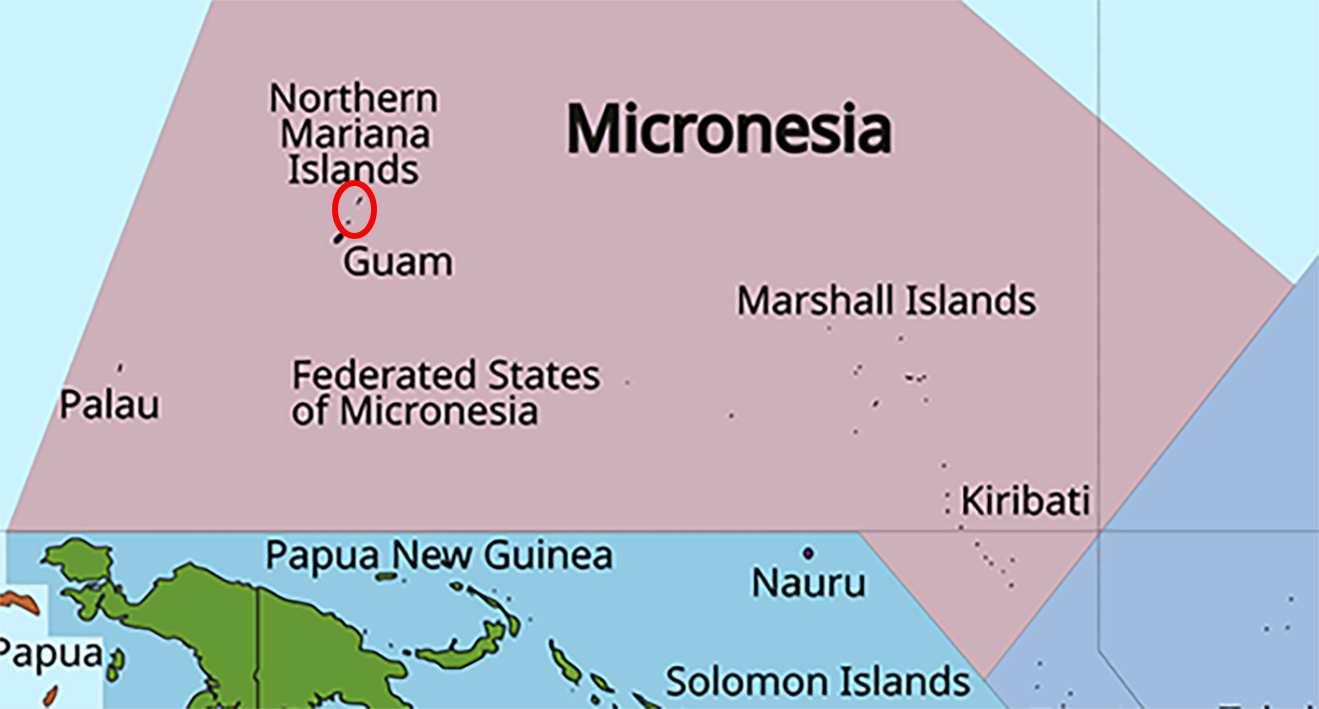 The image above shows the orthern Mariana Islands (circled in red) in relation to Micronesia in
Oceania.The Mariana Islands were the first islands settled by humans in Remote Oceania. Incidentally, their settlement was the first and longest of the ocean-crossing voyages of the Austronesian peoples, separate from the later Polynesian settlement of the rest of Remote Oceania. The islands were first settled around 1500 to 1400 BC by people from the Philippines. This was followed by a second migration from the Caroline Islands by the first millennium AD, and a third migration from Island Southeast Asia (likely the Philippines or eastern Indonesia) by 900 AD.
During the colonial period, the Northern Marianas were variously under the control of the Spanish, German, and Japanese empires. After World War II, the islands were part of the United Nations trust territories under American administration before formally joining the United States as a territory in 1986, with their population gaining United States citizenship.
The United States Department of the Interior cites a landmass of 183.5 square miles (475.26 km2). According to the 2020 United States census, 47,329 people were living in the CNMI at the time. The vast majority of the population resides on Saipan, Tinian, and Rota. The other islands of the Northern Marianas are sparsely inhabited; the most notable among these is Pagan, which has been largely uninhabited since a 1981 volcanic eruption.
The administrative centre is Capitol Hill, a village in northwestern Saipan. The current governor of the CNMI is David M. Apatang, who was elevated from lieutenant governor on July 23, 2025, following the death in office of Arnold Palacios who had served as governor since January 2023. The legislative branch has a nine-member Senate and a 20-member House of Representatives.
Etymology: After their European discovery by Portuguese navigator Ferdinand Magellan (1521), the Marianas were visited frequently but were not colonized until 1668. In that year Jesuit missionaries changed the islands’ name from Islas de los Ladrones (Thieves’ Islands) in order to honour Mariana of Austria, then regent of Spain. The United Nations awarded the Mariana as a trust territory of the United States and the population voted to become the Commonwealth of the Northern Mariana Islands (CNMI) in 1975. The Northern Mariana Islands are the northernmost islands in the Marianas island chain.
The food of Guam and the Marianas is closely related, because it is linked by the traditions of the Chamorro people that inhabit this island chain. The northern Marianas had additional German, Japanese, and Carolinas’ influences, although in modern times the region is also influenced by Filipino, American, and Japanese food cultures. The core island culture is heavily influenced by what is available to eat, especially marine and island flora and fauna, combined with traditions of people and history. A good example of this is the donni’ såli chili pepper, which was brought centuries ago by sailing ships from the Americas, and is important for fina'denni' sauce.
Some of the most well known local specialties are kelaguen, a Chamorro dish consisting of chicken, shrimp, fish or beef marinated in a mix of lemon juice and fresh coconut, red rice made with annatto and kå'du fanihi, a soup made of fruit bat or flying fox and Guyuria cookies. The red rice is hineksa’ aga’ga, is made by cooking rice in annatto broth, giving it a deep orange color. Other noted foods include lumpia (spring roll), shrimp patties, and Spam musabi, which is grilled Spam with pickled daigo radish wrapped in nori. Apigigi’ is a Chamorro dish in which roasted coconut is wrapped in banana leaf. The shrimp patties, or buñelos uhang, are a sort of shrimp fritter, with a mix of shrimp, vegetables, and batter which are then deep fried.
This is a continuation of an entire series of pages that will, I hope, allow my visitors to better navigate this site. As well as displaying recipes by name, country and region of origin I am now planning a whole series of pages where recipes can be located by meal type and main ingredient. This page gives a listing of all the Northern Marianan recipes added to this site.
Much of Chamorro cuisine is influenced by various cultures. Popular foods of foreign origin include various types of sweet or savory empanada, initially introduced by Spain, and pancit, a noodle dish from the Philippines. Local specialties include kelaguen, a dish in which meat is cooked in whole or in part by the action of citric acid rather than heat; tinaktak, a meat dish made with coconut milk; and kå'du fanihi (flying fox/fruit bat soup). Fruit bats have become scarce in modern times on several islands, primarily due to the overharvesting of the species and loss of habitat; hunting them is now illegal even though poaching still occurs.
These recipes, for the major part, originate in Northern Mariana Islands. Otherwise they are fusion recipes with major Northern Marianan influences.
The Northern Mariana Islands, officially the Commonwealth of the Northern Mariana Islands (CNMI) (Sankattan Siha Na Islas Mariånas in Chamorro, Commonwealth Téél Falúw kka Efáng llól Marianas in Carolinian) is an unincorporated territory and commonwealth of the United States consisting of 14 islands in the northwestern Pacific Ocean. The CNMI includes the 14 northernmost islands in the Mariana Archipelago; the southernmost island, Guam, is a separate U.S. territory. The Northern Mariana Islands were listed by the United Nations as a non-self-governing territory until 1990.
The image above shows the orthern Mariana Islands (circled in red) in relation to Micronesia inOceania.
During the colonial period, the Northern Marianas were variously under the control of the Spanish, German, and Japanese empires. After World War II, the islands were part of the United Nations trust territories under American administration before formally joining the United States as a territory in 1986, with their population gaining United States citizenship.
The United States Department of the Interior cites a landmass of 183.5 square miles (475.26 km2). According to the 2020 United States census, 47,329 people were living in the CNMI at the time. The vast majority of the population resides on Saipan, Tinian, and Rota. The other islands of the Northern Marianas are sparsely inhabited; the most notable among these is Pagan, which has been largely uninhabited since a 1981 volcanic eruption.
The administrative centre is Capitol Hill, a village in northwestern Saipan. The current governor of the CNMI is David M. Apatang, who was elevated from lieutenant governor on July 23, 2025, following the death in office of Arnold Palacios who had served as governor since January 2023. The legislative branch has a nine-member Senate and a 20-member House of Representatives.
Etymology: After their European discovery by Portuguese navigator Ferdinand Magellan (1521), the Marianas were visited frequently but were not colonized until 1668. In that year Jesuit missionaries changed the islands’ name from Islas de los Ladrones (Thieves’ Islands) in order to honour Mariana of Austria, then regent of Spain. The United Nations awarded the Mariana as a trust territory of the United States and the population voted to become the Commonwealth of the Northern Mariana Islands (CNMI) in 1975. The Northern Mariana Islands are the northernmost islands in the Marianas island chain.
Northern Marianan Cuisine:
The cuisine of the Mariana Islands is largely made up of meat dishes, including pork, poultry, and meat from other land mammals. Some popular land animals consumed include Mariana fruit bat (fanihi in Chamorro). Guam and the Northern Marianas split in 1899, when Spain transferred Guam to the United States but the northern islands to Germany (later occupied by Japan), and so there are many similarities, especially the Chamorro food culture. Like in many other archipelagos, the islands' surrounding waters make seafood another popular option. Some seafoods include sea cucumbers and various fish. It is said that the Mariana Islands’ cuisine is heavily influenced by its neighbors’ Papuan, Hawaiian, and American cuisines. The Marianas’ cuisine is international, with many dishes, such as Korean kimchi, Filipino pancit and Spanish empanadas being enjoyed on the islands.The food of Guam and the Marianas is closely related, because it is linked by the traditions of the Chamorro people that inhabit this island chain. The northern Marianas had additional German, Japanese, and Carolinas’ influences, although in modern times the region is also influenced by Filipino, American, and Japanese food cultures. The core island culture is heavily influenced by what is available to eat, especially marine and island flora and fauna, combined with traditions of people and history. A good example of this is the donni’ såli chili pepper, which was brought centuries ago by sailing ships from the Americas, and is important for fina'denni' sauce.
Some of the most well known local specialties are kelaguen, a Chamorro dish consisting of chicken, shrimp, fish or beef marinated in a mix of lemon juice and fresh coconut, red rice made with annatto and kå'du fanihi, a soup made of fruit bat or flying fox and Guyuria cookies. The red rice is hineksa’ aga’ga, is made by cooking rice in annatto broth, giving it a deep orange color. Other noted foods include lumpia (spring roll), shrimp patties, and Spam musabi, which is grilled Spam with pickled daigo radish wrapped in nori. Apigigi’ is a Chamorro dish in which roasted coconut is wrapped in banana leaf. The shrimp patties, or buñelos uhang, are a sort of shrimp fritter, with a mix of shrimp, vegetables, and batter which are then deep fried.
Northern Mariana Islands' National Dishes:
Below are listed the dishes considered to be Northern Mariana Islands' national foods along with links to the recipes for those dishes:| Kelaguen Mannok (Chamorro-style Chicken Salad) Origin: Northern Mariana Islands | Spam Kelaguen Origin: Northern Mariana Islands |
The alphabetical list of all the Northern Marianan recipes on this site follows, (limited to 100 recipes per page). There are 11 recipes in total:
Page 1 of 1
| Kelaguen Mannok (Chamorro-style Chicken Salad) Origin: Northern Mariana Islands | Chicken Kelaugen Origin: Northern Mariana Islands | Kelaguen Mannok (Chamorro-style Chicken Salad) Origin: Northern Mariana Islands |
| Spam Kelaguen Origin: Northern Mariana Islands | Hineksa’ Aga’ga’ (Northern Mariana Red Rice) Origin: Northern Mariana Islands | Pado'lalo' (Spicy coconut Aubergine) Origin: Northern Mariana Islands |
| Chamorro Flour Titiyas Origin: Northern Mariana Islands | Kådun Pika (Spicy Chicken) Origin: Northern Mariana Islands | Sardine Kelaguen Origin: Northern Mariana Islands |
| Chamorro Shrimp Patties Origin: Northern Mariana Islands | Ke'lagu'en Uhang (Prawns and Peppers) Origin: Northern Mariana Islands |
Page 1 of 1