FabulousFusionFood's Chilli-based Recipes 21st Page
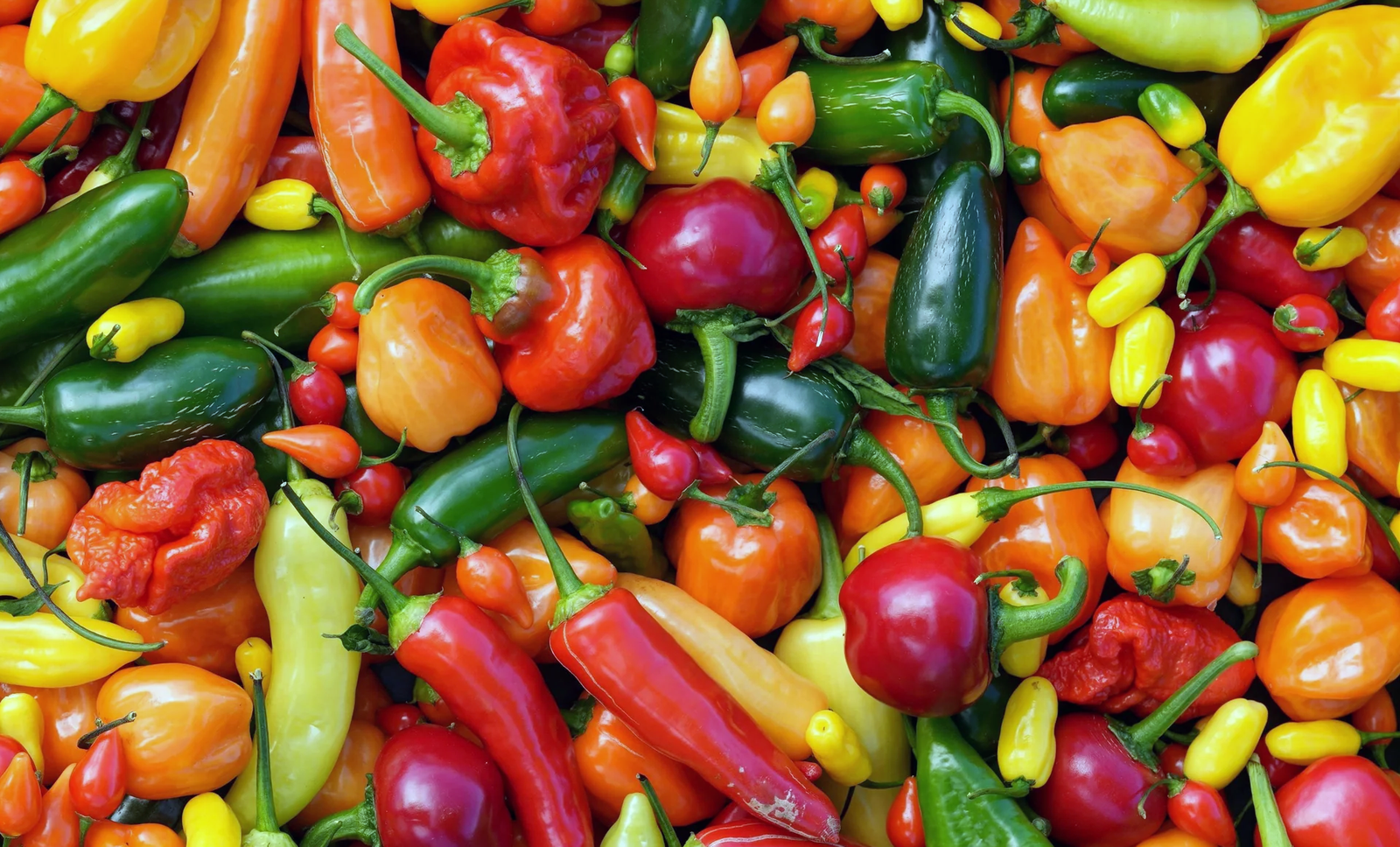 A mixture of different chilli peppers.
Welcome to FabulousFusionFood's Chilli-based Recipes Page — The recipes presented here all contain chilli peppers as a main ingredient. Chillies are the fruit of the chilli plant. Along with black pepper, they are unique spices in that they impart 'heat' to a dish without any associated bitterness. The dried and powdered fruit along with the fresh fruit and the dried fruit are all used as spices. As well as their capsaicin induced heat, chillies (depending on the variety or cultivar) can also imbue a dish with a fruity flavour. Smoked chillies are also used to impart a smokiness as well as heat to a dish.
Chilli peppers, also spelled chile or chili (from Classical Nahuatl chīlli [ˈt͡ʃiːlːi]) and known as hot peppers, are varieties of berry-fruit plants from the genus Capsicum, which are members of the nightshade family Solanaceae, cultivated for their pungency. Chilli peppers are widely used in many cuisines as a spice to add "heat" to dishes. Capsaicin and the related capsaicinoids give chillies their intensity when ingested or applied topically. Chilli peppers exhibit a range of heat and flavours. This diversity is the reason behind the availability of different types of chilli powder, each offering its own taste and heat level.
Chilli peppers originated in Central or South America and were first cultivated in Mexico. European explorers brought chillies back to the Old World in the late 16th century as part of the Columbian Exchange, which led to the cultivation of multiple varieties across the world for food and traditional medicine. Five Capsicum species have been widely cultivated: annuum, baccatum, chinense, frutescens, and pubescens.
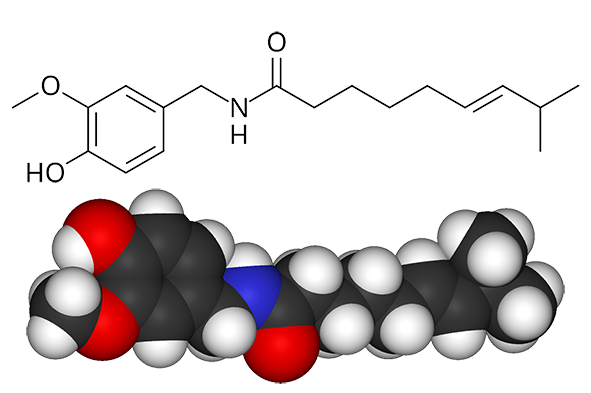 The capsaicin molecule, chemical structure (top) and space-filling model (bottom).
When peppers are consumed by mammals such as humans, capsaicin binds with pain receptors in the mouth and throat, potentially evoking pain via spinal relays to the brainstem and thalamus where heat and discomfort are perceived. However, birds are unable to perceive the hotness and so they can eat some of the hottest peppers. The intensity of the "heat" of chillies is commonly reported in Scoville heat units (SHU), invented by American pharmacist Wilbur Scoville in 1912. Historically, it was a measure of the dilution of an amount of chilli extract added to sugar syrup before its heat becomes undetectable to a panel of tasters; the more it has to be diluted to be undetectable, the more powerful the variety, and therefore the higher the rating. Since the 1980s, spice heat has been assessed quantitatively by high-performance liquid chromatography (HPLC), which measures the concentration of heat-producing capsaicinoids, typically with capsaicin content as the main measure
The alphabetical list of all the chilli-based on this site follows, (limited to 100 recipes per page). There are 2079 recipes in total:
Page 21 of 21
| Turks and Caicos Scotch Bonnet Hot Sauce Origin: Turks Caicos | Vincentian Buljol Origin: Saint Vincent | Wouré Burakhè Magilinri (Sweet Potato Leaf Sauce) Origin: Guinea |
| Turn Cornmeal Origin: British Virgin Islands | Vindaloo Curry Paste Origin: India | Xató (Salt Cod and Tuna Salad) Origin: Spain |
| Udang Masak Lemak Nenas (Pineapple Prawn Curry) Origin: Malaysia | Vindaloo Curry Spice Powder Origin: India | Xerém (Cape Verdean Pap) Origin: Cape Verde |
| Ugandan Matooke Origin: Uganda | Vindaloo Masala Origin: Britain | Xiao Long Xia (Garlic-braised Crayfish) Origin: China |
| Ukpo Origin: Nigeria | Vinegar and Oil Pickled Mushrooms Origin: Britain | Xinjiang Lamb Casserole Origin: China |
| Unakkameen Thenga Chammanthy (Dry Fish Chutney) Origin: India | Vizcaina Origin: Spain | Xinxim (Brazilian Chicken and Crayfish in Peanut Sauce) Origin: Brazil |
| Upma Origin: Britain | Wagasi in Sauce Origin: Benin | Xuyi Shisanxiang Longxia (Jiangsu Crayfish Cooked with Thirteen-Spice Powder) Origin: China |
| Urap (Steamed Vegetables with Coconut) Origin: Brunei | Warm Salad of Oyster Mushrooms Origin: Britain | Yébésséssi (Fried Fish in Tomato and Onion Sauce) Origin: Togo |
| Urap Sayur (Blanched Vegetable Salad with Spiced Coconut Topping) Origin: Indonesia | Werewere Soup (Melon Seed Soup) Origin: Cameroon | Yétissé de Poulet (Chicken Yétissé) Origin: Guinea |
| Vaca Atolada (Beef Ribs with Cassava) Origin: Brazil | West African Curry Powder Origin: West Africa | Yétissé de Tilapia (Tilapia in Aubergine Sauce) Origin: Guinea |
| Vanilla and Spice Candied Sweet Potato Galette Origin: America | West African Fish Rub Origin: West Africa | Yam with Greens, Onion, and Okra Origin: Nigeria |
| Vegetable Tagine Origin: North Africa | West African Seasonings Origin: African Fusion | Yapese Taro Fritters Origin: Federated States Micronesia |
| Vegetarian Chili Beans Origin: American | West African-style Barbecue Sauce Origin: African Fusion | Yassa Poulet (Chicken Yassa) Origin: Senegal |
| Vegetarian Jollof Rice Origin: Fusion | West Indian Pumpkin Curry Origin: Caribbean | Yataklete Kilkili (Ethiopian Ginger Vegetables) Origin: Ethiopia |
| Vegetarian Jollof Rice Accompaniment Origin: Nigeria | West Sumatran Fish Curry Origin: Sumatra | Yebeh (Yam and Fish in Red Palm Oil) Origin: Sierra Leone |
| Vegetarian Kibbeh Origin: India | Wet Fry Pork, Kenyan Style Origin: Kenya | Yebeh Stew Origin: Sierra Leone |
| Venison and Dark Chocolate Chili Origin: Fusion | Wethani Kyet (Dry Burmese Pork Curry) Origin: Myanmar | Yen Thongba (Manipuri Chicken Curry) Origin: India |
| Verulam-style Curried Jackfruit Origin: South Africa | Wethani Kyet II (Dry Burmese Pork Curry II) Origin: Myanmar | Yoghurt Sharbat Origin: India |
| Viande Nyembwe (Meat Nyembwe) Origin: Gabon | White Chili Origin: America | Yucatan-style Habanero Salsa Origin: Mexico |
| Victorian Brinjal Bhaji Origin: Anglo-Indian | White Queso Cheese Dip Origin: America | Zafrig (Soup Thickening Base) Origin: Croatia |
| Victorian Chicken Country Captain Origin: Anglo-Indian | Wild Apple and Chilli Jelly Origin: Britain | Zahlouk Origin: Morocco |
| Victorian Cussoondee Kasundi Origin: Anglo-Indian | Wild Greens Kimchi Origin: Fusion | Zalatina (Pork in Lemon and Vinegar Jelly) Origin: Cyprus |
| Victorian Essence of Chillies Origin: Anglo-Indian | Wild Mushroom and Miso Broth Origin: Britain | Zambian Piri Piri Origin: Zambia |
| Victorian Fish Molee Origin: Anglo-Indian | Wild Mustard and Spinach Curry with Oak Moss Tempering Origin: India | Zhoug Origin: Yemen |
| Victorian Jujube Long Plum Pickle Origin: Anglo-Indian | Winter Parsnip Stew Origin: Czech | Zùlt (Pickled Pigs' Ears) Origin: Aruba |
| Victorian Tomato Chutney Origin: Anglo-Indian | Wonchoi Origin: Ghana | |
| Vietnamese Pho Origin: Vietnam | Wortel Sambal (Carrot Sambal) Origin: South Africa |
Page 21 of 21