FabulousFusionFood's Chilli-based Recipes 20th Page
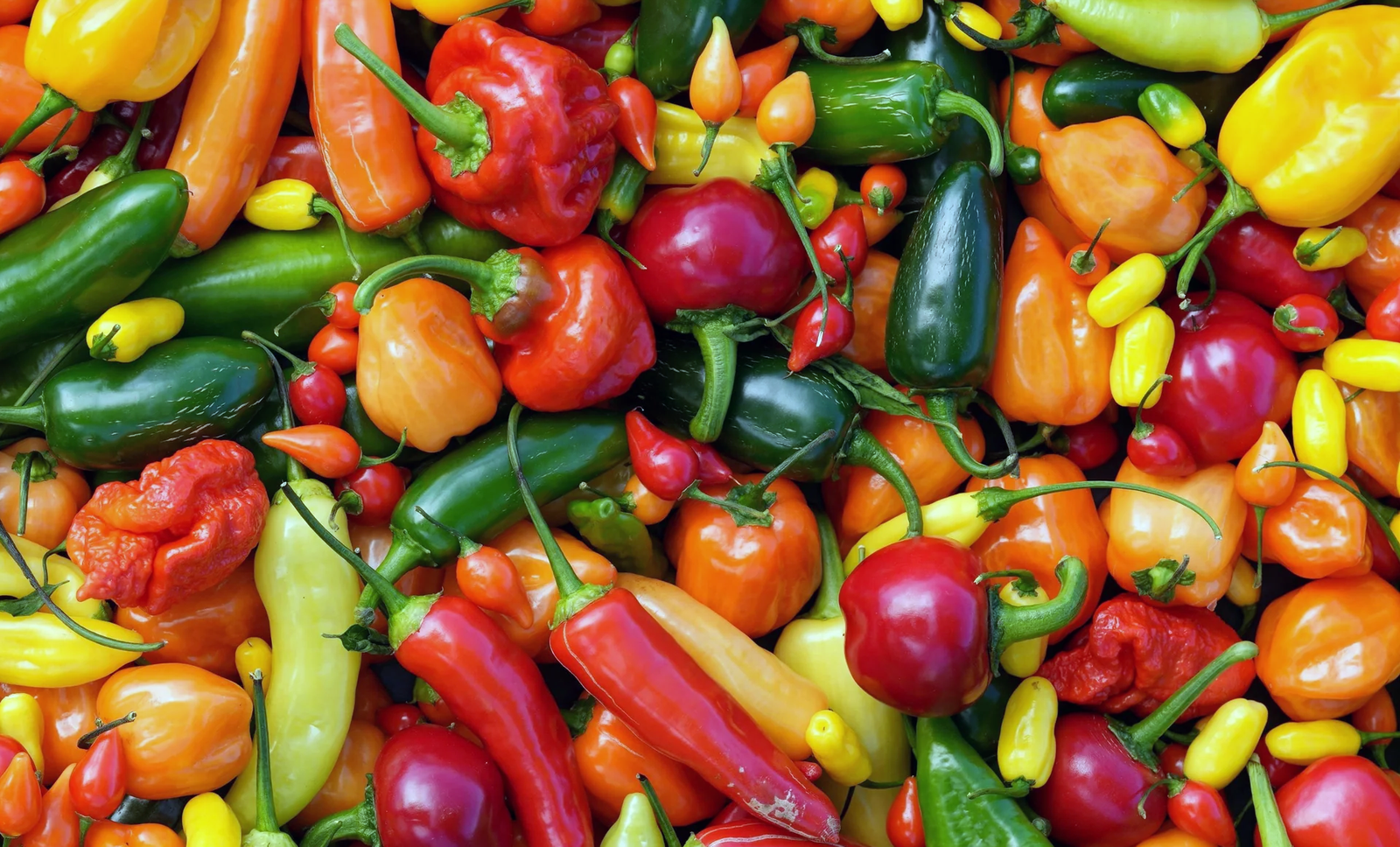 A mixture of different chilli peppers.
Welcome to FabulousFusionFood's Chilli-based Recipes Page — The recipes presented here all contain chilli peppers as a main ingredient. Chillies are the fruit of the chilli plant. Along with black pepper, they are unique spices in that they impart 'heat' to a dish without any associated bitterness. The dried and powdered fruit along with the fresh fruit and the dried fruit are all used as spices. As well as their capsaicin induced heat, chillies (depending on the variety or cultivar) can also imbue a dish with a fruity flavour. Smoked chillies are also used to impart a smokiness as well as heat to a dish.
Chilli peppers, also spelled chile or chili (from Classical Nahuatl chīlli [ˈt͡ʃiːlːi]) and known as hot peppers, are varieties of berry-fruit plants from the genus Capsicum, which are members of the nightshade family Solanaceae, cultivated for their pungency. Chilli peppers are widely used in many cuisines as a spice to add "heat" to dishes. Capsaicin and the related capsaicinoids give chillies their intensity when ingested or applied topically. Chilli peppers exhibit a range of heat and flavours. This diversity is the reason behind the availability of different types of chilli powder, each offering its own taste and heat level.
Chilli peppers originated in Central or South America and were first cultivated in Mexico. European explorers brought chillies back to the Old World in the late 16th century as part of the Columbian Exchange, which led to the cultivation of multiple varieties across the world for food and traditional medicine. Five Capsicum species have been widely cultivated: annuum, baccatum, chinense, frutescens, and pubescens.
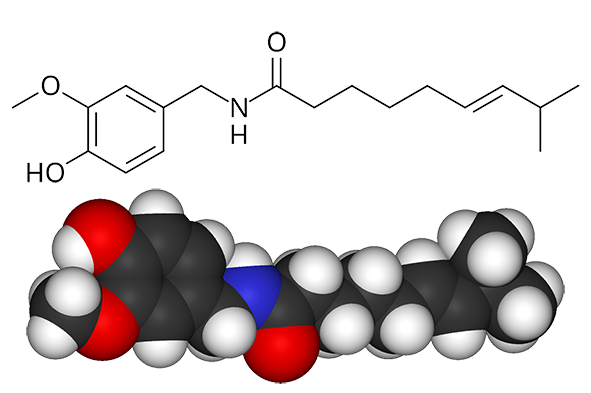 The capsaicin molecule, chemical structure (top) and space-filling model (bottom).
When peppers are consumed by mammals such as humans, capsaicin binds with pain receptors in the mouth and throat, potentially evoking pain via spinal relays to the brainstem and thalamus where heat and discomfort are perceived. However, birds are unable to perceive the hotness and so they can eat some of the hottest peppers. The intensity of the "heat" of chillies is commonly reported in Scoville heat units (SHU), invented by American pharmacist Wilbur Scoville in 1912. Historically, it was a measure of the dilution of an amount of chilli extract added to sugar syrup before its heat becomes undetectable to a panel of tasters; the more it has to be diluted to be undetectable, the more powerful the variety, and therefore the higher the rating. Since the 1980s, spice heat has been assessed quantitatively by high-performance liquid chromatography (HPLC), which measures the concentration of heat-producing capsaicinoids, typically with capsaicin content as the main measure
The alphabetical list of all the chilli-based on this site follows, (limited to 100 recipes per page). There are 2079 recipes in total:
Page 20 of 21
| Tandoori Garlic Chilli Chicken Origin: Britain | Thai Sweet Chilli Sauce Origin: Thailand | Tomato Achar Origin: Guyana |
| Tandoori Masala Powder Origin: Britain | Thai-style Turkey Leftovers Curry Origin: Fusion | Tomato and Peanut Relish Origin: Zambia |
| Tankora Powder Origin: Ghana | Tharoi Thongba (Water Snail Curry) Origin: India | Tomato Chilli Bread Origin: Fusion |
| Tanzanian Curried Okra Origin: Tanzania | The Ultimate Chilli Con Carne Origin: Fusion | Tomato Keema (Tomato and Beef Curry) Origin: Pakistan |
| Tapas de Hongos y Patatas Origin: Britain | The Ultimate Sharing Nachos Origin: Fusion | Tomato Relish Origin: Britain |
| Tapp's Sauce Origin: Anglo-Indian | Thee Sone Thanut (Vegetable Pickle) Origin: Myanmar | Tomato Rice Origin: India |
| Tarbooz ke Chilke ki Sabji (Watermelon Rind Curry) Origin: India | Thengai Chammanthi (Kerala Coconut Chammanthi) Origin: India | Tongabezi Chicken Curry Origin: Zambia |
| Tarhana Çorbası (Tarhana Soup) Origin: Turkey | Thiéré bassy Origin: Senegal | Tongan Taro Fritters Origin: Tonga |
| Tavče Gravče Origin: North Macedonia | Thiebou dieune (Street-style Senegalese Fish and Rice) Origin: Senegal | Tortilla à la Payesa (Spanish Vegetable Omelette) Origin: Spain |
| Tchektchouka de Médéa Origin: Algeria | Thiebou kéthiakh (Rice with Dried Fish and Tamarind) Origin: Senegal | Tortilla Española (Spanish Omelette) Origin: Spain |
| Tchevapchitchi (Bulgarian Minced Meat Croquettes) Origin: Bulgaria | Thiebou Yapp Vermicelles Origin: Senegal | Tourchi Batata (Potato Salad with Cumin) Origin: Tunisia |
| Telo met Bakkeljauw (Fried Cassava with Salt Cod) Origin: Suriname | Thiéré ak Mboum (Couscous with Moringa Sauce) Origin: Senegal | Traditional Jerk Pork Origin: Jamaica |
| Tembran Sauce Origin: Trinidad | Thiou Curry au Boeuf (Senegalese Beef Curry) Origin: Senegal | Travers de Porc Grillé (Barbecued Ribs of Pork) Origin: Mauritius |
| Tepsi kebabı (Turkish Tray Kebab) Origin: Turkey | Tiebe (Rice and Meat with Vegetables) Origin: Togo | Trini Hot Pepper Sauce Origin: Trinidad |
| Terong Belado (Spicy Aubergine) Origin: Brunei | Tiga Dégué au Poisson Fumé (Smoked Fish in Peanut Sauce) Origin: Mali | Trini Meat Patties Origin: Trinidad |
| Terung Saus Santan (Fried Aubergines with Coconut Milk) Origin: Papua | Tigadèguèna II (Chicken and Vegetable Peanut Stew) Origin: Mali | Trinidadian Chicken Curry Origin: Trinidad |
| Texas Caviar Origin: American | Tiguadege Na Origin: Mali | Trinidadian Crab Backs Origin: Trinidad |
| Texas Chili Origin: American | Tikka Masala Origin: India | Trinidadian Curried Goat Origin: Trinidad |
| Texas Red Chili Origin: America | Tikka Masala Curry Powder Origin: India | Trinidadian Fried Wontons Origin: Trinidad |
| Texas-style Pork and Beef Chili Origin: American | Tilapia Braisée (Barbecued Tilapia) Origin: Cameroon | Trinidadian Green Seasoning with Cuban Oregano Origin: Trinidad |
| Thai Chicken and Burdock Curry Origin: Fusion | Tinga de Pollo (Chicken Tinga) Origin: Mexico | Trinidadian Hot Pepper Sauce Origin: Trinidad |
| Thai Chicken Soup with Ginger and Lime Origin: Thailand | Tirk Prahok (Fish Pickle Sauce) Origin: Cambodia | Trinidadian Pepper Pot Origin: Trinidad |
| Thai Chilli Ice Cream Origin: Fusion | Tirk Trey Chu P'em (Sweet Fish Sauce) Origin: Cambodia | Trinidadian Turkey Curry Origin: Trinidad |
| Thai Chilli Sorbet Origin: Fusion | Tirk Umpel (Tamarind Sauce) Origin: Cambodia | Tsiren Dakakken Nama (Spicy Mince Meat Kebabs) Origin: Nigeria |
| Thai Coconut and Rainbow-Pepper Chicken Soup Origin: Thailand | Toborgee Beans Origin: Liberia | Tunisian Byesar (Tunisian Broad Bean Dip) Origin: Tunisia |
| Thai Crab and Sea-blite Curry Origin: Thailand | Tom Yam Goong 1 Origin: Thailand | Tunisian Harissa Origin: Tunisia |
| Thai Green Curry Paste Origin: Thailand | Tom Yam Goong 2 Origin: Thailand | Tunisian Spiced Lamb Balls Origin: Tunisia |
| Thai Green Curry Paste Origin: Thailand | Tom Yam Goong Maenam Origin: Thailand | Turbot in Kerala Red Curry Sauce Origin: India |
| Thai Green Curry Paste II Origin: Thailand | Tom Yum Gai (Hot and Sour Chicken Soup) Origin: Thailand | Turkey and Yam Pepper Soup Origin: Nigeria |
| Thai Mango Fish Curry Origin: Thailand | Tom Yum Hed (Mushroom Tom Yum) Origin: Thailand | Turkey Beanpot Origin: Britain |
| Thai Pork Curry in the Burmese Style Origin: Myanmar | Tom Yum Het Mangsawirat (Mushroom and Lemongrass Soup) Origin: Thailand | Turkey Vindaloo Curry Origin: Fusion |
| Thai Red Curry Paste Origin: Thailand | Tom Yum Pla (Hot and Sour Fish Soup) Origin: Thailand | Turkish Menemen Origin: Turkey |
| Thai Red Curry Paste Origin: Thailand | Tom Yum Talay (Fish Stew) Origin: Thailand | |
| Thai Shrimp Soup Origin: Thailand | Tomatillo and Beef Curry Origin: Fusion |
Page 20 of 21