FabulousFusionFood's Spice Guide for Allspice Home Page
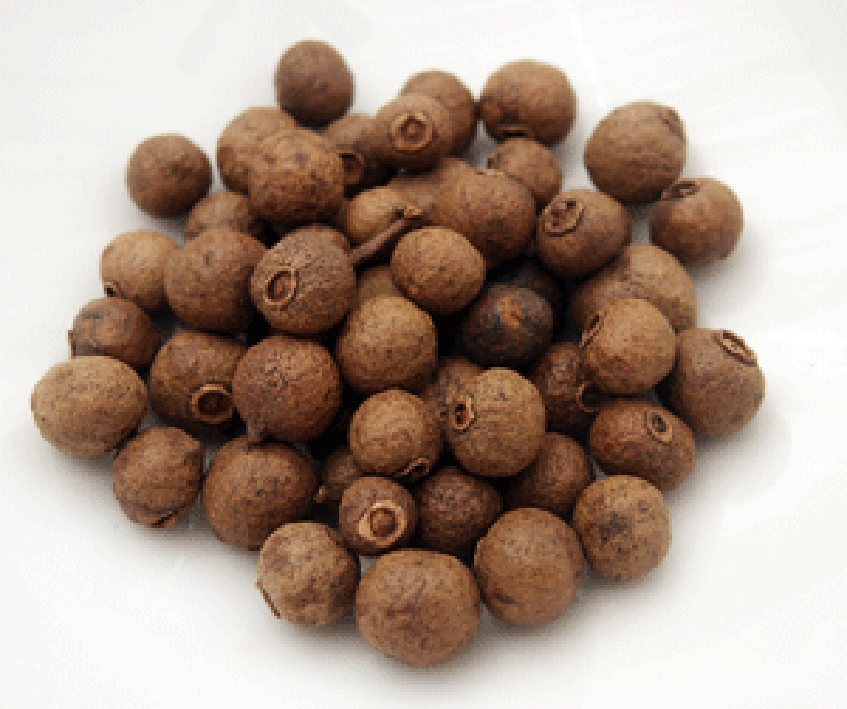 Allspice berries,
the dried unripe
fruit of Pimenta
dioica.
Allspice berries,
the dried unripe
fruit of Pimenta
dioica.
Welcome to the summary page for FabulousFusionFood's Spice guide to Allspice along with all the Allspice containing recipes presented on this site, with 463 recipes in total.
This is a continuation of an entire series of pages that will, I hope, allow my visitors to better navigate this site. As well as displaying recipes by name, country and region of origin I am now planning a whole series of pages where recipes can be located by meal type and main ingredient. This page gives a listing of all the spice-based recipes added to this site.
These recipes, all contain Allspice as a major flavouring.
Allspice (also known as English Spice, English Pepper, Jamaica pepper, Clove Pepper, Myrtle pepper, Pimenta, Pimento, or Newspice) is a Carribbean spice discovered by Christopher Columbus on the island of Jamaica during his second voyage of 1493–1496 CE. The spice itself is the dried, unripe, (green) fruit of the Pimenta dioica plant which is a small shrubby tree, quite similar to the bay laurel in size and form and a member of the Myrtaceae (Myrtle) family. It grows readily in the tropics and adapts well to container growth where it can be kept as a houseplant. The English name 'allspice' was coined in England by 1621 and is derived from the English belief that this spice combined the flavour of several spices: most notable cloves, pepper, cinnamon and nutmeg (in essence all the economically important spices of the fifteenth and sixteenth centuries). It is an aromatic spice with a taste similar to a combination of cinnamon and cloves, but hotter and more peppery.
The allspice tree is classified as an evergreen shrub that reaches a height of between 10 and 20 metres, it has smooth grey bark, with elliptic, glossy leaves, dark green and glossy, up to 15cm long. The flowers, which are small and white appearing in mid summer followed by green berries that turn purple when ripe. Trees are planted about 10m apart, allowing room for a full canopy of fruit-bearing branches. Fruit starts to develop after about five years, though it can take up to twenty years for a tree to fully mature. The allspice fruit is gathered when green and unripe and, traditionally, is dried in the sun. the Spanish introduced into European and Mediterranean cuisines in the 16th century. The Spanish called this spice pimento, since they took the dried fruit to be similar to black pepper. This is why, to this day, allspice is still known as pimento in much of the world (which is especially confusing as the Spanish also called chillies pimento).
On a similar linguistic note, the native Arawak peoples of Jamaica used allspice to cure meats. In Arawak this meat was called boucan and later later Europeans who learnt to cure meat this way came to be known as boucaniers, which ultimately became ‘buccaneers’.
Allspice was first imported into Britain on a large scale in the 1730s and it remains an important spice in British cuisine to this day, flavouring both sweet and savoury dishes. In fact, by this time Jamaica (just about the only source of allspice) was a part of the British empire and the only source came through England. This is why, in many European languages, allspice is known as 'English pepper' or 'English spice'. In the USA, by contrast, its use tends to be confined to sweet dishes and barbecue sauces. Whilst in Germany, it is seldom found in the home, but is used to flavour a range of sausages. The spice has also become popular in Africa, Eastern Europe and the Middle East. Surprisingly, it is seldom known in the Indian Sub-continent and in Asia (probably because it is not grown there), though the leaves are used in Indian cookery.
As might be expected allspice is an important ingredient of Caribbean cuisine where it is an important component of Jerk seasoning and also works as an additive when smoking meat. It s also an ingredient in commercial sausage preparations and in many curry powders and barbecue sauces. It is also a common ingredient of British cooking where it is often used to lift the flavour of many dishes (especially cakes).
The fruit contain 2 to 5% essential oil (the exact content depends much on the time of harvest). As main components, eugenol, eugenol methyl ether, and terpenes (myrcene, 1,8-cineol and α-phellandrene) have been reported. In allspice fruit from Jamaica, eugenol (65% to 90%) is the main constituent; methyl eugenol is found in minor (10%) and myrcene in trace amounts (1%). Allspice from México is dominated by methyl eugenol (50 to 60%) with smaller amounts of myrcene (15%) and eugenol (10%).
The centre of origin seems to be Jamaica, which is also the main exporter. Several other Central American states (e.g, México, Honduras) produce this spice, but their quality is considered inferior. The fruits of P. racemosa, a closely related species, are sometimes used to adulterate allspice.
This is a continuation of an entire series of pages that will, I hope, allow my visitors to better navigate this site. As well as displaying recipes by name, country and region of origin I am now planning a whole series of pages where recipes can be located by meal type and main ingredient. This page gives a listing of all the spice-based recipes added to this site.
These recipes, all contain Allspice as a major flavouring.
Allspice (also known as English Spice, English Pepper, Jamaica pepper, Clove Pepper, Myrtle pepper, Pimenta, Pimento, or Newspice) is a Carribbean spice discovered by Christopher Columbus on the island of Jamaica during his second voyage of 1493–1496 CE. The spice itself is the dried, unripe, (green) fruit of the Pimenta dioica plant which is a small shrubby tree, quite similar to the bay laurel in size and form and a member of the Myrtaceae (Myrtle) family. It grows readily in the tropics and adapts well to container growth where it can be kept as a houseplant. The English name 'allspice' was coined in England by 1621 and is derived from the English belief that this spice combined the flavour of several spices: most notable cloves, pepper, cinnamon and nutmeg (in essence all the economically important spices of the fifteenth and sixteenth centuries). It is an aromatic spice with a taste similar to a combination of cinnamon and cloves, but hotter and more peppery.
The allspice tree is classified as an evergreen shrub that reaches a height of between 10 and 20 metres, it has smooth grey bark, with elliptic, glossy leaves, dark green and glossy, up to 15cm long. The flowers, which are small and white appearing in mid summer followed by green berries that turn purple when ripe. Trees are planted about 10m apart, allowing room for a full canopy of fruit-bearing branches. Fruit starts to develop after about five years, though it can take up to twenty years for a tree to fully mature. The allspice fruit is gathered when green and unripe and, traditionally, is dried in the sun. the Spanish introduced into European and Mediterranean cuisines in the 16th century. The Spanish called this spice pimento, since they took the dried fruit to be similar to black pepper. This is why, to this day, allspice is still known as pimento in much of the world (which is especially confusing as the Spanish also called chillies pimento).
On a similar linguistic note, the native Arawak peoples of Jamaica used allspice to cure meats. In Arawak this meat was called boucan and later later Europeans who learnt to cure meat this way came to be known as boucaniers, which ultimately became ‘buccaneers’.
Allspice was first imported into Britain on a large scale in the 1730s and it remains an important spice in British cuisine to this day, flavouring both sweet and savoury dishes. In fact, by this time Jamaica (just about the only source of allspice) was a part of the British empire and the only source came through England. This is why, in many European languages, allspice is known as 'English pepper' or 'English spice'. In the USA, by contrast, its use tends to be confined to sweet dishes and barbecue sauces. Whilst in Germany, it is seldom found in the home, but is used to flavour a range of sausages. The spice has also become popular in Africa, Eastern Europe and the Middle East. Surprisingly, it is seldom known in the Indian Sub-continent and in Asia (probably because it is not grown there), though the leaves are used in Indian cookery.
As might be expected allspice is an important ingredient of Caribbean cuisine where it is an important component of Jerk seasoning and also works as an additive when smoking meat. It s also an ingredient in commercial sausage preparations and in many curry powders and barbecue sauces. It is also a common ingredient of British cooking where it is often used to lift the flavour of many dishes (especially cakes).
The fruit contain 2 to 5% essential oil (the exact content depends much on the time of harvest). As main components, eugenol, eugenol methyl ether, and terpenes (myrcene, 1,8-cineol and α-phellandrene) have been reported. In allspice fruit from Jamaica, eugenol (65% to 90%) is the main constituent; methyl eugenol is found in minor (10%) and myrcene in trace amounts (1%). Allspice from México is dominated by methyl eugenol (50 to 60%) with smaller amounts of myrcene (15%) and eugenol (10%).
The centre of origin seems to be Jamaica, which is also the main exporter. Several other Central American states (e.g, México, Honduras) produce this spice, but their quality is considered inferior. The fruits of P. racemosa, a closely related species, are sometimes used to adulterate allspice.
The alphabetical list of all Allspice recipes on this site follows, (limited to 100 recipes per page). There are 463 recipes in total:
Page 1 of 5
| 'West Indian' Mulled Wine Origin: Fusion | Aruk Khass (Lettuce Fritters) Origin: Iraq | Boudin Créole Rouge (Creole Black Pudding) Origin: Guadeloupe |
| Šproty v smetane (Smoked Sprats in Sour Cream) Origin: Russia | Augurken (Dutch Lunch Pickles) Origin: Netherlands | Bricyll wedi Piclo (Pickled Apricots) Origin: Welsh |
| A Cornish Cake Origin: Cornwall | Avocado Banana Berry Smoothie Origin: American | Brôn (Brawn) Origin: Welsh |
| A Good Sauce for Steaks Origin: British | Bahrain Baharat Spice Blend Origin: Bahrain | Brown Sauce Origin: Britain |
| Achiote Paste Origin: Mexico | Bajan Curry Powder Origin: Barbados | Bruine Bonen met Rijst (Brown Beans with Rice) Origin: Suriname |
| Achiote Paste Origin: Nicaragua | Bajan Green Seasoning Origin: Barbados | Burdock Pickles Origin: Britain |
| Afalau Sur Bach wedi Piclo (Pickled Crabapples) Origin: Welsh | Bajan Spice Mix Origin: Barbados | Burrebrede Origin: Scotland |
| Agua de Jamaica (Jamaican-style Iced Hibiscus Tea) Origin: Mexico | Baked Pumpkin and Sour Cream Pudding Origin: American | Cabbage and Bacon Origin: Ireland |
| Aguají (Plantain Soup) Origin: Dominican Republic | Bamijas, Ulcinj Style (Ulcinj style Okra) Origin: Montenegro | Cabbage Au Gratin Origin: Montserrat |
| Air Fryer Sausage Rolls Origin: Britain | Banana Ketchup Origin: Jamaica | Calalou aux crabes (Crab Callaloo) Origin: Guadeloupe |
| Al Machboos (Emirati Spiced Rice With Chicken) Origin: UAE | Banana Muffins Origin: Britain | Camel Nihari Origin: Pakistan |
| Anguilla Green Seasoning Origin: Anguilla | Banana Stobá (Stewed Plantains) Origin: Curacao | Camel Steak with Allspice Origin: Fusion |
| Anguilla Habanero Hot Sauce Origin: Anguilla | Barbecued Kibbeh Origin: African Fusion | Cape Malay Pickled Fish Origin: South Africa |
| Anguillan Barbecue Sauce Origin: Anguilla | Barszcz Wigilijny (Polish Christmas Eve Borscht) Origin: Poland | Cape Malay Seafood Curry Origin: South Africa |
| Antigua and Barbuda Jerk Chicken Origin: Antigua | Basic Irish Sausages Origin: Ireland | Cari de Cerf (Venison Curry) Origin: Reunion |
| Antiguan Curried King Prawns Origin: Antigua | Beef Koftas with Fruity Couscous Origin: Morocco | Caribbean All Purpose Seasoning Origin: Jamaica |
| Antiguan Curry Goat Origin: Antigua | Beef Stock Origin: Britain | Caribbean Burnt Sugar (Guyana Browning Sauce) Origin: Guyana |
| Antiguan Curry Powder Origin: Antigua | Beet Kvass Origin: Poland | Caribische kruidenmix (Caribbean Spice Blend) Origin: Bonaire |
| Antiguan Hot Sauce Origin: Antigua | Belfast Potted Herring Origin: Northern Ireland | Cayman Cassava Cake Origin: Cayman Islands |
| Antiguan Jerk Seasoning Origin: Antigua | Berbere Spice Origin: Ethiopia | Cayman Curry Powder Origin: Cayman Islands |
| Antiguan Rice and Peas Origin: Antigua | Bermuda Curry Powder Origin: Bermuda | Cayman Fish Rundown Origin: Cayman Islands |
| Antiguan Rice Pudding Origin: Antigua | Biscoitos De Mel (Honey Biscuits) Origin: Angola | Cayman-style Blackened Snapper Origin: Cayman Islands |
| Antiguan Seasoned Rice Origin: Antigua | Black Bun Origin: Scotland | Chaimen (Armenian Mixed Spice) Origin: Armenia |
| Antiguan Tomato Sauce Origin: Antigua | Black Cake Origin: Jamaica | Chaimen Spice Mix Origin: Armenia |
| Antillean Barbecue Sauce Origin: Sint Maarten | Black Liver Pudding Origin: Ireland | Chemen Spice Mix Origin: Georgia |
| Antillean Barbecue Sauce Origin: Guadeloupe | Blackened Fish on the Barbecue Origin: Fusion | Cheshire Potted Cheese Origin: England |
| Antillean Barbecue Sauce Origin: Martinique | Blaff de poisson (Fish Blaff) Origin: Guadeloupe | Chicken Boileen Origin: Saint Vincent |
| Antillean Barbecue Sauce Origin: Saint-Martin | Blaff de poisson (Fish Blaff) Origin: French Guiana | Chicken Broth Origin: American |
| Antillean Barbecue Sauce Origin: Saint Barthelemy | Bloms (Blom Meatballs) Origin: France | Chilli Catsup Origin: African Fusion |
| Apple Butter Origin: American | Boharat Origin: Middle East | Chilli Chow-Chow Origin: African Fusion |
| Apricot Chutney Origin: Britain | Boiled Ham Origin: Britain | Chocolate Cake Mix Spice Cake Origin: American |
| Armjanskij sup chechevicy (Armenian Lentil Soup) Origin: Armenia | Bokit au Poulet (Chicken in Fried Bread Rolls) Origin: Guadeloupe | Chow-Chow Origin: American |
| Aruba Curry Powder Origin: Aruba | Bottle Masala Origin: India | |
| Aruba Mango Chutney Origin: Aruba | Boudin Créole (Creole Black Pudding) Origin: French Guiana |
Page 1 of 5