FabulousFusionFood's Spice Guide for Sesame Seeds Home Page
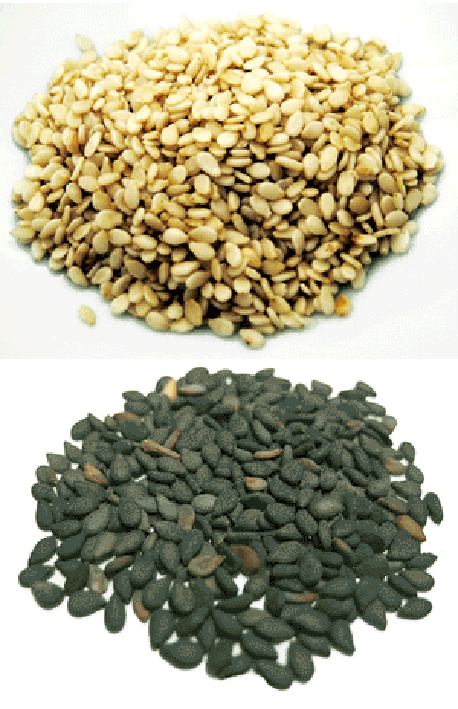 White and black
sesame seeds, the
seeds of Sesamum
indicum.
White and black
sesame seeds, the
seeds of Sesamum
indicum.
Welcome to the summary page for FabulousFusionFood's Spice guide to Sesame Seeds along with all the Sesame Seeds containing recipes presented on this site, with 194 recipes in total.
This is a continuation of an entire series of pages that will, I hope, allow my visitors to better navigate this site. As well as displaying recipes by name, country and region of origin I am now planning a whole series of pages where recipes can be located by meal type and main ingredient. This page gives a listing of all the spice-based recipes added to this site.
These recipes, all contain Sesame Seeds as a major flavouring.
Sesame seeds (also known as Gingelly and Benneseed) are the seeds of the sesame plant Sesamum indicum, and being the plant's seeds they are classed as a spice. Indeed, they are the oldest spice known from written human records and figure in an Assyrian myth circa 3000 BCE. It is an annual flowering plant in the genus Pedaliaceae (sesame) family growing to just short of 1m tall. The flowers are white to purple, tubular, 3-5 cm long, with a four-lobed mouth. The true native region of this plant is not known, as it was widely naturalized during ancient times; however, it's closest relatives occur in Africa. The name 'sesame' ultimately derives from the Assyrian (Akkadian) shamash-shammū (which is a compound of a compound of šamnu [𒉌] 'fat, oil' and šammum [𒌑] 'plant') by way of Greek sesamon [σήσαμον] (Mycenaean Greek sasaman [𐀭𐀭𐀔]) which gives us the Latin sesamum. The archaic English name gingelly derives from the Arabic al-juljulan [الجلجلان] 'sesame'. The other extant name, benneseed (or benne) derives from the West African, Wolof, name for sesame seeds, bene. This being the commonest name for this spice in African English.
Sesame seeds can range in colour from off-white through brown to black. The seeds have a nutty flavour and are distinctly oily when chewed. The nutty taste is significantly increased by toasting (which is why sesame seeds are often used as toppings for breads and cakes). Interestingly, the aroma profile of sesame seeds depend on the toasting procedure. The chemicals, pyrazines tend to dominate the flavour on mild toasting conditions (160°C), whilst toasting at higher temperatures (200°C) leads to increased formation of furane compounds.
Sesame plants are primarily cultivated for their oil-rich seeds which have a rich nutty flavour. These are commonly added to breads and can also be made into the paste, tahini which is a main component of humus. In India, sections of the Middle East and East Asia, popular treats are made from sesame mixed with honey or syrup and roasted. Indeed, sesame oil was the preferred cooking medium in India before the advent of groundnut oil. Sesame flavour (through oil and seeds [roasted and plain]) is also very popular in Korean cuisine, used to marinate meat and vegetables. The leaves of the sesame plant are also used in Korean cuisine as a type of wrap, eaten with meat and other vegetables (however, it should be noted that Korean recipes referring to 'wild sesame' actually mean the herb, perilla). Sesame seeds are also sprinkled onto some sushi style foods. East Asian cuisines, like Chinese cuisine uses sesame seeds and oil in some dishes, such as the dim sum dish, sesame seed balls. In Japanese cookery tempura chefs blend sesame and cottonseed oil for deep frying.
This is a continuation of an entire series of pages that will, I hope, allow my visitors to better navigate this site. As well as displaying recipes by name, country and region of origin I am now planning a whole series of pages where recipes can be located by meal type and main ingredient. This page gives a listing of all the spice-based recipes added to this site.
These recipes, all contain Sesame Seeds as a major flavouring.
Sesame seeds (also known as Gingelly and Benneseed) are the seeds of the sesame plant Sesamum indicum, and being the plant's seeds they are classed as a spice. Indeed, they are the oldest spice known from written human records and figure in an Assyrian myth circa 3000 BCE. It is an annual flowering plant in the genus Pedaliaceae (sesame) family growing to just short of 1m tall. The flowers are white to purple, tubular, 3-5 cm long, with a four-lobed mouth. The true native region of this plant is not known, as it was widely naturalized during ancient times; however, it's closest relatives occur in Africa. The name 'sesame' ultimately derives from the Assyrian (Akkadian) shamash-shammū (which is a compound of a compound of šamnu [𒉌] 'fat, oil' and šammum [𒌑] 'plant') by way of Greek sesamon [σήσαμον] (Mycenaean Greek sasaman [𐀭𐀭𐀔]) which gives us the Latin sesamum. The archaic English name gingelly derives from the Arabic al-juljulan [الجلجلان] 'sesame'. The other extant name, benneseed (or benne) derives from the West African, Wolof, name for sesame seeds, bene. This being the commonest name for this spice in African English.
Sesame seeds can range in colour from off-white through brown to black. The seeds have a nutty flavour and are distinctly oily when chewed. The nutty taste is significantly increased by toasting (which is why sesame seeds are often used as toppings for breads and cakes). Interestingly, the aroma profile of sesame seeds depend on the toasting procedure. The chemicals, pyrazines tend to dominate the flavour on mild toasting conditions (160°C), whilst toasting at higher temperatures (200°C) leads to increased formation of furane compounds.
Sesame plants are primarily cultivated for their oil-rich seeds which have a rich nutty flavour. These are commonly added to breads and can also be made into the paste, tahini which is a main component of humus. In India, sections of the Middle East and East Asia, popular treats are made from sesame mixed with honey or syrup and roasted. Indeed, sesame oil was the preferred cooking medium in India before the advent of groundnut oil. Sesame flavour (through oil and seeds [roasted and plain]) is also very popular in Korean cuisine, used to marinate meat and vegetables. The leaves of the sesame plant are also used in Korean cuisine as a type of wrap, eaten with meat and other vegetables (however, it should be noted that Korean recipes referring to 'wild sesame' actually mean the herb, perilla). Sesame seeds are also sprinkled onto some sushi style foods. East Asian cuisines, like Chinese cuisine uses sesame seeds and oil in some dishes, such as the dim sum dish, sesame seed balls. In Japanese cookery tempura chefs blend sesame and cottonseed oil for deep frying.
The alphabetical list of all Sesame Seeds recipes on this site follows, (limited to 100 recipes per page). There are 194 recipes in total:
Page 1 of 2
| Abobora de Camarao (Prawn Abobora) Origin: Angola | Bosh (Beans and Bread) Origin: Sudan | Golbeda Achar (Nepali Tomato Achar) Origin: Nepal |
| Ahi Poke Origin: Hawaii | Bottle Masala Origin: India | Good Luck Chilli Biscuits Origin: Fusion |
| Ahi Poke Bowl Origin: Hawaii | Brown Shrimp Soup with Crisp Sesame Croûtons Origin: Britain | Grillades de Thon Mariné (Grilled Marinated Tuna) Origin: Togo |
| Ahi Poke Bowl Origin: Kiribati | Bulgogi (Beef Stir-fry) Origin: Korea | Grilled Orange Roughy Origin: New Zealand |
| Air Fryer Crisp Chicken Wings with Korean Barbecue Sauce Origin: Britain | Bullet Naan Origin: USA | Guai wei ji si (Bang-bang Chicken) Origin: China |
| Air Fryer Orange Chicken Origin: Fusion | Burmese grilled chicken with sticky and crispy rice Origin: Myanmar | Gundruk (Nepali Fermented Leafy Greens) Origin: Nepal |
| Aish bel-Lahm (Bread with Lamb) Origin: Saudi Arabia | Cajun Crayfish Bread Origin: Cajun | Gutti Vankaya (Stuffed Brinjal Curry) Origin: India |
| Aliter Phoenicoptero (Flamingo, Another Way) Origin: Roman | Cheese and Sesame Balls Origin: Roman | Halvah Origin: Jewish |
| Alu ko Achhar (Potatoes with Split Peas) Origin: Nepal | Chicken Tagine with Honey and Apricots Origin: Morocco | Harissa Lamb Noodles Origin: Fusion |
| Assegas n Tajin s Ifrawen (Camel tagine with dried apricots) Origin: Western Sahara | Chinese Lamb and Cucumber Kebabs Origin: China | Hot Sesame Beef Origin: China |
| Authentic Mole Poblano Origin: Mexico | Chu Hou Paste Origin: Hong Kong | Hoummi Kopanisti (Chickpea Dip) Origin: Cyprus |
| Awaoktoshi (Candied Puffed Millet) Origin: Japan | Chuoereg (Armenian Easter Bread) Origin: Armenia | Iflaghun Origin: Syria |
| Azerbaijani Plav (Azerbaijani Pilaf) Origin: Azerbaijan | Churek (Flatbread With Sesame Seeds) Origin: Azerbaijan | Israeli Falafel Origin: Israel |
| Bacon and Onion Muffins Origin: American | Crispy Miso Mackerel and Chinese-style Noodles Origin: Fusion | Itrion (Sesame Biscuits) Origin: Roman |
| Bang-Bang-Chicken (Bang Bang Chicken) Origin: Fusion | Dan Dan Noodles Origin: America | Jamaican Mutton and Lime Leaf Origin: Jamaica |
| Bara Brown Sylfaenol (Basic Brown Bread) Origin: Welsh | Dan Dan Noodles II Origin: Fusion | Johl Momo Origin: Nepal |
| Bara Ceirch Lafwr Sych (Dried Laver Oatcakes) Origin: Welsh | Deep Fried Sweet Potato Balls Origin: India | JRamene (Ramen) Origin: Japan |
| Bara Gwenith a Cheirch Sylfaenol (Basic Wheat and Oat Bread) Origin: Welsh | Dhansak Masala Origin: India | Kaak Malih (Yeasted Almond Biscuits) Origin: Libya |
| Bara Gwyn Sylfaenol (Welsh Basic White Bread) Origin: Welsh | Doraji Namul (Stir-fried Creeping Bellflower Root) Origin: Korea | Kadee Origin: Middle East |
| Barazek (Syrian Sesame Biscuits) Origin: Syria | Dukkah Origin: Egypt | Kazakh Halvah Origin: Kazakhstan |
| Barzak Shortbreads (Black and White Sesame and Pistachio Biscuits) Origin: Fusion | Evening Primrose Root Gobo (Japanese-style Braised Evening Primrose Root) Origin: Britain | Kinpira Gobo (Japanese-style Braised Burdock Root) Origin: Japan |
| Basic Brown Bread Origin: Ireland | Fatir (Tajik Flatbread) Origin: Tajikistan | Knekkebrød (Norwegian Crispbread) Origin: Norway |
| Basico (Sudanese Sesame Seeds, Greens and Smoked Meat) Origin: South Sudan | Feuilles de Consoude Farcies (Stuffed Comfrey Leaves) Origin: France | Kohlapuri Chicken (Maharashtra Chicken Curry) Origin: India |
| Basyniai (Walnut and Fig Cakes) Origin: Roman | Flaounes II (Easter Cheese Cakes) Origin: Cyprus | Korean-flavoured Lamb Shanks with Swede and Potato Mash Origin: Fusion |
| Beef Noodles with Oyster Sauce Origin: China | Fruity Naan Bread Origin: India | Korean-inspired Oxeye Daisy Greens Origin: Fusion |
| Beignets aux Pommes (Apple Fritters) Origin: Togo | Fukujinzuke (Japanese Red Pickled Vegetables) Origin: Japan | Koulourakia (Greek Easter Biscuits) Origin: Greece |
| Benne Cake (Sesame Seed Wafers) Origin: Sierra Leone | Fuul (Broad Bean Paste) Origin: Sudan | Lahpet Thoke (Burmese Tea Leaf Salad) Origin: Myanmar |
| Benne-seed Wafers Origin: West Africa | Gastris (Nut Cake) Origin: Roman | Lambropsomo (Greek Easter Bread) Origin: Greece |
| Bergamot and Cheese Tuiles Origin: Britain | Gimchi bokk-eumbab (Kimchi Fried Rice) Origin: Korea | Lavaş Ekmeği (Turkish Lavash Puff Bread) Origin: Turkey |
| Bergamot, Basil and Almond Pesto Origin: Fusion | Ginger Chicken with Toasted Sesame Seeds Origin: China | Lavash (Armenian Flatbread) Origin: Armenia |
| Best Ever Barbecued Burgers Origin: Britain | Ginger Prawns with Oyster Mushrooms Origin: China | Lebanese-style Braaied Fruit Salad Origin: South Africa |
| Best Ever Barbecued Tex-Mex Burgers Origin: Fusion | Ginger Soy Fish en Papillote Origin: Fusion | Magrood (Libyan Date Biscuits) Origin: Libya |
| Bibimap (Korean Mixed Rice with Meat and Assorted Vegetables) Origin: Korea | Goda Masala Origin: India | |
| Boo with Okra Origin: Uganda | Goda Masala Origin: India |
Page 1 of 2