FabulousFusionFood's Pastry and Pastries Recipes 2nd Page
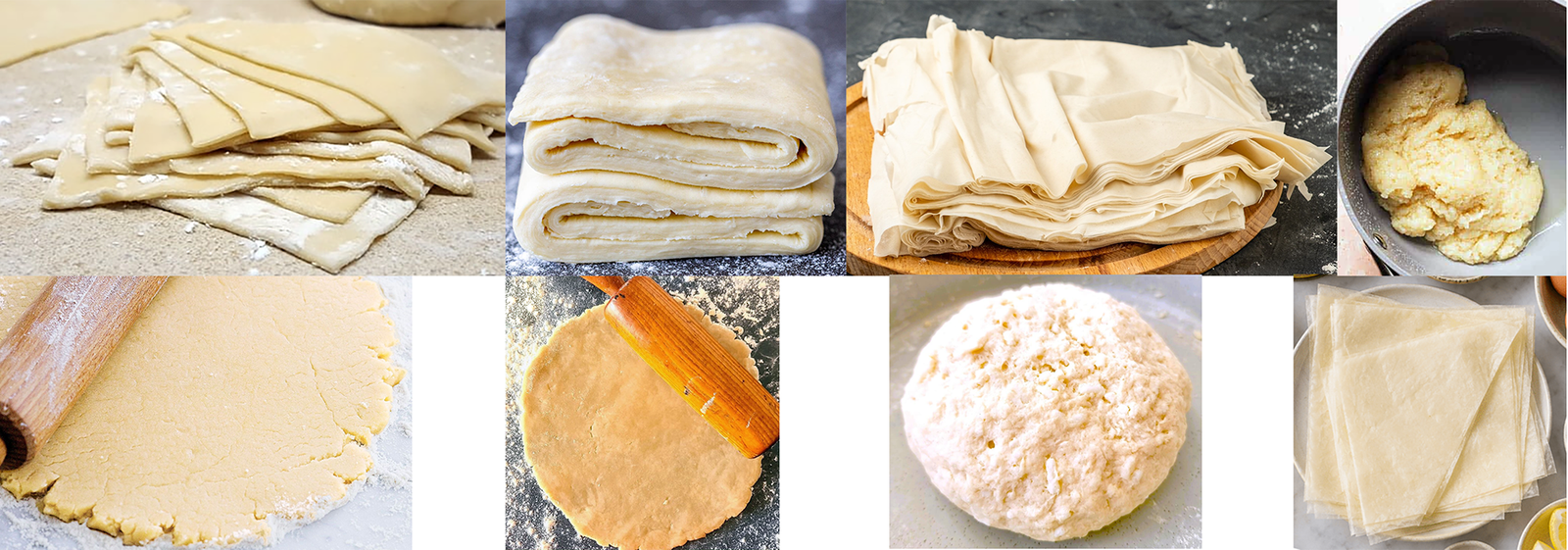 Ten pastry types, clockwise from top left: brik pastry, puff pastry, filo
pastry, choux pastry, dumpling wrappers, suet pastry, hot
water crust, shortcrust pastry
Welcome to FabulousFusionFood's Pastry and Pastries Recipes Page — A pastry is an unleavened dough at its most basic formed from flour (or ground grains or seeds) and water. However they can also contain various fats, sugar, eggs and milk products. The dough may be called pastry dough. Common pastry dishes include börek, pies, tarts, and turnovers.
In Britain and Australia (as well as historically) the term pastry refers to the dough whilst pastries are confections made primarily from pastry. In North America, the term Pastry is used for sweet baked goods made with dough, however, it is generally used colloquially to describe all sweet baked or fried goods.
The precise definition of the term pastry varies based on location and culture. Common doughs used to make pastries include filo dough, puff pastry, choux pastry, shortcrust pastry and Flaky pastry. Pastries tend to have a delicate texture, often flaky or crumbly, and rich flavour. This is caused by the crystals found in solid fats, which forces the starch particles apart and stops the formation of elastic gluten, making the pastry short. Pastries also tend to be baked.
The European tradition of pastry-making is often traced back to the shortcrust era of flaky doughs that were in use throughout the Mediterranean in ancient times. In the ancient Mediterranean, the Romans, Greeks, and Phoenicians all had filo-style pastry in their culinary traditions. In the plays of Aristophanes, written in the 5th century BC, there is mention of sweetmeats, including small baked goods filled with fruit. Roman cuisine used flour, oil, and water to make the pastry dough that were used to cover meats and fowls during baking in order to keep in the juices, but the pastry was not meant to be eaten. The Romans also used a type of pastry sheet know as tractae as a larder stand-by for thickening. A pastry that was meant to be eaten was a richer pastry that was made into small baked goods containing eggs or little birds and that were often served at banquets. Greeks and Romans both struggled in making a good pastry because they used oil in the cooking process, and oil causes the pastry to lose its stiffness.
 Medieval coffyn pie where the pastry is to be discarded
It was not until about the mid-16th century that actual pastry recipes began appearing. These recipes were adopted and adapted over time in various European countries, resulting in the myriad pastry traditions known to the region, including Portuguese "pastéis de nata" to Pasty in the United Kingdom. Throughout the world pastry has developed. In China, Chinese flaky pastry (Chinese: 中式酥皮; also known as Chinese puff pastry) is made in two distinct styles, Huaiyang-style (淮揚酥皮) and Cantonese-style pastry (廣式酥皮). In Asia, Spring rolls are made with a simple pastry dough of water, flour and oil.
The main types of pastry are:
Dumpling Wrappers
This is the most basic type of pastry, often made from nothing more than flour and water, though sometimes oil can also be added.
Shortcrust pastry
Shortcrust pastry is the simplest and most common pastry. It is made with flour, fat, butter, salt, and water to bind the dough. Pâte brisée is the French version of classic pie or tart shortcrust pastry. The process of making pastry includes mixing of the fat and flour, adding water, chilling and then rolling out the dough. Chilling before rolling is essential since it enables the fat (lard, butter, etc.) to harden again and thus create flaky layers in the dough. It also allows for even hydration and inhibits gluten formation. It results in a tender flaky pastry. The fat is mixed with the flour first, generally by rubbing with fingers or a pastry blender, which inhibits gluten formation by coating the gluten strands in fat and results in a short (as in crumbly; hence the term shortcrust), tender pastry. A related type is the sweetened sweetcrust pastry, also known as pâte sucrée, in which sugar and egg yolks have been added (rather than water) to bind the pastry.
Puff pastry
Puff pastry has many layers that cause it to expand or "puff" when baked. Puff pastry is made using a laminated dough consisting of flour, butter, salt, and water. The pastry rises up due to the water and fats expanding as they turn into steam upon heating. Puff pastry come out of the oven light, flaky, and tender.
Flaky pastry
Flaky pastry is a simple pastry that expands when cooked due to the number of layers. It bakes into a crisp, buttery pastry. The "puff" is obtained by the shard-like layers of fat, most often butter or shortening, creating layers which expand in the heat of the oven when baked. A form of Flaky pastry is Chinese flaky pastry, but it uses oil instead of butter.
Choux pastry
Choux pastry is a very light pastry that is often filled with cream. Unlike other types of pastry, choux is in fact closer to a dough before being cooked which gives it the ability to be piped into various shapes such as the éclair and profiterole. Its name originates from the French choux, meaning cabbage, owing to its rough cabbage-like shape after cooking.
Choux begins as a mixture of milk or water and butter which are heated together until the butter melts, to which flour is added to form a dough. Eggs are then beaten into the dough to further enrich it. This high percentage of water causes the pastry to expand into a light, hollow pastry. Initially, the water in the dough turns to steam in the oven and causes the pastry to rise; then the starch in the flour gelatinizes, thereby solidifying the pastry. Once the choux dough has expanded, it is taken out of the oven; a hole is made in it to let out the steam. The pastry is then placed back in the oven to dry out and become crisp. The pastry is filled with various flavours of cream and is often topped with chocolate. Choux pastries can also be filled with ingredients such as cheese, tuna, or chicken to be used as starters.
Filo (Phyllo)
FIlo is a paper-thin pastry dough that is used in many layers. The filo is generally wrapped around a filling and brushed with butter before baking. These pastries are very delicate and flaky.
Malsouka/Brik
Also known as brik sheets, (Arabic: ورق البريك, French: feuilles de brick) or bourek sheets (ورق البوراك) or dioul (Arabic: ديول) is a Maghrebi pastry sheet that resembles filo. It is thicker than filo and unlike filo is created by spreading wafer-thin layers of dough on a heated pan rather than by rolling a raw dough.
Hot water crust pastry
Hot water crust pastry is used for savoury pies, such as pork pies, game pies and, more rarely, steak and kidney pies. Hot water crust is traditionally used for making hand-raised pies. The usual ingredients are hot water, lard, and flour. The pastry is made by heating water into which the fat is then melted, before bringing to the boil, and finally mixing with the flour. It can be done by beating the flour into the mixture in the pan, or by kneading on a pastry board. Either way, the result is a hot and rather sticky paste that can be used for hand-raising: shaping by hand, sometimes using a dish or bowl as an inner mould. As the crust cools, its shape is largely retained, and it is filled and covered with a crust, ready for baking. Hand-raised hot water crust pastry does not produce a neat and uniform finish, as there will be sagging during the cooking of the filled pie, which is generally accepted as the mark of a hand-made pie.
Suet pastry
A traditional pastry in British cuisine used in both sweet and savoury dishes. Suet is the raw, hard fat of beef, lamb or mutton found around the loins and kidneys. Its high smoke point makes it ideal for deep frying and pastry production.
Strudelteig Pastry
Traditional strudel pastry, known as Strudelteig, differs from puff pastry in that it is very elastic. It is made from flour with a high gluten content, water, oil, and salt, with no sugar added. The dough is worked vigorously, rested, and then rolled out and stretched by hand very thinly with the help of a clean linen tea towel or kitchen paper.
Links to all the above types of pastry, and many others can be found in the recipe links section below:
In the context of this page, pastries are typically small or hand-fitting confections made primarily from pastry and there are links to several types of pastries in the links below. Pies and Tarts also have a significant pastry component, but these have their own home at the Pies and Tarts Recipes page.
The alphabetical list of all the recipes recipes for pastry and pastries on this site follows, (limited to 100 recipes per page). There are 257 recipes in total:
Page 2 of 3
| Gruzinchiki (Siberian Fish Rolls) Origin: Siberia | Maids of Honour Tarts Origin: Britain | Peynirli Künefe (Turkish Cheesecake) Origin: Turkey |
| Gyoza Wrappers Origin: Japan | Manti (Meat-filled Boat-shaped Pastry) Origin: Armenia | Phthois (Pastry Rounds) Origin: Roman |
| Hamantaschen (Tricorn Purim Pastries) Origin: Israel | Manx Pasties Origin: Manx | Pice Cocos (Cockle Pikelets) Origin: Welsh |
| Hapai Hantue (Filled Buckwheat Dumplings) Origin: Bhutan | Mesru (Date and Pistachio Pastries) Origin: Mesopotamia | Pishies (Pastries with Syrup) Origin: Cyprus |
| Hart rows Origin: England | Mille Feuille Origin: France | Pishme (Turkmen Dough Fritters) Origin: Turkmenistan |
| Herbed Potato Pastry Origin: British | Mincemeat Baklava Rolls Origin: Fusion | Placenta (Cato's Layered Cheesecake) Origin: Roman |
| Hevva Cake (Heavy Cake) Origin: England | Mincemeat Croissants Origin: Britain | Plum and Apple Tart Spiced with Herb Bennet Root Origin: Britain |
| Hojuelas (Fried Puff Squares) Origin: Colombia | Mincemeat Eccles Cakes Origin: Britain | Poppyseed Kolaches Origin: Czech |
| Home-made Kadayıf Origin: Turkey | Mincemeat Samosas Origin: South Africa | Potato and Onion Flan Origin: Ireland |
| Home-made Kataifi Origin: Nigeria | Mincemeat Strudel with a Medieval Twist Origin: Britain | Potato Pizza Base Origin: Italy |
| Homentashn (Poppy Pockets) Origin: Jewish | Mincepies Origin: Britain | Potato Shortcrust Pastry Origin: Britain |
| Hot Water Pastry Origin: Britain | Namak Paray Origin: Pakistan | Poten Bwmpen (Marrow Pie) Origin: Welsh |
| Hot-water Crust Pastry Origin: Britain | Nepali Momo Wrappers Origin: Nepal | Prawn Patties Origin: Trinidad |
| Imqaret (Date Diamonds) Origin: Malta | Onion Bhaji Origin: India | Puff Pastry Purses Origin: American |
| Irish Rich Pastry Origin: Ireland | Oxeye Daisy Filo Rolls Origin: Fusion | Puff-paste Origin: Britain |
| Israeli Mamul (Israeli Date Pastries) Origin: Israel | Pâte Sucrée (Sugar Pastry) Origin: France | Puff-paste Patties Origin: Britain |
| K'naafeh (String Pastry) Origin: Lebanon | Party crispies Origin: Andorra | Pultes Tractogalatae (Pottage of Pastry and Milk) Origin: Roman |
| Kabocha Squash and Kale Galette Origin: America | Pasta Frolla (Italian Sweet Shortcrust Pastry) Origin: Italy | Pumpkin and Chanterelle Tamales Origin: Mexico |
| Kaldi (Algerian Crescent Pastries) Origin: Algeria | Paste for Tarts Origin: Britain | Pumpkin Croquettes Origin: Fusion |
| Khinkali Origin: Georgia | Pastechi de Boeuf (Beef Pastechi) Origin: Saint-Martin | Pwdin Bara Menyn (Welsh Bread and Butter Pudding) Origin: Welsh |
| Koeksisters Origin: South Africa | Pastechi Karni (Aruban Meat Empanadas) Origin: Aruba | Qaghaq Tal L-Ghasel (Treacle Rings) Origin: Malta |
| Koeksisters II Origin: South Africa | Pastelillos de Guayaba (Guava Pastries) Origin: Puerto Rico | Quarkkuchen (German cheesecake) Origin: Germany |
| Kolacky Origin: Poland | Pastelle Dough Origin: Trinidad | Quassatat with Beef and Peas Filling Origin: Malta |
| Kolokotes (Pastries Stuffed with Pumpkin) Origin: Cyprus | Pastelles Origin: Trinidad | Quesitos (Cream Cheese Puffs) Origin: Puerto Rico |
| Kremówki (Polish No-bake Custard Pillows) Origin: Poland | Pastry Cheesecake Crust Origin: Britain | Rich Shortcrust Pastry Origin: Britain |
| Kroštule (Dalmatian Pastry) Origin: Croatia | Pastry for Pasties Origin: England | Rich, Sweet, Orange Shortcrust Pastry Origin: Britain |
| La Pastiera di Grano (Neapolitan Easter Cake) Origin: Italy | Pâte à Choux (Choux Pastry) Origin: France | Rich, Sweet, Shortcrust Pastry Origin: Britain |
| Leftovers Pie Origin: Britain | Pâte Feuilletée (Puff Pastry) Origin: France | Robinson Origin: Martinique |
| Les Bouchons (Pork Dumplings) Origin: Reunion | Pâte Sablée Selon (pate-sablee-selon) Origin: France | Sabzi Gutab (Green Gutab) Origin: Azerbaijan |
| Les Palmiers du Jour de Valentine (Palmiers for Valentine's Day) Origin: France | Pâtés à la Goyave (Guava Pasties) Origin: Martinique | Sahina Origin: Trinidad |
| Lumpia Wrappers Origin: Philippines | Patty Dough Origin: Trinidad | Saint Helena Curry Puffs Origin: St Helena |
| M'hajeb (Filled Pastries) Origin: Algeria | Payn Puff (Medieval Puff Pastry) Origin: England | Samboussa (Djibouti Samosas) Origin: Djibouti |
| Macadamia Nut Cheesecake Origin: American | Peksimeti (Sour Dough Fingers) Origin: Serbia | |
| Maids of Honour Origin: England | Pernam (Ham) Origin: Roman |
Page 2 of 3