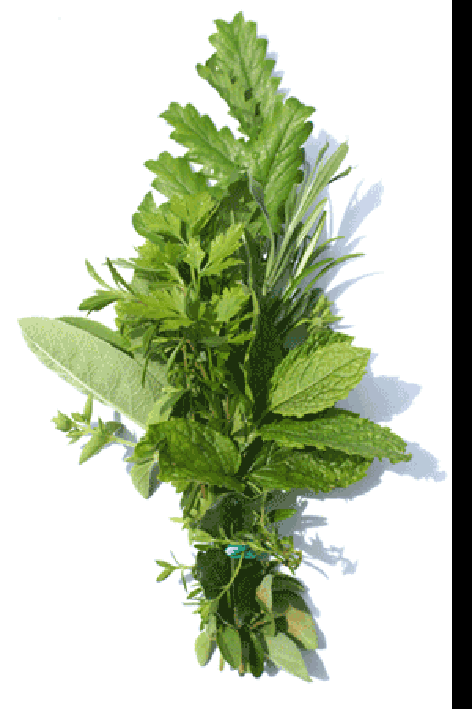
 Bunch of mixed herbs.
Welcome to the summary page for FabulousFusionFood's Cook's Guide entry for Savoury Herbs along with all the recipes employing Savoury Herbs presented on this site, with 2195 recipes in total.
This is a continuation of an entire series of pages that will, I hope, allow my visitors to better navigate this site. As well as displaying recipes by name, country and region of origin I am now planning a whole series of pages where recipes can be located by meal type and main ingredient. This page gives a listing of all the Savoury Herbs recipes added to this site.
These recipes, all contain Savoury Herbs as a major wild food ingredient.
Savoury Herbs are a class of herbs that lend pungency and savoury notes to dishes in which they are added. Savoury herbs are hardly ever eaten raw and tend to have a bitter undertone. As a result, they are typically removed from a dish in which they are cooked before serving.
In contrast with sweet herbs, which tend to be aromatic, soft and green, savoury herbs tend to be perennial in nature and are often woody and hard. Typically they have bitter undertones and may be indigestible. They are added to foods for flavour but are typically removed prior to serving. They were used frequently in Georgian and Victorian cookery to provide more pungency to a dish and were added particularly when a dish needed prolonged cooking.
Classic savoury herbs include: winter savory, rosemary, curry leaves, bayleaves (both Indian and common), fenugreek, chives, lime leaves, lavender, lemongrass, myrtle, rue, salad burnet, amongst others.
The exception to this list being parsley, which though a 'sweet' herb according to the standard description was also invariably added to any bunch of savoury herbs. Originally, however (in Medieval and Tudor times) the term 'sweet' herbs referred to those herbs that could be eaten raw or could be added directly to stews and pottages. All other herbs were 'potherbs' and required blanching before consumption. All herbs that were not 'sweet' were savoury by exclusion. However, over time the definition evolved to encompass the flavour profile of the herbs.
This is a continuation of an entire series of pages that will, I hope, allow my visitors to better navigate this site. As well as displaying recipes by name, country and region of origin I am now planning a whole series of pages where recipes can be located by meal type and main ingredient. This page gives a listing of all the Savoury Herbs recipes added to this site.
These recipes, all contain Savoury Herbs as a major wild food ingredient.
Savoury Herbs are a class of herbs that lend pungency and savoury notes to dishes in which they are added. Savoury herbs are hardly ever eaten raw and tend to have a bitter undertone. As a result, they are typically removed from a dish in which they are cooked before serving.
In contrast with sweet herbs, which tend to be aromatic, soft and green, savoury herbs tend to be perennial in nature and are often woody and hard. Typically they have bitter undertones and may be indigestible. They are added to foods for flavour but are typically removed prior to serving. They were used frequently in Georgian and Victorian cookery to provide more pungency to a dish and were added particularly when a dish needed prolonged cooking.
Classic savoury herbs include: winter savory, rosemary, curry leaves, bayleaves (both Indian and common), fenugreek, chives, lime leaves, lavender, lemongrass, myrtle, rue, salad burnet, amongst others.
The exception to this list being parsley, which though a 'sweet' herb according to the standard description was also invariably added to any bunch of savoury herbs. Originally, however (in Medieval and Tudor times) the term 'sweet' herbs referred to those herbs that could be eaten raw or could be added directly to stews and pottages. All other herbs were 'potherbs' and required blanching before consumption. All herbs that were not 'sweet' were savoury by exclusion. However, over time the definition evolved to encompass the flavour profile of the herbs.
The alphabetical list of all Savoury Herbs recipes on this site follows, (limited to 100 recipes per page). There are 2195 recipes in total:
Page 1 of 22
| Ŵyau Mewn Caws (Eggs in Cheese) Origin: Welsh | Aliter Coliclos II (Stalks, Another Way, II) Origin: Roman | Almond and Lavender Biscuits Origin: Britain |
| A Messe of Greens Origin: Britain | Aliter Coliclos III (Stalks, Another Way, III) Origin: Roman | Almôndegas com Molho de Caril (Portuguese Meatball Curry) Origin: Portugal |
| Aam Ka Meetha Achaar (Sweet Mango Chutney) Origin: India | Aliter Coliclos IV (Stalks, Another Way, IV) Origin: Roman | Aloo Badun (Potato Badun) Origin: Sri Lanka |
| Abbacchio alla Cacciatora Origin: Italy | Aliter Coliclos V (Stalks, Another Way, V) Origin: Roman | Aloo ki Bhujia (Pakistani Potato Curry) Origin: Pakistan |
| Abbacchio alla scottadito (Barbecued Milk-fed Lamb Chops) Origin: Vatican City | Aliter Dulcia (Another Kind of Dessert) Origin: Roman | Aloo Sabzi Kari (Potato Curry) Origin: India |
| Abbachio al Forno (Italian Roast Baby Lamb) Origin: Italy | Aliter Dulcia III (Another Sweet III) Origin: Roman | Alu Bhindi (Okra and Potato Curry) Origin: Fiji |
| Accent Herbs Origin: Caribbean | Aliter Fabaciae (Green Beans, Another Way) Origin: Roman | Alu Kesel (Sri Lankan Ash Plantain Curry) Origin: Sri Lanka |
| Achaari Jhinga (Indian Pickled Prawns) Origin: India | Aliter in Apro (Wild Boar, Another Way) Origin: Roman | Alubias Blancas Con Almejas (White Beans with Clams) Origin: Spain |
| Achari Masala Origin: India | Aliter in Apro II (Wild Boar, Another Way II) Origin: Roman | Alubias blancas con calamar y aceite de romero (White Beans with Squid and Rosemary Oil) Origin: Spain |
| Ad Digestionem (An Aid to Digestion) Origin: Roman | Aliter in Apro III (Wild Boar, Another Way III) Origin: Roman | Am Ke Achar (Fijian Mango Pickle) Origin: Fiji |
| Adjika II (Paprika Sauce) Origin: Abkhazia | Aliter In Aprum Assum Iura Ferventia Facies Sic (Hot Sauce for Roast Wild Boar, Another Way) Origin: Roman | Améijoas (Clams in Beer) Origin: Mozambique |
| Adobong Pato a la Moja (Duck Adobo with Pineapple and Dates) Origin: Philippines | Aliter in Echino (Sauce for Sea Urchin) Origin: Roman | Amba Sauce Origin: Israel |
| Advieh Ash (Persian Soup Spice Blend) Origin: Iran | Aliter In Echino (Sea Urchin, Another Way) Origin: Roman | Ambasha Origin: Ethiopia |
| Advieh Mahi (Persian Fish Spice Blend) Origin: Iran | Aliter in Locusta (Another Sauce for Lobster) Origin: Roman | Ambul Thial (Pickled Fish Curry) Origin: Sri Lanka |
| Afghan Kofta Curry Origin: Afghanistan | Aliter in Palumbis sive Columbis (Sauce for Boiled Wood Pigeons and Doves, Another Way) Origin: Roman | Ambul Thial (Pickled Fish) Origin: Sri Lanka |
| Afghani Chicken Curry Origin: Pakistan | Aliter ius candidum in copadiis (White Sauce for Choice Cuts, Another Way) Origin: Roman | Amchar Masala Origin: Trinidad |
| African Chicken (Macanese One-pan Chicken Curry) Origin: Macau | Aliter Ius Frigidum in Aprum Elixum (Cold Sauce for Boiled Wild Boar, Another Way) Origin: Roman | Amchar Masala Origin: Trinidad |
| African Chicken Wings Origin: African Fusion | Aliter Ius in Mugile Salso (Another Sauce for Salted Grey Mullet) Origin: Roman | American-style Chicken Curry Origin: America |
| Agneau au Cari (Lamb Curry) Origin: Reunion | Aliter Ius in Mullos Assos (Another Sauce for Baked Red Mullet) Origin: Roman | Amok Trey Khmer (Cambodian Fish Amok) Origin: Cambodia |
| Agneau Provençal au Jus Menthe Verte (Roast Lamb Provençal with Mint Gravy) Origin: France | Aliter Ius in Murena Elixa II (Another, Sauce for Poached Moray Eel II) Origin: Roman | Amulatum Aliter II (Another Thick Sauce II) Origin: Roman |
| Ailes de raie sauce au beurre noir (Skate wings with black butter sauce) Origin: France | Aliter Laseratum (Another Hing Sauce) Origin: Roman | Anadl y Ddraig (Dragon's Breath) Origin: Welsh |
| Air Fried Beef Brisket Origin: Britain | Aliter Lenticulam (Lentils, Another Way) Origin: Roman | Anardana Jheenga (Pomegranate-flavoured Prawns) Origin: India |
| Air Fryer Beef Wellington Origin: Britain | Aliter Leporem Elixum (Another, Boiled Hare) Origin: Roman | Andhra Kodi Kura (Andhra Chicken Curry) Origin: India |
| Air Fryer Breaded Cod Origin: America | Aliter Leporem ex Suo Iure (Another, Hare in its Own Gravy) Origin: Roman | Andhra Pappu Charu (Andhra-style Lentil Puree Curry) Origin: India |
| Air Fryer Lamb Chops Origin: Britain | Aliter Mullos (Red Mullets, Another Way) Origin: Roman | Andhra Pepper Chicken (Dry Restaurant-style Pepper Chicken) Origin: India |
| Air Fryer Liver and Sausage Curry Origin: Britain | Aliter Pisa Sive Faba (Peas or Beans, Another Way) Origin: Roman | Angolan Prego no Pão (Angolan Prego Rolls) Origin: Angola |
| Air Fryer Pancakes Origin: Britain | Aliter Sphondylos II (Parsnips, Another Way II) Origin: Roman | Anserem Elixum Calidum ex Iure Frigido Apiciano (Boiled Goose, Served Hot with Cold Apician Sauce) Origin: Roman |
| Air-fryer Mini Hasselback Potatoes Origin: Britain | Aliter Sphondylos III (Parsnips, Another Way III) Origin: Roman | Ansjovisfisk (Fish with Anchovies) Origin: Sweden |
| Ajiaco Criollo (Cuban Creole Stew) Origin: Cuba | Aliter Tubera II (Truffles, Another Way II) Origin: Roman | Antiguan Curry Powder Origin: Antigua |
| Alexanders Seed and Wild Greens Cheese Scones Origin: Britain | Aliter Tubera III (Truffles, Another Way III) Origin: Roman | Antiguan Green Seasoning Origin: Antigua |
| Aliater ius in mullos assos (Red Mullet in Fennel and Mint Sauce) Origin: Roman | Aliter Tubera V (Truffles, Another Way V) Origin: Roman | Antiguan Seasoned Rice Origin: Antigua |
| Alitas de pollo picante (Spicy Chicken Wings) Origin: Ecuador | All-purpose Tamale Seasoning Blend Origin: Mexico | Apelsin och rosmarinlax (Orange and Rosemary Salmon) Origin: Sweden |
| Aliter assaturas (Roast Meats, Another Way) Origin: Roman | Alleppey Fish Curry Origin: India | |
| Aliter carduos (Artichokes with Herbs) Origin: Roman | Almejas à la Marinera (Marinated Clams) Origin: Spain |
Page 1 of 22