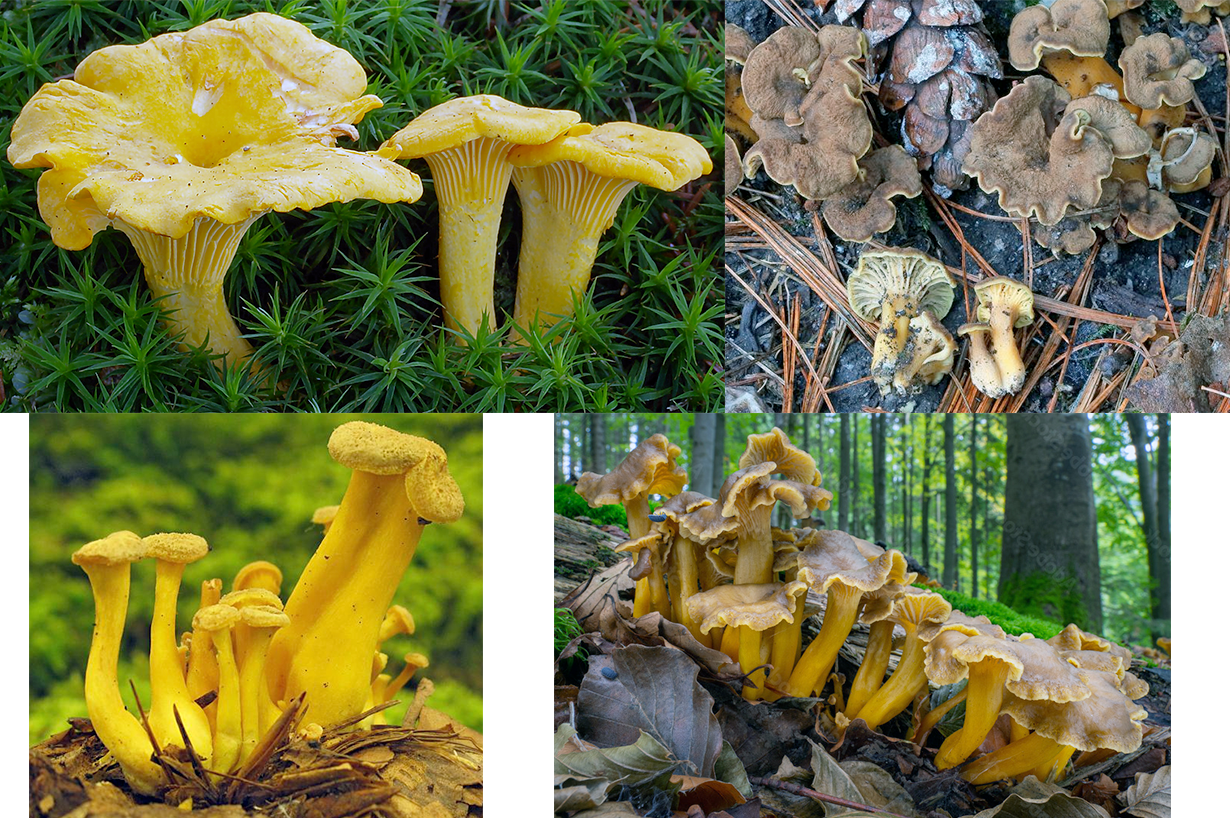
 The image, above, shows the trumpet chanterelle mushroom
(Craterellus tubaeformis), with yellow and darker mature
forms, young specimens, a group growing though leaf litter and
some on their sides to reveal the stems and gills..
| Common Name: Trumpet chanterelle |
| Scientific Name: Craterellus tubaeformis |
| Other Names: Yellowfoot, Winter Mushroom, Funnel Chanterelle, Winter Chanterelle (USA), Siantrel Cornffurf (CY) |
| Family: Cantharellaceae |
| Range: Europe from Scandinavia to the Mediterranean Basin |
Physical Characteristics Craterellus tubaeformis is a mycorrhizal fungus, growing to 5cm by 7cm in size. It is typically associated with mixed woodland and coniferous forest on moss or rotting wood; it is most especially associated with beech. They can be found from August through to December.
|
|
Edible Parts: Caps and Stipes |
 Spore Print: Yellow Spore Print: Yellow |
 Cap: Infundibuliform Cap: Infundibuliform
|
 Hymenium: Decurrent Hymenium: Decurrent
|
 Gills: Ridges on hymenium Gills: Ridges on hymenium
|
 Stipe: Bare Stipe: Bare
|
 Edibility Rating: 5 (Choice Edible) Edibility Rating: 5 (Choice Edible) 
|
 Known Hazards: None known Known Hazards: None known
|
Monthly Availability: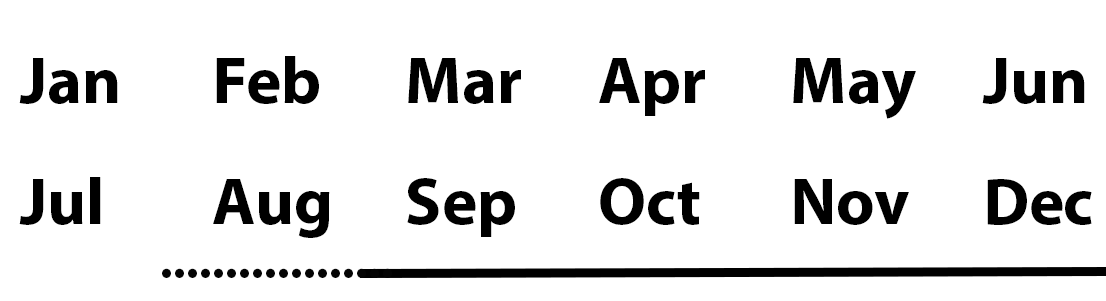
|
Welcome to the summary page for FabulousFusionFood's Wild Food guide to Trumpet Chanterelle along with all the Trumpet Chanterelle containing recipes presented on this site, with 49 recipes in total.
These recipes, all contain Trumpet Chanterelle as a major wild food ingredient.
The Trumpet Chanterelle Craterellus tubaeformis (formerly Cantharellus tubaeformis) is a mycrorhizal fungus (forming symbiotic relationships with plants). The cap is 3-5cm in diameter, convex with a depression in the centre when young becoming funnel-shaped with irregular edges. A hole in the centre can run right through to the hollow stem. Dark yellow/brown to orange/yellow. The gills are pale yellow/brown, not crowded, irregularly branching and running down the stem, decurrent. These are not true gills but folds. The stem is typically 3-6 cm long, 0.4-1.5 cm diameter. Yellow, cylindrical to irregular and hollow. Can have a vertical depression making the stem look like a pair of yellow legs. The stem generally tapers towards the base. The flesh is yellow or brown.
Chanterelles are a feature of Viennese cooking and are typically served with venison. Typically they can be found in woodlands (especially under pine, birch and beech) in September and October, though a few may fruit early, in June. They pickle well but typically do not freeze or dry. Thy are excellent eating and make a very tasty omelette if gently fried with garlic. They are also safe to eat raw and make a colourful addition to salads. The most likely confusion is with the Jack O'Lantern fungus but this is generally rare, has a very unpleasant smell and typically grows on the trunks and buried roots of sweet chestnuts and oak.
Chanterelles are well-suited for drying, and tend to maintain their aroma and consistency quite well. Dried chanterelles re-constitute very well and their flavour is intensified by drying. Dried chanterelles can also be crushed into flour and used and used as a seasoning in soups and sauces. They also freeze well, though older chanterelles, when frozen, can develop a bitter taste. Fresh chanterelles will keep for up to ten days in the refrigerator.
Possible Confusion: Other Chanterelles but these are edible. The Jelly Baby (Leotia lubrica), looks similar but does not have gills and has a bulbous cap rather than a slight funnel shape. This mushroom is considered poisonous or inedible in some guides, edible in others, best avoided. The false chanterelle (Hygrophoropsis aurantiaca) has a similar appearance and can be confused with the chanterelle. Distinguishing factors are colour (the true chanterelle is uniform egg-yellow, while the false one is more orange in hue and graded, with darker centre) and attachment of gills to the stem (the true chanterelle has ridges or wrinkles, which can be quite deep, but not true gills). Though once thought to be hazardous, it is now known that the false chanterelle is edible but not especially tasty, and ingesting it may result in mild gastrointestinal distress. The poisonous species in the genus Omphalotus (the jack-o'-lantern mushrooms) have been misidentified as chanterelles, but can usually be distinguished by their well-developed unforked gills. Omphalotus is not closely related to chanterelles.
For other edible mushrooms, see the guide to edible mushrooms
[2]. Huxley, A. The New RHS Dictionary of Gardening. 1999
[3]. Tanaka, T. Tanaka's Cyclopaedia of Edible Plants of the World.
[4]. Lim T.K. Edible Medicinal And Non-Medicinal Plants, Vols 1–12.
[5]. Thomas, G. S. Perennial Garden Plants, 2004
[6]. Milner, E. Trees of Britain and Ireland, 2011
[7]. Rose, F. & O'Reilly, C. The Wild Flower Key (Revised Edition) — How to identify wild plants, trees and shrubs in Britain and Ireland, 2006
[8]. Streeter, D. & Garrard, I. The Wild Flowers of the British Isles, 1983
[9]. Clapham, A.R.; Tutin, T.G. & Moore, D.M. Flora of the British Isles, 1987
[10]. Phillips, R. Mushrooms, 2006
[11]. Jordan, P. & Wheeler, S. The Complete Book of Mushrooms: An Illustrated Encyclopedia of Edible Mushrooms, 2011
[12]. Bunker, F. Seaweeds of Britain and Ireland, Second Edition, 2017
[13]. Facciola, S. Cornucopia II — A Source Book of Edible Plants, 1998
[14]. Hartford, R. Edible and Medicinal Wild Plants of Britain and Ireland: A Foraging and Photographic Identification Guide
(Note that the above book links are Amazon Affiliate links)
These recipes, all contain Trumpet Chanterelle as a major wild food ingredient.
The Trumpet Chanterelle Craterellus tubaeformis (formerly Cantharellus tubaeformis) is a mycrorhizal fungus (forming symbiotic relationships with plants). The cap is 3-5cm in diameter, convex with a depression in the centre when young becoming funnel-shaped with irregular edges. A hole in the centre can run right through to the hollow stem. Dark yellow/brown to orange/yellow. The gills are pale yellow/brown, not crowded, irregularly branching and running down the stem, decurrent. These are not true gills but folds. The stem is typically 3-6 cm long, 0.4-1.5 cm diameter. Yellow, cylindrical to irregular and hollow. Can have a vertical depression making the stem look like a pair of yellow legs. The stem generally tapers towards the base. The flesh is yellow or brown.
Chanterelles are a feature of Viennese cooking and are typically served with venison. Typically they can be found in woodlands (especially under pine, birch and beech) in September and October, though a few may fruit early, in June. They pickle well but typically do not freeze or dry. Thy are excellent eating and make a very tasty omelette if gently fried with garlic. They are also safe to eat raw and make a colourful addition to salads. The most likely confusion is with the Jack O'Lantern fungus but this is generally rare, has a very unpleasant smell and typically grows on the trunks and buried roots of sweet chestnuts and oak.
Chanterelles are well-suited for drying, and tend to maintain their aroma and consistency quite well. Dried chanterelles re-constitute very well and their flavour is intensified by drying. Dried chanterelles can also be crushed into flour and used and used as a seasoning in soups and sauces. They also freeze well, though older chanterelles, when frozen, can develop a bitter taste. Fresh chanterelles will keep for up to ten days in the refrigerator.
Possible Confusion: Other Chanterelles but these are edible. The Jelly Baby (Leotia lubrica), looks similar but does not have gills and has a bulbous cap rather than a slight funnel shape. This mushroom is considered poisonous or inedible in some guides, edible in others, best avoided. The false chanterelle (Hygrophoropsis aurantiaca) has a similar appearance and can be confused with the chanterelle. Distinguishing factors are colour (the true chanterelle is uniform egg-yellow, while the false one is more orange in hue and graded, with darker centre) and attachment of gills to the stem (the true chanterelle has ridges or wrinkles, which can be quite deep, but not true gills). Though once thought to be hazardous, it is now known that the false chanterelle is edible but not especially tasty, and ingesting it may result in mild gastrointestinal distress. The poisonous species in the genus Omphalotus (the jack-o'-lantern mushrooms) have been misidentified as chanterelles, but can usually be distinguished by their well-developed unforked gills. Omphalotus is not closely related to chanterelles.
For other edible mushrooms, see the guide to edible mushrooms
References:
[1]. David Evans Notes from field observations, tastings and cookery experiments.[2]. Huxley, A. The New RHS Dictionary of Gardening. 1999
[3]. Tanaka, T. Tanaka's Cyclopaedia of Edible Plants of the World.
[4]. Lim T.K. Edible Medicinal And Non-Medicinal Plants, Vols 1–12.
[5]. Thomas, G. S. Perennial Garden Plants, 2004
[6]. Milner, E. Trees of Britain and Ireland, 2011
[7]. Rose, F. & O'Reilly, C. The Wild Flower Key (Revised Edition) — How to identify wild plants, trees and shrubs in Britain and Ireland, 2006
[8]. Streeter, D. & Garrard, I. The Wild Flowers of the British Isles, 1983
[9]. Clapham, A.R.; Tutin, T.G. & Moore, D.M. Flora of the British Isles, 1987
[10]. Phillips, R. Mushrooms, 2006
[11]. Jordan, P. & Wheeler, S. The Complete Book of Mushrooms: An Illustrated Encyclopedia of Edible Mushrooms, 2011
[12]. Bunker, F. Seaweeds of Britain and Ireland, Second Edition, 2017
[13]. Facciola, S. Cornucopia II — A Source Book of Edible Plants, 1998
[14]. Hartford, R. Edible and Medicinal Wild Plants of Britain and Ireland: A Foraging and Photographic Identification Guide
(Note that the above book links are Amazon Affiliate links)
The alphabetical list of all Trumpet Chanterelle recipes on this site follows, (limited to 100 recipes per page). There are 49 recipes in total:
Page 1 of 1
Page 1 of 1