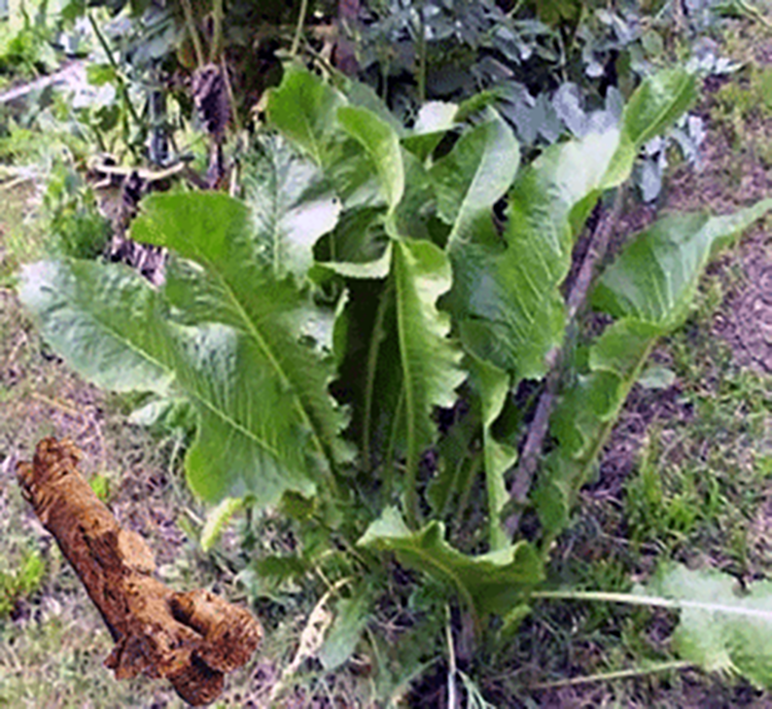
 The image, above, shows the full horseradish plant (Armoracia
rusticana) when in full leaf, with the spicy, edible root
shown, inset..
| Common Name: Horseradish |
| Scientific Name: Armoracia rusticana |
| Other Names: Red Cole |
| Family: Cruciferae |
| Range: Europe. Naturalized in Britain |
Physical Characteristics Armoracia rusticana is a hardy Perennial plant, growing to 70cm (2 ft 4 in) by 80cm (2 ft 7 in) in size. It is hardy to zone 5 and is not frost tender. The plant flowers from May to June and seeds ripen from Jube to July. The flowers are hermaphrodite and are pollinated by bees, flies and beetles. The flowers can self-pollinate and are self-fertile
|
| Edible Parts: Leaves, Root, Seeds |
 Edibility Rating: 3 Edibility Rating: 3 
|
 Known Hazards: Large quantities of this plant can be poisonous due to its content of volatile oils. Contraindicated with chronic nephritis, hepatitis, gastro-oesophageal reflux or hyperacidity conditions, and inflammatory bowel conditions. Avoid during pregnancy and lactation (but moderate amounts with food ok). Known Hazards: Large quantities of this plant can be poisonous due to its content of volatile oils. Contraindicated with chronic nephritis, hepatitis, gastro-oesophageal reflux or hyperacidity conditions, and inflammatory bowel conditions. Avoid during pregnancy and lactation (but moderate amounts with food ok).
|
Monthly Availability: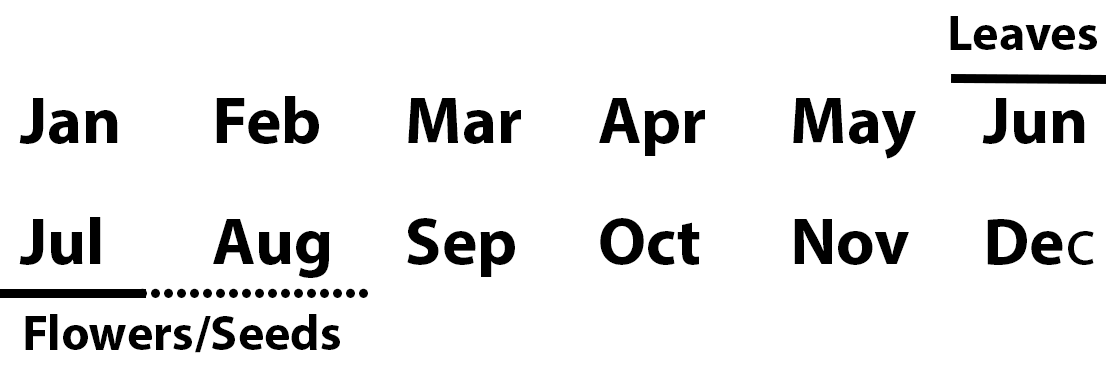
|
Welcome to the summary page for FabulousFusionFood's Wild Food guide to Horseradish along with all the Horseradish containing recipes presented on this site, with 66 recipes in total.
These recipes, all contain Horseradish as a major wild food ingredient.
Horseradish, Armoracia rusticana, also known as Red Cole, is a perennial plant of the Brassicaceae (mustard and cabbage) family. It grows up to 1.5 m tall and is mainly cultivated for its large white, tapering root, although the leaves are also edible.
The plant is fully hardy and can be left in the ground all winter to be harvested as required[4]. Alternatively, the roots can be harvested in early winter and stored for later use, they will retain their juicy state for some time if stored in dry sand.
Its root is used as a vegetable or ground in a condiment called prepared horseradish, and has at times been used as the bitter herbs in the Passover meal in some Jewish communities. Horseradish, sometimes blended with cream and called horseradish sauce, is often served with roast or boiled beef or sausages, as well as smoked fish. Horseradish is also used in some prepared mustards. Also, much of what is styled wasabi is actually common horseradish dyed green.
The horseradish root itself has hardly any aroma in its intact state. When cut or grated, however, enzymes from the damaged plant cells break down sinigrin (a glucosinolate) to produce allyl isothiocyanate (mustard oil), which irritates the sinuses and eyes. Once grated, if not used immediately or mixed in vinegar, the root darkens and loses its pungency and becomes unpleasantly bitter when exposed to air and heat. In recent years horseradish has gained something of a renaissance and horseradish root can now be found in most supermarkets. It is easy to propagate both from seed and bought roots, but note that if you want to plant in your own garden it is very invasive and is best grown in a small raised bed. In the wild, it is often found by the sides of railways, often being an escapee from Victorian cultivation.
The leaves of the plant are edible either raw when young (chopped and added to salads). They can also be cooked and served as a vegetable — though the leaves have a strong and pungent flavour and are not suited to everyone's taste. The seeds can be sprouted and added to salads.
[2]. Huxley, A. The New RHS Dictionary of Gardening. 1999
[3]. Tanaka, T. Tanaka's Cyclopaedia of Edible Plants of the World.
[4]. Lim T.K. Edible Medicinal And Non-Medicinal Plants, Vols 1–12.
[5]. Thomas, G. S. Perennial Garden Plants, 2004
[6]. Milner, E. Trees of Britain and Ireland, 2011
[7]. Rose, F. & O'Reilly, C. The Wild Flower Key (Revised Edition) — How to identify wild plants, trees and shrubs in Britain and Ireland, 2006
[8]. Streeter, D. & Garrard, I. The Wild Flowers of the British Isles, 1983
[9]. Clapham, A.R.; Tutin, T.G. & Moore, D.M. Flora of the British Isles, 1987
[10]. Phillips, R. Mushrooms, 2006
[11]. Jordan, P. & Wheeler, S. The Complete Book of Mushrooms: An Illustrated Encyclopedia of Edible Mushrooms, 2011
[12]. Bunker, F. Seaweeds of Britain and Ireland, Second Edition, 2017
[13]. Facciola, S. Cornucopia II — A Source Book of Edible Plants, 1998
[14]. Hartford, R. Edible and Medicinal Wild Plants of Britain and Ireland: A Foraging and Photographic Identification Guide
(Note that the above book links are Amazon Affiliate links)
These recipes, all contain Horseradish as a major wild food ingredient.
Horseradish, Armoracia rusticana, also known as Red Cole, is a perennial plant of the Brassicaceae (mustard and cabbage) family. It grows up to 1.5 m tall and is mainly cultivated for its large white, tapering root, although the leaves are also edible.
The plant is fully hardy and can be left in the ground all winter to be harvested as required[4]. Alternatively, the roots can be harvested in early winter and stored for later use, they will retain their juicy state for some time if stored in dry sand.
Its root is used as a vegetable or ground in a condiment called prepared horseradish, and has at times been used as the bitter herbs in the Passover meal in some Jewish communities. Horseradish, sometimes blended with cream and called horseradish sauce, is often served with roast or boiled beef or sausages, as well as smoked fish. Horseradish is also used in some prepared mustards. Also, much of what is styled wasabi is actually common horseradish dyed green.
The horseradish root itself has hardly any aroma in its intact state. When cut or grated, however, enzymes from the damaged plant cells break down sinigrin (a glucosinolate) to produce allyl isothiocyanate (mustard oil), which irritates the sinuses and eyes. Once grated, if not used immediately or mixed in vinegar, the root darkens and loses its pungency and becomes unpleasantly bitter when exposed to air and heat. In recent years horseradish has gained something of a renaissance and horseradish root can now be found in most supermarkets. It is easy to propagate both from seed and bought roots, but note that if you want to plant in your own garden it is very invasive and is best grown in a small raised bed. In the wild, it is often found by the sides of railways, often being an escapee from Victorian cultivation.
The leaves of the plant are edible either raw when young (chopped and added to salads). They can also be cooked and served as a vegetable — though the leaves have a strong and pungent flavour and are not suited to everyone's taste. The seeds can be sprouted and added to salads.
References:
[1]. David Evans Notes from field observations, tastings and cookery experiments.[2]. Huxley, A. The New RHS Dictionary of Gardening. 1999
[3]. Tanaka, T. Tanaka's Cyclopaedia of Edible Plants of the World.
[4]. Lim T.K. Edible Medicinal And Non-Medicinal Plants, Vols 1–12.
[5]. Thomas, G. S. Perennial Garden Plants, 2004
[6]. Milner, E. Trees of Britain and Ireland, 2011
[7]. Rose, F. & O'Reilly, C. The Wild Flower Key (Revised Edition) — How to identify wild plants, trees and shrubs in Britain and Ireland, 2006
[8]. Streeter, D. & Garrard, I. The Wild Flowers of the British Isles, 1983
[9]. Clapham, A.R.; Tutin, T.G. & Moore, D.M. Flora of the British Isles, 1987
[10]. Phillips, R. Mushrooms, 2006
[11]. Jordan, P. & Wheeler, S. The Complete Book of Mushrooms: An Illustrated Encyclopedia of Edible Mushrooms, 2011
[12]. Bunker, F. Seaweeds of Britain and Ireland, Second Edition, 2017
[13]. Facciola, S. Cornucopia II — A Source Book of Edible Plants, 1998
[14]. Hartford, R. Edible and Medicinal Wild Plants of Britain and Ireland: A Foraging and Photographic Identification Guide
(Note that the above book links are Amazon Affiliate links)
The alphabetical list of all Horseradish recipes on this site follows, (limited to 100 recipes per page). There are 66 recipes in total:
Page 1 of 1
Page 1 of 1