FabulousFusionFood's Spice Guide for Fenugreek Home Page
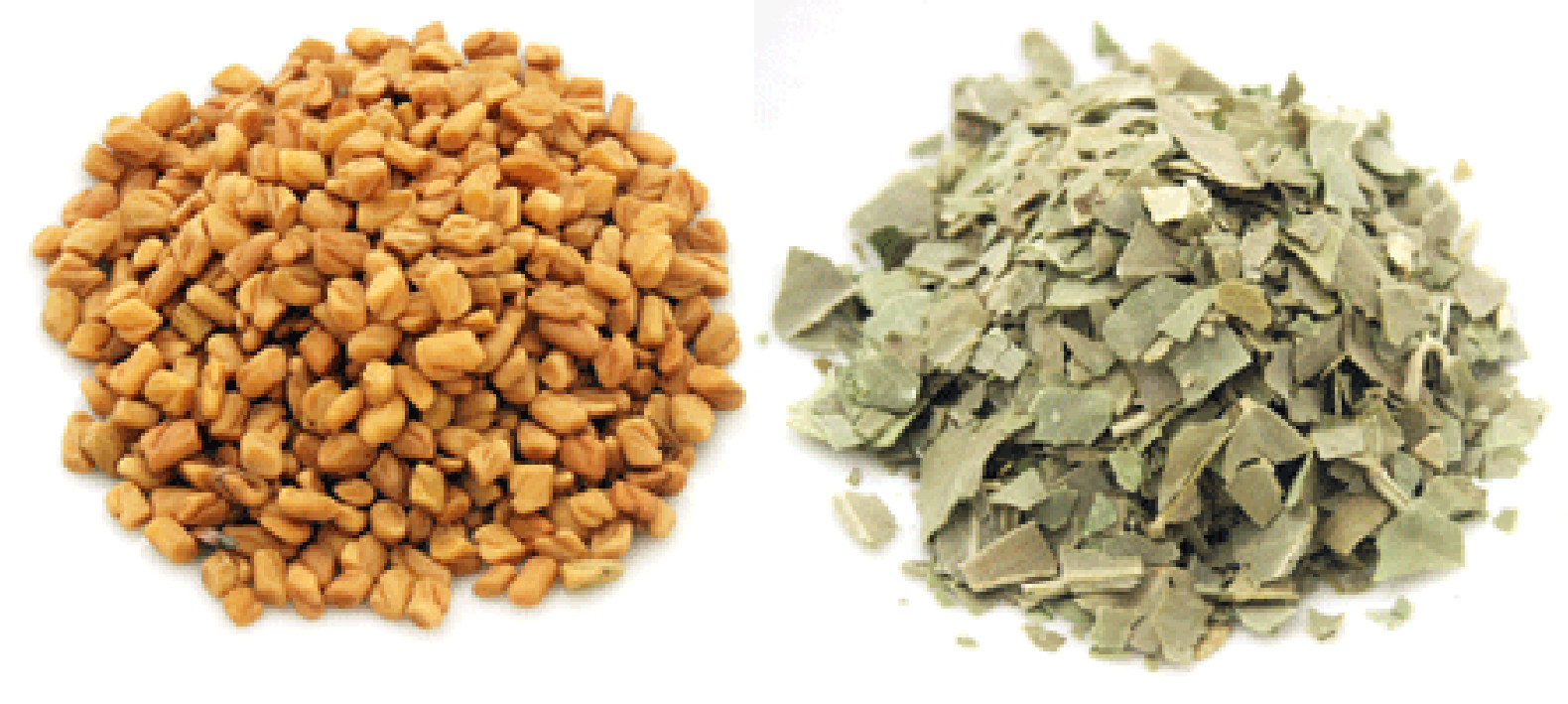 The seeds and dried
leaves of fenugreek,
Trigonella
foenum-graecum.
The seeds and dried
leaves of fenugreek,
Trigonella
foenum-graecum.
Welcome to the summary page for FabulousFusionFood's Spice guide to Fenugreek along with all the Fenugreek containing recipes presented on this site, with 125 recipes in total.
This is a continuation of an entire series of pages that will, I hope, allow my visitors to better navigate this site. As well as displaying recipes by name, country and region of origin I am now planning a whole series of pages where recipes can be located by meal type and main ingredient. This page gives a listing of all the spice-based recipes added to this site.
These recipes, all contain Fenugreek as a major flavouring.
Fenugreek, Trigonella foenum-graecum has a native realm that extends from the eastern Mediterranean across to China, though it is now cultivated worldwide. It can easily be grown as a pot-herb, both for its leaves and the seeds which are used as a spice. It is a member of the Fabaceae family that includes the nitrogen-fixing legumes. As such fenugreek can survive in very poor soil. The name itself, 'fenugreek', is derived from the Latin foenum-graecum (Greek hay).
The leaves of fenugreek (image, right) are used as an herb both in the raw and dried state. In the dried form it is often sold as 'methi' and it is this that provides the 'curry' flavour in many Indian and Pakistani dishes. The seeds are used as a spice (often sold ground as 'ground fenugreek'). This is an important element of many pickles, curry powders and pastes, and is often encountered in the cuisine of the Indian subcontinent and Thailand. The seeds have a bitter taste that mellows when cooked and a very distinctive 'curry-like' aroma which is created by the aromatic compound, sotolone. If toasted before being ground fenugreek develops substituted pyrazines (the same scent compounds as found in cumin).
Fenugreek is also one of the ingredients in the making of injera/taita, a type of bread unique to Ethiopian and Eritrean cuisine. It is also sometimes used as an ingredient in the production of clarified butter (ghee).
Fenugreek seeds have a bitter and aromatic taste. The dried leaves’ fragrance slightly resembles lovage; though they are lack any remarkable scent in the fresh state. Fenugreek seeds contains only minute quantities of an essential oil. In the essential oil, 40 different compounds were found, furthermore, n-alkanes, sesquiterpenes, alkanoles and lactones were reported. The dominant aroma component in fenugreek seeds is a hemiterpenoid γ-lactone, sotolone (3-hydroxy 4,5-dimethyl 2(5H)-furanone), which is contained in concentrations up to 25 ppm. It supposedly forms by oxidative deamination of 4-hydroxy isoleucine. Sotolone has a spicy flavour and was also found a key flavour in fermented protein seasonings, e. g., Maggi sauce. There is chemical similarity between sotolone and the phthalides responsible for the quite similar flavour of lovage leaves. Toasted fenugreek seeds owe their altered, more nutty flavour to another type of heterocyclic compounds, the so-called pyrazines. See cumin for further information.
Fenugreek is an ancient spice, used for thousands of years in the region from Central Asia to Northern India (the Egyptians also mention the spice as essential to the mummification process), though it has only recently penetrated the western market (with the increasing popularity of Indian foods). It is also used in Ethiopian spice mixtures (particularly Berbere spice), is particularly favoured in Yemeni cuisine and is used in the cuisines of West, Central and South Asia (which are now the largest consumers).
The fenugreek plants is probably native to the Eastern Mediterranean, but is today found all over Asia, from the Mediterranean to China. Though not much used in Europe today, fenugreek seeds are found in many curry blends. It is also an important spice in Iranian cookery.
This is a continuation of an entire series of pages that will, I hope, allow my visitors to better navigate this site. As well as displaying recipes by name, country and region of origin I am now planning a whole series of pages where recipes can be located by meal type and main ingredient. This page gives a listing of all the spice-based recipes added to this site.
These recipes, all contain Fenugreek as a major flavouring.
Fenugreek, Trigonella foenum-graecum has a native realm that extends from the eastern Mediterranean across to China, though it is now cultivated worldwide. It can easily be grown as a pot-herb, both for its leaves and the seeds which are used as a spice. It is a member of the Fabaceae family that includes the nitrogen-fixing legumes. As such fenugreek can survive in very poor soil. The name itself, 'fenugreek', is derived from the Latin foenum-graecum (Greek hay).
The leaves of fenugreek (image, right) are used as an herb both in the raw and dried state. In the dried form it is often sold as 'methi' and it is this that provides the 'curry' flavour in many Indian and Pakistani dishes. The seeds are used as a spice (often sold ground as 'ground fenugreek'). This is an important element of many pickles, curry powders and pastes, and is often encountered in the cuisine of the Indian subcontinent and Thailand. The seeds have a bitter taste that mellows when cooked and a very distinctive 'curry-like' aroma which is created by the aromatic compound, sotolone. If toasted before being ground fenugreek develops substituted pyrazines (the same scent compounds as found in cumin).
Fenugreek is also one of the ingredients in the making of injera/taita, a type of bread unique to Ethiopian and Eritrean cuisine. It is also sometimes used as an ingredient in the production of clarified butter (ghee).
Fenugreek seeds have a bitter and aromatic taste. The dried leaves’ fragrance slightly resembles lovage; though they are lack any remarkable scent in the fresh state. Fenugreek seeds contains only minute quantities of an essential oil. In the essential oil, 40 different compounds were found, furthermore, n-alkanes, sesquiterpenes, alkanoles and lactones were reported. The dominant aroma component in fenugreek seeds is a hemiterpenoid γ-lactone, sotolone (3-hydroxy 4,5-dimethyl 2(5H)-furanone), which is contained in concentrations up to 25 ppm. It supposedly forms by oxidative deamination of 4-hydroxy isoleucine. Sotolone has a spicy flavour and was also found a key flavour in fermented protein seasonings, e. g., Maggi sauce. There is chemical similarity between sotolone and the phthalides responsible for the quite similar flavour of lovage leaves. Toasted fenugreek seeds owe their altered, more nutty flavour to another type of heterocyclic compounds, the so-called pyrazines. See cumin for further information.
Fenugreek is an ancient spice, used for thousands of years in the region from Central Asia to Northern India (the Egyptians also mention the spice as essential to the mummification process), though it has only recently penetrated the western market (with the increasing popularity of Indian foods). It is also used in Ethiopian spice mixtures (particularly Berbere spice), is particularly favoured in Yemeni cuisine and is used in the cuisines of West, Central and South Asia (which are now the largest consumers).
The fenugreek plants is probably native to the Eastern Mediterranean, but is today found all over Asia, from the Mediterranean to China. Though not much used in Europe today, fenugreek seeds are found in many curry blends. It is also an important spice in Iranian cookery.
The alphabetical list of all Fenugreek recipes on this site follows, (limited to 100 recipes per page). There are 125 recipes in total:
Page 1 of 2
| Aam Ka Meetha Achaar (Sweet Mango Chutney) Origin: India | Durban Leaf Masala Origin: South Africa | Mas Riha (Maldives Tuna Curry) Origin: Maldives |
| Achaari Jhinga (Indian Pickled Prawns) Origin: India | Durban Masala Origin: South Africa | Mauritian Poudre de Colombo Origin: Mauritius |
| Achari Masala Origin: India | Eritrean Berbere Spice Origin: Eritrea | Meatloaf with Indian Seasonings Origin: Fusion |
| Am Ke Achar (Fijian Mango Pickle) Origin: Fiji | Ethiopian Berbere Sauce Origin: Ethiopia | Methi Kalia (Spicy Fenugreek Meat) Origin: Bangladesh |
| Amba Sauce Origin: Israel | Faenum Graecum (Fenugreek) Origin: Roman | Methi Mushroom Masala Origin: India |
| Amchar Masala Origin: Trinidad | Fijian Chicken and Potato Curry Origin: Fiji | Mother-in-law Masala Origin: South Africa |
| Anardana Jheenga (Pomegranate-flavoured Prawns) Origin: India | Fijian Chicken Curry Origin: Fiji | Mushroom Bhaji Origin: Britain |
| Antiguan Curry Powder Origin: Antigua | Fijian Goat Curry Origin: Fiji | Mussel Hodi Origin: Sri Lanka |
| Arbi ki Bhaji (Taro Curry) Origin: India | Filipino Yellow Curry Powder Origin: Philippines | Nettle Aloo Origin: Fusion |
| Arnott's Curry Powder Origin: Britain | Ghanaian Curry Powder Origin: Ghana | Nevis Curry Powder Origin: Saint Kitts |
| Balti Tandoori Keema Origin: Britain | Good King Henry Aloo Origin: Fusion | Nigerian Curry Powder Origin: Nigeria |
| Beef Koftas with Fruity Couscous Origin: Morocco | Grilled Mackerel with Spicy Dahl Origin: South Africa | Njandu Curry (Kerala Crab Curry) Origin: India |
| Bermuda Curry Powder Origin: Bermuda | Guiana Colombo Powder Origin: French Guiana | Palandi Origin: Sri Lanka |
| Black Curry Powder Origin: Sri Lanka | Gujarati Kadhi Origin: India | Panch Phoron Origin: India |
| Bo-Kaap Kerrie Poeier (Cape Malay Curry Powder) Origin: South Africa | Gurnard Curry Origin: Britain | Paneer Pasanda Origin: India |
| Bombay Murga Kari (Bombay Chicken Curry) Origin: India | Gutti Vankaya (Stuffed Brinjal Curry) Origin: India | Pastırma Origin: Turkey |
| Breton Kari (Breton Curry Power) Origin: France | Hilbeh (Yemeni Fenugreek Dip) Origin: Yemen | Phaal Chicken Curry Origin: India |
| Cape Malay Leaf Masala Origin: South Africa | Hot Curry Powder Origin: Anglo-Indian | Pickle Masala Origin: India |
| Cape Malay Red Leaf Masala Origin: South Africa | Indian Curry Paste Origin: Fusion | Pineapple Pulissery Origin: India |
| Cari (Vietnamese Curry Powder) Origin: Vietnam | Indian Mustard Curry Paste Origin: India | Pó de Caril (Portuguese Curry Powder) Origin: Portugal |
| Cauliflower, Mushroom and Carlin Peas Curry Origin: Britain | Jalfrezi Curry Powder Origin: India | Poudre de Colombo (Colombo Powder) Origin: Martinique |
| Chemmeen Manga Curry (Prawn and Mango Curry) Origin: India | Jalfrezi Masala Origin: India | Prawn Balti Origin: Britain |
| Chemmen Roast (Kerala Prawn Roast) Origin: India | Kharcho (Georgian Beef and Rice Soup) Origin: Georgia | Prawn Patia Origin: India |
| Chicken Ghee Roast Origin: India | Khmeli-Suneli Origin: Georgia | Pumpkin Sambar Origin: India |
| Chicken White Curry Origin: Sri Lanka | Lamb, Apricot and Prune Casserole Origin: African Fusion | Pumpkin Vine Tips Tarkari Origin: Nepal |
| Chmeli-Suneli Origin: Kyrgyzstan | Lampara Curry Origin: Sri Lanka | Rifissa (Chicken and Lentil Stew) Origin: Morocco |
| Classic Vindaloo Curry Origin: India | Lashun ka Achar (Indian Garlic Pickle) Origin: India | Royal Beef Biryani Origin: India |
| Comfrey Aloo Origin: Fusion | Madeeda Hilba II (Fenugreek Porridge) Origin: South Sudan | Saint Barthélemy Colombo Spice Blend Origin: Saint Barthelemy |
| Cornish Chicken Curry Origin: England | Madras Curry Paste Origin: Britain | Saint Martin Colombo Spice Blend Origin: Saint-Martin |
| Curry en Poudre (Cameroonian Curry Spice Blend) Origin: Cameroon | Malabar Peralan (Malabar Fish Roast) Origin: India | Saint Martin Colombo Spice Blend Origin: Sint Maarten |
| Curry Vovoka (Malagasy Curry Powder) Origin: Madagascar | Malaysian Fish Curry Powder Origin: Malaysia | Saint-Martin Johnny Cakes Origin: Saint-Martin |
| Dhansak Masala Origin: India | Maldives Meat Curry Powder Origin: Maldives | Sambar Podi (Sambar Powder) Origin: India |
| Dominica Colombo Curry Powder Origin: Dominica | Mambazha Pulissery Origin: India | |
| Durban Fish Masala Origin: South Africa | Mangalorean Prawn Sukka Origin: India |
Page 1 of 2