FabulousFusionFood's Francatelli Recipes from the Victorian Age 3rd Page
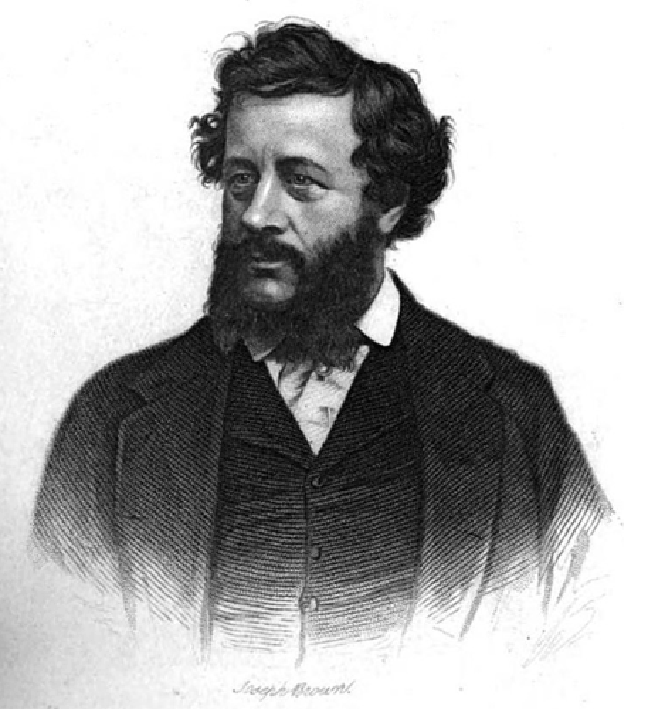 Drawing of Charles Elme Francatelli 1805–1867.
Welcome to FabulousFusionFood's Charles Elmé Francatelli Recipes Page — This page brings together all the recipes on this site redacted (updated) from Francatelli's 1851 volume The Modern Cook. All recipes are given both in their original form and as a modern redaction that and cook today could follow so that you, too, can prepare classic Victorian fare at home. Below I also provide a brief outline on Francatelli's life and more information on his book. I am making my way through the entire recipe collection and as soon as they are added to my site they will be available here. (For the recipe list scroll down.) Enjoy...
Charles Elme Francatelli
1805–1867
Francatelli; Charles Elmé Francatelli was born in London in 1805. His father was Italian and he was educated in France, where he learnt the art of cookery, gaining a diploma from the Parisian College of Cooking. Whilst in France he had the opportunity to study under the legendary Chef Marie Antoine Carême, who is often termed 'The architect of French Haute Cuisine'. On his return to England her worked at various places such as Rossie Priory (for Lord Kinnaird) and, most notably, Chesterfield House where he was chef de cuisine for the Earl of Chesterfield. He also worked Chislehurst in Kent for Sir Herbert Jenner-Fust, at the Coventry House Club; Francatelli also cooked for the Earl of Errol.
By February the 4th 1839 he was working as a chef at Crockford's Club in London, taking over from its previous chef, Ude who quit over a salary dispute. Crockford's was a succesful private club and gaming house on the west side of St James's street and though his tenure was short (he left in 1840 or 1841) it proved to be a good career move, as his next employment was as mâitre d'hôtel and 'chief cook in ordinary' for Queen Victoria at Windsor (according to legend he was spotted by a steward of the royal household). He remained in this post for only one year and this royal appointment was undoubtedly the highlight of his career. The reasons for his leaving are not clear, though it is suggested that this may have been due to Queen Victoria's lack of enthusiasm for French cuisine or maybe Prince Albert's tendency toward less extravagant culinary preparations.
On leaving his royal post, Francatelli was appointed the culinary manager of the Coventry House Club, 106 Piccadilly (this became the St James's club in 1869).
His tenure at the Coventry House Club saw the maturing of Francatelli's culinary style. He developed and Anglo-French style of cookery, becoming the interpreter of French culinary art to the English, and giving the country a new set of polished culinary terms to take the place of the old homely nomenclature of the kitchen, which had prevailed up to that time. This led to Francatelli's first book, The Modern Cook, published in 1845. This volume proved so popular that it went through 29 editions. However, Francatelli was not extravagant in his cookery, indeed, he once remarked that 'he could feed every day a thousand families on the food that was wasted in London' and this principle was espoused in his 1852 volume, A Plain Cookery Book for the Working Classes, which he persuaded the food company, Brown and Polson to sponsor. In 1861 he published The Cook's Guide and Housekeeper's & Butler's Assistant (it is from this volume that the recipes on this site are derived). Known for his sweet tooth, Francatelli's fourth and final book was his 1862 volume, Royal English and Foreign Confectionery Book.
In 1854 Francatelli was appointed chef de cuisine at the prestigious Reform Club, whose kitchens, designed by Alexis Soyer, were reputed to be the greatest in London (indeed, he took over from Sawyer who had resigned in May of that year). Francatelli remained at this post for seven years.
Between 1863 and 1870 he managed the St.James' Hotel in Berkeley Street, and then joined the Freemasons' Tavern in Great Queen Street, a post he held until just before his death in 1876.
Francatelli died on the 10th of August, 1867 at Eastbourne.
This is a continuation of the recipes for the Victorian chef, Charles Elmé Francatelli (3rd page in fact). If you would like to learn a little more about Francatelli himself then please go to the first listing page for the Francatelli recipes home page for the biography and information page. Here you will get just a list of the additional recipes from Charles Elmé Francatelli on this site.
The alphabetical list of all the Charles Elmé Francatelli recipes on this site follows, (limited to 100 recipes per page). There are 447 recipes in total:
Page 3 of 5
| Ham Sauce Origin: Britain | Loins of Mutton Origin: British | Orange Sauce Origin: Britain |
| Hamboro' Salad Origin: British | Lord Marcus Hill's Soup Origin: British | Ordinary Sandwiches Origin: British |
| Hare Soup Origin: British | Lyonnaise Sauce Origin: Britain | Ox Tongue Origin: British |
| Hodge-Podge Origin: British | Maître d'Hôtel Sauce Origin: Britain | Ox-cheek Soup Origin: British |
| Horseradish Sauce Origin: Britain | Macédoine of Vegetables Origin: British | Ox-tail Soup Origin: British |
| Hunting Beef Origin: British | Macaroni Soup Origin: British | Oyster Croquets Origin: Britain |
| Indian Pilau Origin: British | Maitre D'Hôtel Butter Origin: British | Oyster Soup Origin: British |
| Indian Pooloot Origin: British | Marrow Croustades Origin: Britain | Oysters Origin: British |
| Indian Sauce Origin: Britain | Marrow Patties Origin: Britain | Palestine Soup Origin: British |
| Irish Sandwiches Origin: British | Marrow Toast à la Victoria Origin: British | Parsley Sauce Origin: Britain |
| Italian Frying Batter Origin: British | Marrow-Bones Origin: British | Patty Meats Origin: British |
| Italian Paste Soup Origin: British | Matelotte of Salmon Origin: British | Pea Soup Origin: British |
| Italian Polpetti Origin: British | Mayonaise Sauce Origin: Britain | Perch Origin: British |
| Italian Salad Origin: British | Melted Butter or Butter Sauce Origin: Britain | Perigeux Sauce Origin: Britain |
| Italian Sauce Origin: Britain | Milanese Ragôut Origin: British | Pheasant à la Gitana (Pheasant, Gypsy Fashion) Origin: British |
| Italian Soup Origin: British | Mirepoix Origin: British | Pickled Fish Origin: British |
| Jardiniere Origin: British | Mulligatawney Soup Origin: Britain | Pickled Salmon Origin: British |
| Jardiniere Soup Origin: British | Muscle Sauce (Mussel Sauce) Origin: Britain | Piquant Sauce Origin: Britain |
| John Dory Origin: British | Mushroom Sauce Origin: Britain | Plain Boiled Rice for Curries Origin: Britain |
| John Dory II Origin: British | Mustard Sauce Origin: Britain | Plain Boiled Trout Origin: British |
| Julienne Soup Origin: British | Mutton Broth Origin: Britain | Plain Salmon Origin: British |
| Knuckle of Veal and Rice Soup Origin: British | Mutton Pies à la Windsor Origin: Britain | Plum Sauce Origin: Britain |
| Lamb's Head Origin: British | Neapolitan Sauce Origin: Britain | Poivrade Sauce Origin: Britain |
| Leg of Mutton à la Bretonne Origin: British | Neck of Mutton à l'Allemande Origin: British | Poor-man's Sauce Origin: Britain |
| Leg of Mutton à la Naolitaine Origin: British | Neck of Mutton à l'Irlandaise Origin: British | Port-wine Sauce for Wild Fowl Origin: Britain |
| Leg of Mutton à la Soubise Origin: British | Neck of Mutton à la Soubise Origin: British | Potato Soup Origin: British |
| Liver and Ham Forcemeat for Raised Pies Origin: British | Neck of Mutton Roebuck Fashion Origin: British | Poulette Sauce Origin: Britain |
| Lobster Butter Origin: British | Neck of Mutton with Purée of Sorrel Origin: British | Prawn Croquets Origin: British |
| Lobster Croquets Origin: Britain | Neck of Veal Larded Origin: British | Prawn Soup Origin: British |
| Lobster Quenelles Origin: British | Noix or Cushion of Veal Origin: British | Prawns Origin: British |
| Lobster Sauce Origin: Britain | Novel Kinds of Frying Batter Origin: British | Pressed Beef Origin: British |
| Lobster Soup Origin: British | Olives Origin: British | Prince of Wales' Canapés Origin: British |
| Loin of Veal à la Creme Origin: British | Onion Porridge Origin: British | |
| Loin of Veal Braised Origin: British | Onion Sauce Origin: Britain |
Page 3 of 5