FabulousFusionFood's Easter Recipes 3rd Page
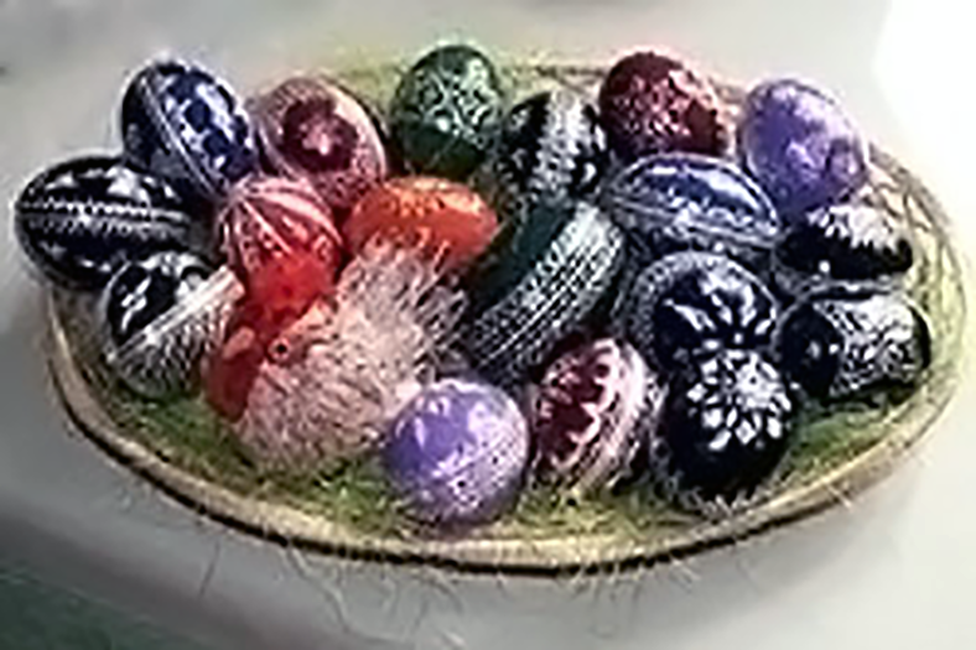 Easter decorations of eggs in a bowl.
Easter
Welcome to Easter Recipes Page — This is the latest in my occasional series (beginning with Christmas Recipes) on festival foods and dishes. With Easter now on the way I thought I'd start next tackle this particular festival. Though considered a Christian festival these days Easter is basically an amalgam of various spring-time festival, celebrating the re-birth and re-awakening of the earth in a different guise. Almost all civilizations above the tropics have a version of the spring-time feast and various spring-time practices to do with re-birth and renewal. In the Romance and Celtic languages, the name of easter derives from the Greek name, Pascha, which itself is derived from Pesach, the Hebrew festival of Passover. In the Germanic languages English name, 'Easter', and the German, 'Ostern', derive from the name of a putative Anglo-Saxon Goddess of the Dawn known variously as Ēaster, Ēastre, and Ēostre in various dialects of Old English and Ostara in German. In most Slavic languages, the name for Easter either means 'Great Day' or 'Great Night'. For example, Wielkanoc and Velikonoce mean 'Great Night' or 'Great Nights' in Polish and Czech, respectively. Великдень (Velikden', Velykden') and Вялікдзень (Vyalikdzyen') mean 'The Great Day' in Ukrainian, Bulgarian and Belarusian, respectively.
Easter is the most important of the religious festivals in the Christian liturgical year and celebrates the resurrection of Jesus, which Christians believe occurred on the third day after his crucifixion some time in the period AD 27 to 33. Many pagan elements have become part of the celebration, and those aspects are often celebrated by many Christians and non-Christians alike.
Easter is such an important celebration in the Christian calendar that it is hardly surprising that various culinary traditions have grown up around it. From Europe, through Africa, the Middle Easy and to the Americas there are drinks and dishes that are specifically served at Easter only.
Part of this tradition is to do with the fasting days of lent. The days leading up to Easter are meatless and either vegetarian or fish-based dishes only are served. The period of lent itself begins with Shrove Tuesday (also known as Pancake Tuesday) where the last of the year's rich produce is consumed. There are then meatless or lenten days leading up to Easter itself.
As well as being served for Easter it is also traditional to decorate eggs for Easter itself and many cakes and desserts are often decorated with eggs (originally coloured chicken eggs, though candy and chocolate eggs are often used today).
For the complete list of recipes, please scroll down to the 'links to Easter recipes' below.
This is a continuation of the recipes listings for Easter (the page in fact). With over 250 recipes in total, the recipes have had to be broken down into a number of individual pages, which you can scroll through below. If you would like to learn a little more about Easter itself and the cookery traditions associated with it, then please go to the first listing page for these Easter recipes for the main information page. Here you will get just a list of the additional Easter recipes available on this site.
The alphabetical list of all the Easter recipes on this site follows, (limited to 100 recipes per page). There are 210 recipes in total:
Page 3 of 3
| Turkey Singapore Noodles Origin: Fusion | Watercress and Spinach Soup Origin: Britain | Zupa Chrzanowa (Polish Horseradish Soup) Origin: Poland |
| Ujeni Ndiwo Origin: Malawi | Yeast-based Simnel Cake Origin: American | Zurek (Polish Easter Soup) Origin: Poland |
| Vanilla Snap Biscuits Origin: Britain | Ysgwydd Oen Mewn Dull Gwledig (Rustic Lamb Shoulder Roast) Origin: Welsh | |
| Vastlakuklid (Estonian Lenten Buns) Origin: Estonia | Zanzibar Fish Curry Origin: Tanzania |
Page 3 of 3