FabulousFusionFood's Mutton-based Recipes 2nd Page
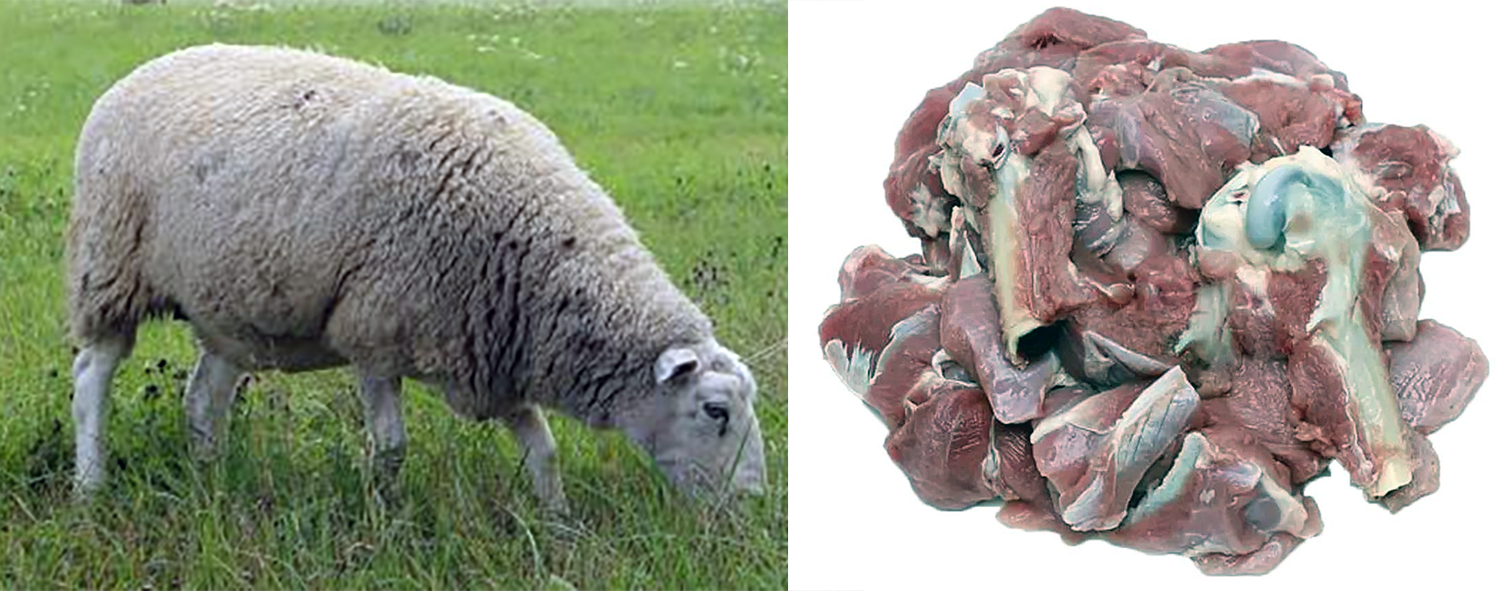 Mature sheep (mutton) and a selection of mutton cuts.
Welcome to FabulousFusionFood's Mutton-based Recipes Page — The recipes presented here are all based on sheep meat. Mutton represents a mature sheep (Ovis aries) which is more than two years old.
Hogget is term for a sheep of either sex having no more than two permanent incisors in wear, or its meat. In the UK, it means animals that are 11 to 24 months old. Still common in farming usage and among speciality butchers, it is now a rare term in British, Australian and New Zealand supermarkets, where meat of all sheep less than two years old tends to be called 'lamb'.
Mutton — the meat of a female (ewe) or castrated male (wether) sheep having more than two permanent incisors in wear. Thin strips of fatty mutton can be cut into a substitute for bacon called macon. In Northern Europe, mutton and lamb feature in many traditional dishes, including those of Iceland, Norway and Western Europe, including those of the United Kingdom, particularly in the western and northern uplands, Scotland and Wales.
Sheep are most likely descended from the wild mouflon of Europe and Asia, with Iran being a geographic envelope of the domestication centre. One of the earliest animals to be domesticated for agricultural purposes, sheep are raised for fleeces, meat (lamb, hogget or mutton), and milk. A sheep's wool is the most widely used animal fibre, and is usually harvested by shearing. In Commonwealth countries, ovine meat is called lamb when from younger animals and mutton when from older ones; in the United States, meat from both older and younger animals is usually called lamb. Sheep continue to be important for wool and meat today, and are also occasionally raised for pelts, as dairy animals, or as model organisms for science.
Sheep meat and milk were one of the earliest staple proteins consumed by human civilization after the transition from hunting and gathering to agriculture. Sheep meat prepared for food is known as either mutton or lamb, and approximately 540 million sheep are slaughtered each year for meat worldwide. "Mutton" is derived from the Old French moton, which was the word for sheep used by the Anglo-Norman rulers of much of the British Isles in the Middle Ages. This became the name for sheep meat in English, while the Old English word sceap was kept for the live animal. Throughout modern history, "mutton" has been limited to the meat of mature sheep usually at least two years of age; "lamb" is used for that of immature sheep less than a year.
Cuts of Mutton (UK, Canada, and other Commonwealth countries):
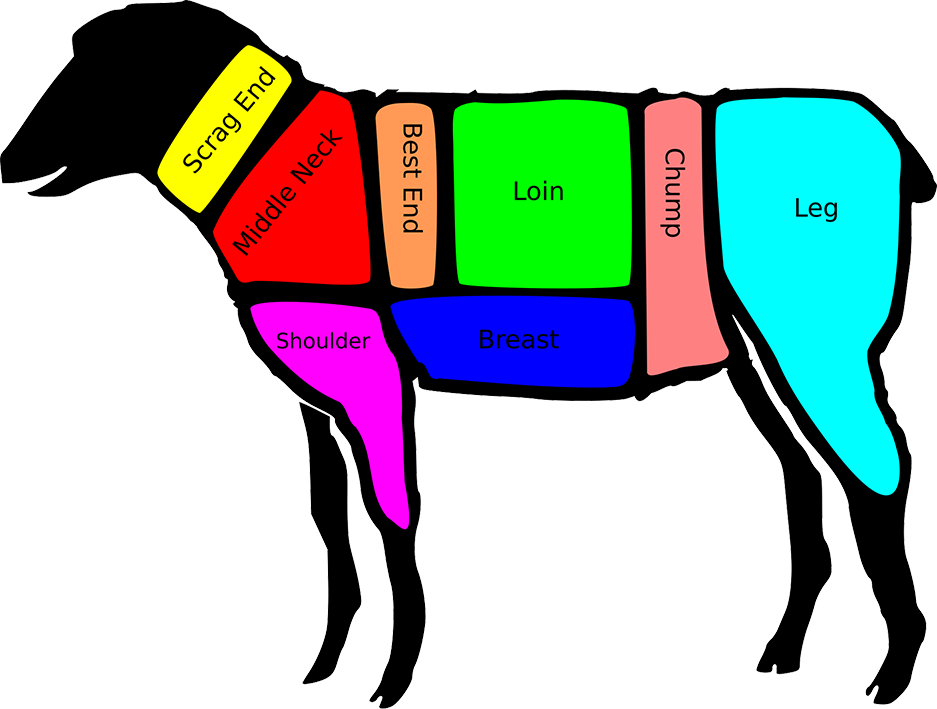 Cuts of Mutton:
Scrag end (of neck) — stewing
Middle neck — braising, stewing
Best End (of neck) — roasting, stewing, braising
Loin (including chops, racks and saddle) — roasting, frying, braising
Chump (and chump chops) — frying
Barnsley chop, a large double loin chop — frying
Leg (gigot in Scotland) including leg steaks — roasting, frying
Shank — braising
Shoulder — roasting Breast — braising
Offal — typically tongue, liver, heart, stomach, sweetbreads, testicles, intestines and kidneys
The alphabetical list of all the mutton-based recipes on this site follows, (limited to 100 recipes per page). There are 175 recipes in total:
Page 2 of 2
| Monnchelet (Veal or Mutton Stew with Herbs and Egg Liaison) Origin: England | Pelmeni (Kyrgyz Mutton Dumplings) Origin: Kyrgyzstan | Soupe aux pois et la viande (Pea Soup and Meat) Origin: Guinea-Bissau |
| Mouton au Curry (Mutton Curry) Origin: France | Pilau Mouton de Comores (Comorian Mutton Pilau) Origin: Comoros | Soupe de mouton (Mutton soup) Origin: Saint-Martin |
| Mrs Beeton Boiled Neck of Mutton Origin: Britain | Plat Songhay (Songhay Dish) Origin: Mali | Soupe Djiboutienne (Djibouti Soup) Origin: Djibouti |
| Muhammara (Fried Dumplings) Origin: Mongolia | Potato and Mutton Soup Origin: Scotland | South African Cape Malay Curry Origin: South Africa |
| Mutton and Coconut Cream Curry Origin: Fusion | Poullaille farcie (Stuffed Poultry) Origin: France | South African Rhus Bukhari Origin: South Africa |
| Mutton and Potato Pies Origin: Britain | Rapa Nui Cazuela Origin: Easter Island | Spiced Mutton Origin: Northern Ireland |
| Mutton and Turnip Pie Origin: England | Real Irish Stew Origin: Ireland | Sugar Bean Curry Origin: South Africa |
| Mutton Broth Origin: Britain | Red Oil Greens Origin: Liberia | Svinekødsuppe (Skerpikjøt Soup) Origin: Denmark |
| Mutton Cutlets with Mashed Potatoes Origin: Britain | Reestit Mutton Soup (Reestit Mutton Soup Soup) Origin: Scotland | Szureti Birkaporkolt (Mutton Porkolt) Origin: Hungary |
| Mutton in Stout Origin: Ireland | Rezala (Lamb Curry) Origin: Bangladesh | Tadjine Zdef (Mutton and Cheese Tagine) Origin: Benin |
| Mutton in the Burmese Style Origin: Fusion | Saffe (Mutton and Cassava Leaf Stew) Origin: Sierra Leone | Thiéré Bassi (Millet Couscous Stew) Origin: Senegal |
| Mutton Madras Origin: India | Saka-saka (Mutton and Cassava Leaf Stew) Origin: Guinea | Thiéré bassy Origin: Senegal |
| Mutton Pies à la Windsor Origin: Britain | Samish Mirchi Soup (Mulligatawny Soup) Origin: India | Tick-Keeah Kebab Origin: India |
| Mutton Pilau Origin: India | Samsa Origin: Kyrgyzstan | To boil a chine of veal, or a chicken in sharp broth with herbs Origin: Britain |
| Mutton Rendang Origin: Indonesia | Sanger Yena (Offal Sausages) Origin: Aruba | To Dress a Hen, Mutton or Lamb the Indian Way Origin: England |
| Mutton Rissole Origin: Britain | Scotch Pie Origin: Scotland | To make a Haggas Pudding. Origin: Britain |
| Mutton Toad-in-the-Hole Origin: Britain | Scotch Pie II Origin: Scotland | Tourtes parmeriennes (Parmesan Pies) Origin: France |
| Mutton with Peppers and Chironji Origin: India | Scots Mutton Pies Origin: Scotland | Tsuivan (Stewed Vegetables, Meat and Fresh Noodles) Origin: Mongolia |
| Nigerian Spiced Goat Meat Pepper Soup Origin: Nigeria | Serabe (Boiled Offal) Origin: Botswana | Tukasu (Mutton Stew with Dumplings) Origin: Mali |
| Nigerian Spiced Mixed Meat Pepper Soup Origin: Nigeria | Sheikh Kebab Origin: India | Turkmen Kebap Origin: Turkmenistan |
| Osban (Offal Sausages) Origin: Libya | Sindhi-style Pilau Origin: Pakistan | Vinthaleaux Origin: India |
| Packet and Tripe Origin: Ireland | Skerpikjøt (Faroese Air-dried Mutton) Origin: Denmark | Wastels yfarced (White Bread, Stuffed) Origin: England |
| Pakistani Seekh Kebab Origin: Pakistan | Small Raised Mutton Pies Origin: Scotland | Wouré Burakhè Magilinri (Sweet Potato Leaf Sauce) Origin: Guinea |
| Pastai Penfro (Pembrokeshire Pies) Origin: Welsh | Snyboontjies Bredie (Green Bean Bredie) Origin: South Africa | Zahtar-spiced Barbecued Mutton Origin: Jordan |
| Pea Soup and Meat Origin: Guinea-Bissau | Souko Dounguouri (Meat Stew with White Beans) Origin: Niger | Zanzibar Pilau Origin: Tanzania |
Page 2 of 2